David Lean
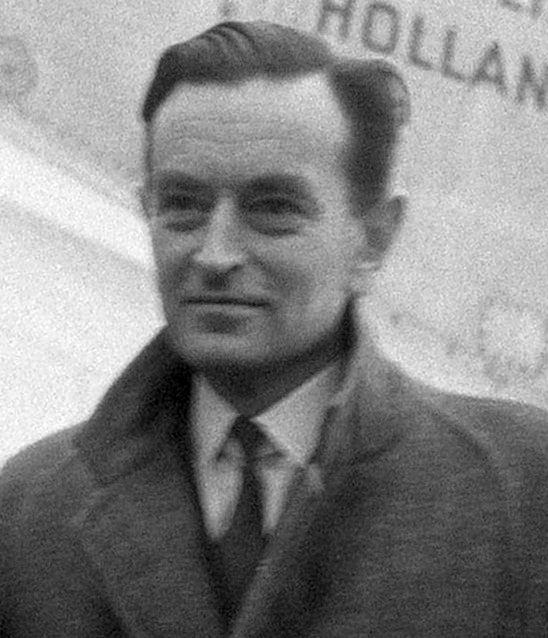
The English filmmaker who mastered the large-scale epic without losing sight of the small, private moment — a discipline that produced some of the most enduring films in British cinema.
David Lean began his career in a cutting room and never forgot what editing taught him: that a film lives in the cut, not the shot. He went on to direct some of the largest-scale films ever made — Lawrence of Arabia among them — but the quality that distinguished his work was a precision in the brief, decisive image that no amount of spectacle could dilute.
From editing to direction
Lean grew up in a Quaker household in Croydon, south of London, and entered the film industry as a tea boy at Gaumont Studios in the late 1920s. He rose through the ranks to become one of the most respected editors in British cinema, cutting films for directors including Paul Czinner and Gabriel Pascal. He moved into co-direction with Noël Coward on In Which We Serve (1942), then directed his own features. His literary adaptations — Great Expectations (1946) and Oliver Twist (1948) — remain models of their kind: faithful to Dickens's rhythms without being merely illustrated.
Brief Encounter and the intimate film
Before the epics came Brief Encounter (1945), a film of deliberate smallness: two married people in a provincial English town, meeting weekly at a railway refreshment room, conducting and ending an affair entirely in a register of understatement. It is made almost entirely in close-up and reaction shot, with Rachmaninoff's Second Piano Concerto as its emotional weather. Celia Johnson and Trevor Howard give performances that depend on what is not said. The film's reputation has only grown.
The whole secret of films is in the detail.
Lawrence of Arabia and the epic scale
Lawrence of Arabia (1962) is considered by many critics the finest British film ever made. Shot on 70mm across Jordan and Spain, it runs to over three and a half hours and contains some of the most sustained desert photography in cinema — but Lean understood that the landscape was interior as much as exterior. Peter O'Toole's T.E. Lawrence is a figure of genuine ambiguity: heroic and vain, colonially complicit and genuinely attached. The film won seven Academy Awards, including Best Picture and Best Director for Lean.
His subsequent epics — Doctor Zhivago (1965), Ryan's Daughter (1970) — were criticised for extravagance, though Doctor Zhivago became commercially enormous. After a fourteen-year silence he returned with A Passage to India (1984), adapted from E.M. Forster, which demonstrated that his control of both scale and intimacy remained undiminished.