David Lynch
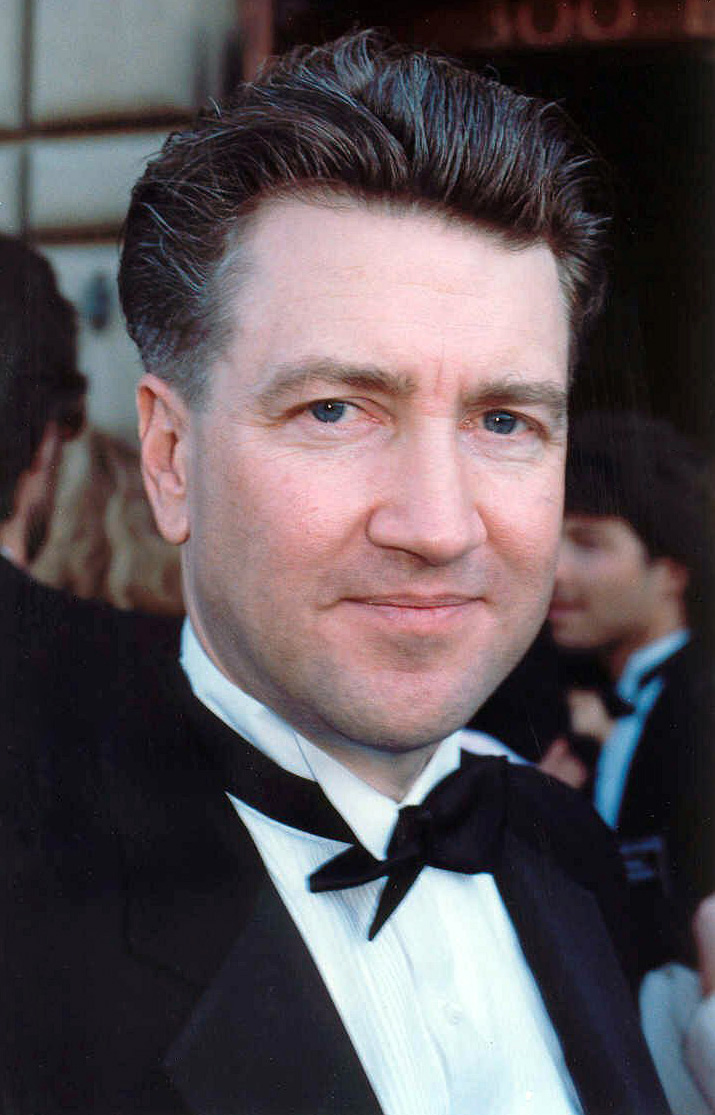
The American filmmaker whose surrealist vision mapped the psychological underside of American normality with an imagery so distinctive it generated its own adjective.
David Lynch filmed the American suburban lawn as if something was buried beneath it, and proved repeatedly that something was. In a career spanning more than five decades he produced a body of work — films, television, painting, music — that made the word "Lynchian" indispensable: a shorthand for unease that cannot be fully explained, beauty that is also threat.
Missoula to Philadelphia to Los Angeles
Lynch was born in Missoula, Montana, to a family that moved frequently with his father's work for the US Forest Service. He grew up in small towns across the Pacific Northwest and South, imprinting what would become a lifelong engagement with the surface pleasures and hidden violence of American domestic life. He studied painting at the Pennsylvania Academy of the Fine Arts in Philadelphia, where he began making short films — moving images in a painted frame. His early short Six Men Getting Sick (1966) was a looped animation projected onto a sculptural screen; he has never entirely left the painter's mode of thinking.
Eraserhead and the industrial unconscious
Eraserhead (1977), shot over five years in Los Angeles on an American Film Institute grant and Lynchian stubbornness, established his signature universe: industrial noise, disfigured bodies, hallucinatory domestic horror, and a protagonist who cannot escape a situation that is never quite explicable. The film found its audience on the midnight movie circuit and has never left it. It brought Lynch to the attention of Mel Brooks, who produced his next film.
The Elephant Man (1980) demonstrated that Lynch could work within a studio budget and a narrative of established historical record — but even here, the Victorian London he created was filtered through his own visual obsessions: smoke, shadow, the grotesque and the tender in close proximity.
Ideas are like fish. If you want to catch little fish, you can stay in the shallow water. But if you want to catch the big fish, you've got to go deeper.
Blue Velvet and Twin Peaks
Blue Velvet (1986) is the film that codified the Lynchian mode for a mainstream audience: beneath the rose garden of a small American town, extreme violence and sexual pathology. Kyle MacLachlan finds a severed human ear in a field; the film follows the logic of that ear into places that should not exist in a prosperous suburb. It received an Academy Award nomination for Best Director. Wild at Heart (1990) won the Palme d'Or at Cannes. Twin Peaks (1990–91), the television series created with Mark Frost, brought his visual and narrative sensibility to network television and permanently expanded what television drama could attempt.
Mulholland Drive (2001), initially developed as a television pilot and then expanded into a feature, is widely considered his masterpiece: a non-linear investigation of Hollywood delusion, identity, and grief, structured as a kind of waking dream. It won him the Best Director prize at Cannes.