Donald Knuth
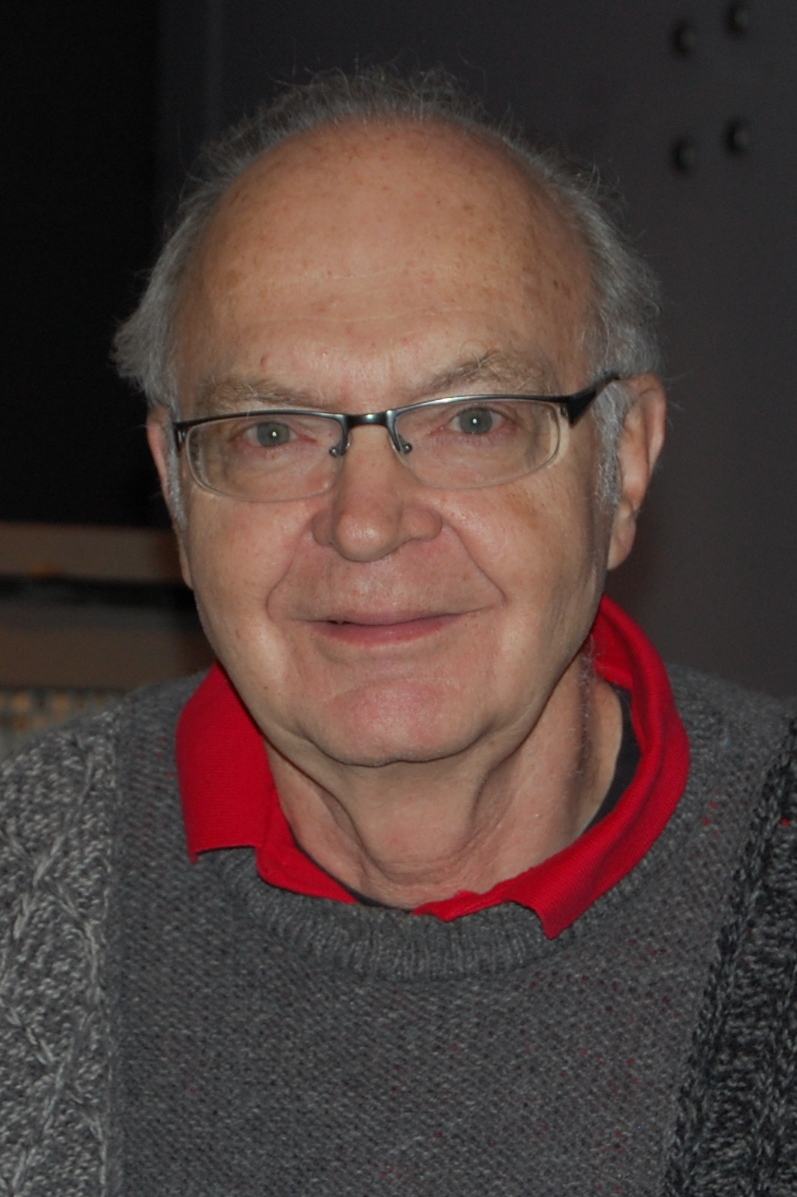
The computer scientist who turned programming into a mathematical art form — and who has spent more than sixty years writing its definitive manual.
Donald Knuth set out in 1962 to write a short compiler textbook. The project grew into The Art of Computer Programming — a multi-volume work that redefined what rigorous thinking about algorithms could look like, earned him the ACM Turing Award, and remains unfinished by deliberate, unhurried design.
Formation and early ambition
Knuth grew up in Milwaukee, the son of a small-business owner who encouraged mathematics. He enrolled at the Case Institute of Technology intending to study physics, switched to mathematics, and graduated summa cum laude in 1960 — the faculty simultaneously awarding him a master's degree. His doctoral work at Caltech on compiler design was where the encyclopaedic project began: a publisher commissioned a book on compilers, and Knuth realised the underlying material demanded something far larger.
He joined Stanford's faculty in 1969 and spent the rest of his career there, retiring to emeritus status in 1992 to write full time.
The Art of Computer Programming
The first volume appeared in 1968. Knuth's method was distinct from anything then available: algorithms presented as mathematical objects, analysed for their exact performance using rigorous asymptotic notation, illustrated with worked examples in a hypothetical assembly language called MIX. The approach established algorithm analysis as a discipline, a fact the ACM recognised with the 1974 Turing Award — at the time the youngest-ever recipient.
Three volumes had appeared by 1973. Then Knuth paused. The reason was typography.
Beware of bugs in the above code; I have only proved it correct, not tried it.
TeX and the detour that changed publishing
Dissatisfied with the typesetting quality of the second-edition proofs, Knuth spent what he estimated as a few months developing a new typesetting system. The result — TeX, completed in 1978, and its companion font system Metafont — became the standard for mathematical and scientific publishing worldwide. LaTeX, the macro system built on top of TeX by Leslie Lamport, extended its reach to virtually every research field.
Knuth also developed the WEB literate programming system, which interleaves documentation and source code in a single file — an idea whose influence is visible in modern notebook-style programming environments.
Legacy and the unfinished monument
Volumes 1 through 3 are standard references; Volume 4A appeared in 2011, with further fascicles following. Knuth has declined all email since 1990, citing the need for uninterrupted concentration. The project's incompleteness is a feature of its ambition: it covers material that continues to develop.
His influence runs through every field that touches computation. The analysis of algorithms, the mathematics of notation, the idea that programs are literature — all descend from the discipline he modelled across six decades.