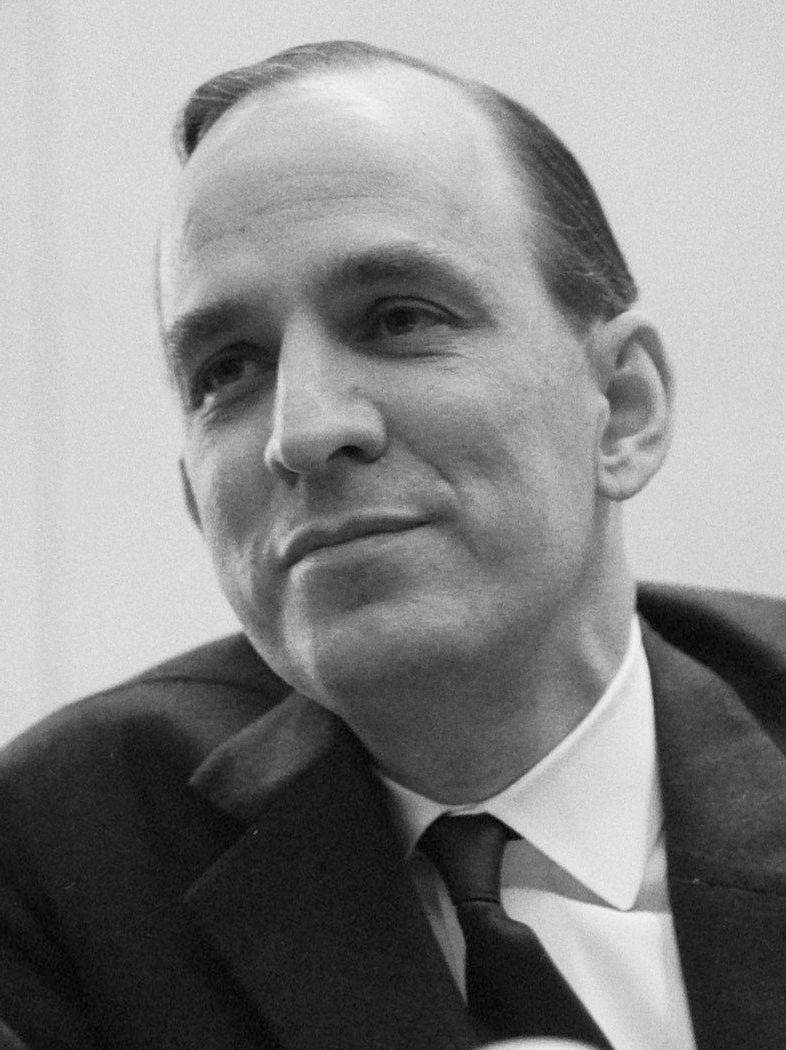
Dziga Vertov
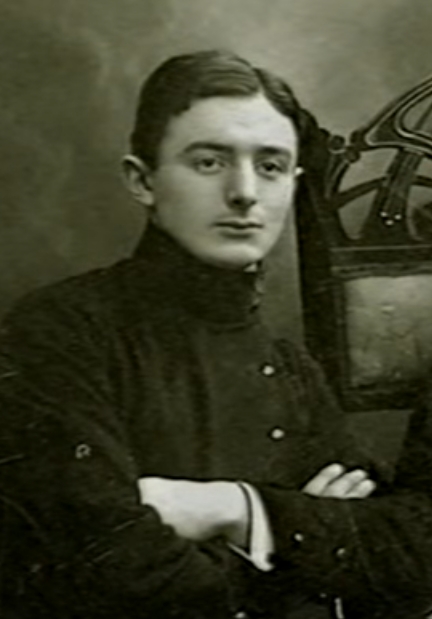
The Soviet pioneer of documentary cinema who theorised the camera as a more honest eye than the human one and made the city symphony into a political manifesto.
Dziga Vertov believed that the camera, freed from the constraints of narrative fiction and theatrical staging, could reveal truths about modern life that the unaided human eye could not see. His documentary practice — fast cutting, unexpected angles, superimpositions, slow motion, split screens — was simultaneously a political programme and an aesthetic manifesto, and his 1929 film Man with a Movie Camera remains one of the most formally inventive works in cinema history.
From Białystok to the Kino-Eye
Denis Kaufman was born in 1895 in Białystok (then in the Russian Empire, now in Poland), the son of a Jewish bookseller. He adopted the pseudonym Dziga Vertov — approximately "spinning top" in Ukrainian, a name that captures something of his cinematic energy — when he began working in film. He studied at the Petrograd Psychoneurological Institute before the Revolution, where he experimented with sound poetry and the montage of recorded sounds.
After the October Revolution he joined the Moscow Cinema Committee, editing newsreel footage from the Civil War into the Kino-Pravda (Cinema Truth) series — a newsreel running to twenty-three issues between 1922 and 1925, each one formally more adventurous than the last. He was a member of the Kinoks collective with his brother Mikhail Kaufman (who served as his primary cinematographer) and his wife Elizaveta Svilova (his primary editor).
The Kino-Eye theory
Vertov's theoretical writings, collected in Kino-Eye: The Writings of Dziga Vertov, articulate a systematic attack on staged fiction film. The Kino-Eye (Kinoglaz) — the camera as an instrument of perception superior to the human eye — can slow time, reverse it, freeze it, show what the eye misses. The film crew's job was to catch life unawares, to film without theatrical preparation or professional actors, and to assemble the result using montage as an analytical rather than narrative tool.
His opposition to the story-film was as political as it was aesthetic: staged narrative film imported bourgeois dramatic conventions into revolutionary cinema. The newsreel and documentary were the forms appropriate to a society in the process of remaking itself.
I am the Kino-Eye. I am the mechanical eye. I, a machine, show you the world as only I can see it.
Man with a Movie Camera
Man with a Movie Camera (1929) is both the culmination of the Kinoks project and a work that exceeds any theoretical description. Following a Soviet city — assembled from footage shot in Moscow, Kiev, Odessa, and Kharkiv — from dawn to dusk, it is a symphony of urban life that simultaneously comments on its own construction: the cameraman, the editing room, and the audience watching the film appear within the film itself. The techniques used — freeze frames, slow motion, fast motion, split screens, superimpositions, reverse motion, tracking shots from vehicles, extreme close-ups — were not all invented by Vertov but had never been assembled with this density and structural purpose.
It was received with controversy: Soviet critics debated whether its formal complexity served or undermined its political function. Western critics in subsequent decades placed it among the canonical works of cinema.
Later career and marginalisation
Sound film presented Vertov with both an opportunity — Enthusiasm (1931), a documentary about Donbas coal miners, used sound with the same experimental rigour he applied to images — and a problem. The Soviet film industry increasingly demanded accessible narrative entertainment; Vertov's experimental approach was progressively marginalised. His last major work, Three Songs of Lenin (1934), was a more conventionally structured tribute that achieved wide distribution. After it he was largely confined to newsreel editing and unable to realise the ambitious projects he proposed. He died in Moscow in 1954.