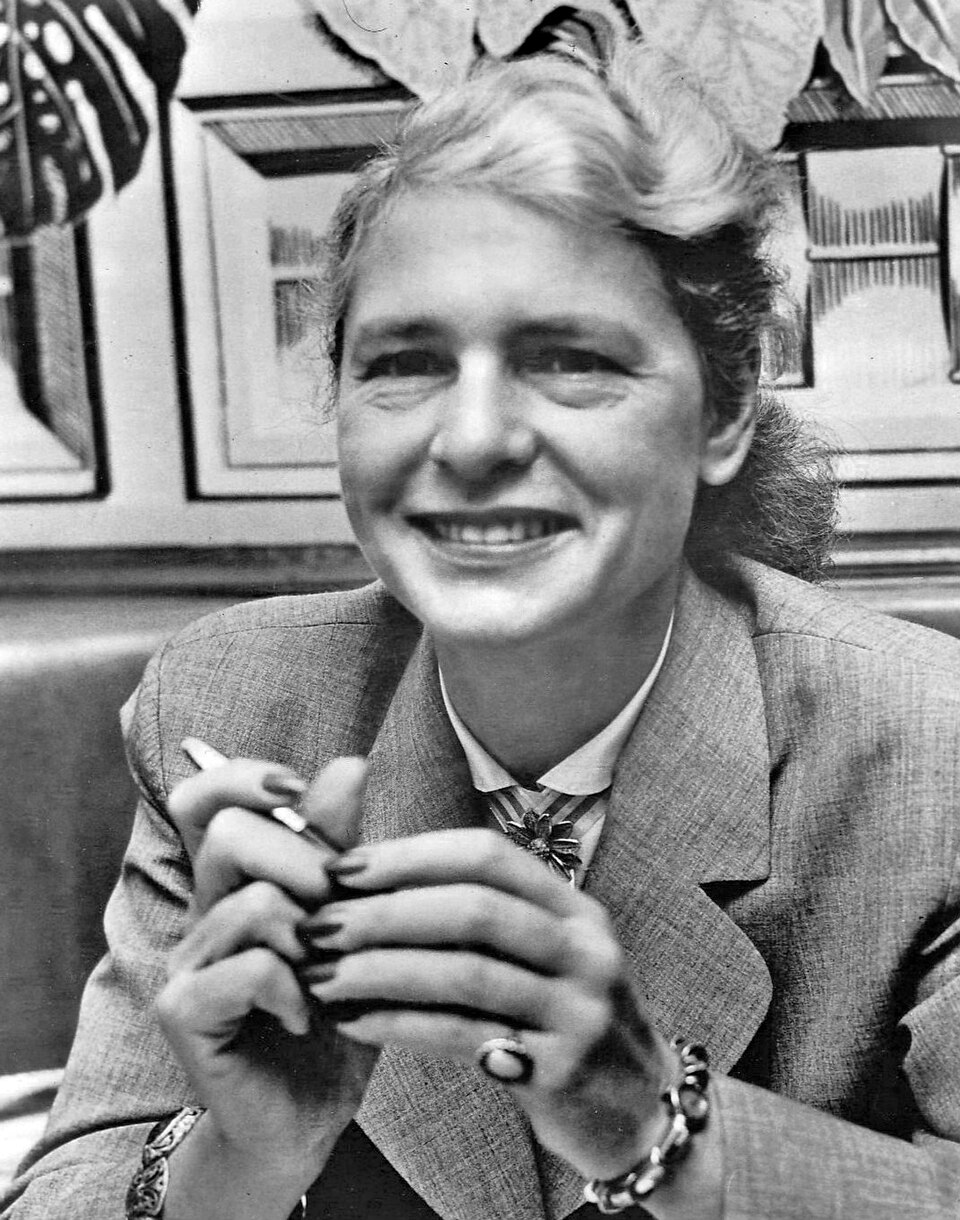
Edward Weston
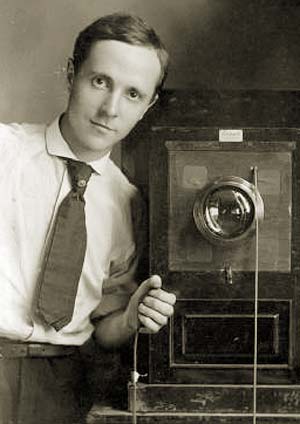
The Californian photographer who stripped the medium back to pure form — teaching the camera to see shells, peppers, and rock faces with a clarity that no eye alone had managed.
Edward Weston photographed a green pepper in 1930 and made it look like a torso. That compression — the translation of one thing into the formal language of another, without metaphor, without explanation — was the whole of his method, and it changed what people thought photography could be.
Early career and the pivot to form
Weston was born in Highland Park, Illinois, in 1886, and received his first camera at sixteen. He trained in the pictorialist tradition — soft-focus, painterly, striving for the effects of art photography as it was then understood. By 1911 he had his own portrait studio in Tropico, California, and was winning prizes in the accepted style.
The break came from Mexico. Between 1923 and 1926 he lived in Mexico City with the photographer Tina Modotti, encountering muralists and modernists who convinced him that formal directness, not atmospheric softness, was the proper ambition of the camera. He returned to California stripped of his earlier manner.
Group f/64 and straight photography
In 1932 Weston co-founded Group f/64 with Ansel Adams, Imogen Cunningham, and others. The name referred to the smallest aperture setting on a large-format camera — the one that produces maximum depth of field and sharpness across the entire frame. It was a manifesto: photography should use its own native properties, not simulate painting.
The group advocated straight photography: no manipulation in darkroom or camera, no pictorialist soft-focus, no constructed allegory. The subject photographed with complete precision — that was the image.
Photography suits me because the things I want to express are largely matters of form and light.
The 8×10 view camera years
In 1937 Weston became the first photographer to receive a Guggenheim Fellowship. Over the following two years he produced nearly 1,400 negatives using his 8×10 view camera, travelling California and the American West. The resulting images — dunes at Oceano, cypress trees at Point Lobos, rocks and tide-pools — are among the most technically accomplished large-format photographs ever made.
Point Lobos, where he lived for many years, became his primary studio. The concentration of rock, sea, and organic form there suited his formal preoccupations exactly.
Legacy
Weston's influence on American photography was substantial and direct: Ansel Adams's zone system grew from the same f/64 discipline; the documentary and landscape traditions of mid-century photography are indebted to straight photography's principle that the camera shows rather than interprets.
Parkinson's disease ended his work in 1948. He lived another decade, dying on New Year's Day 1958. His son Cole continued his printing work. The Center for Creative Photography at the University of Arizona holds a major archive of his prints and papers.