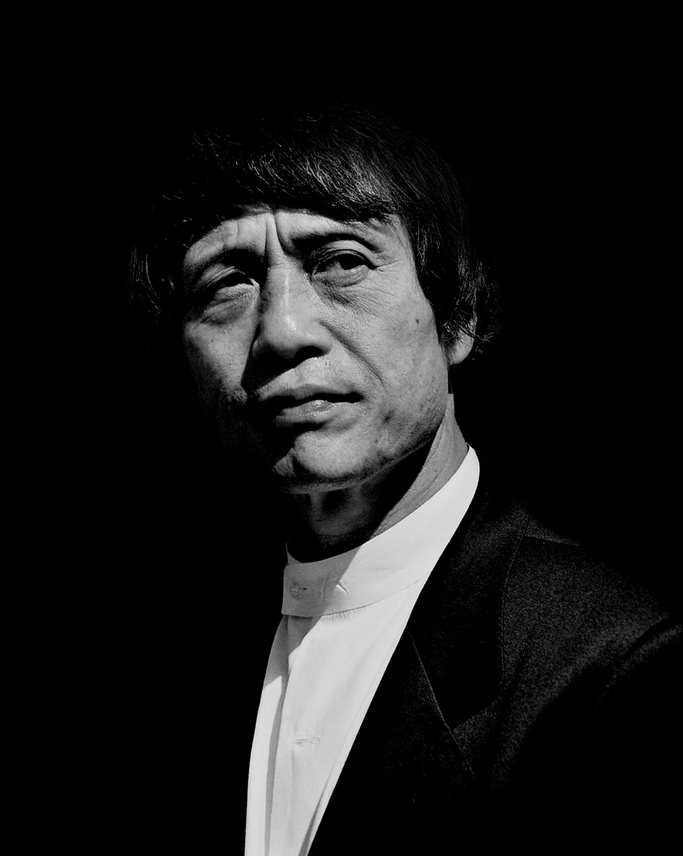
Eero Saarinen
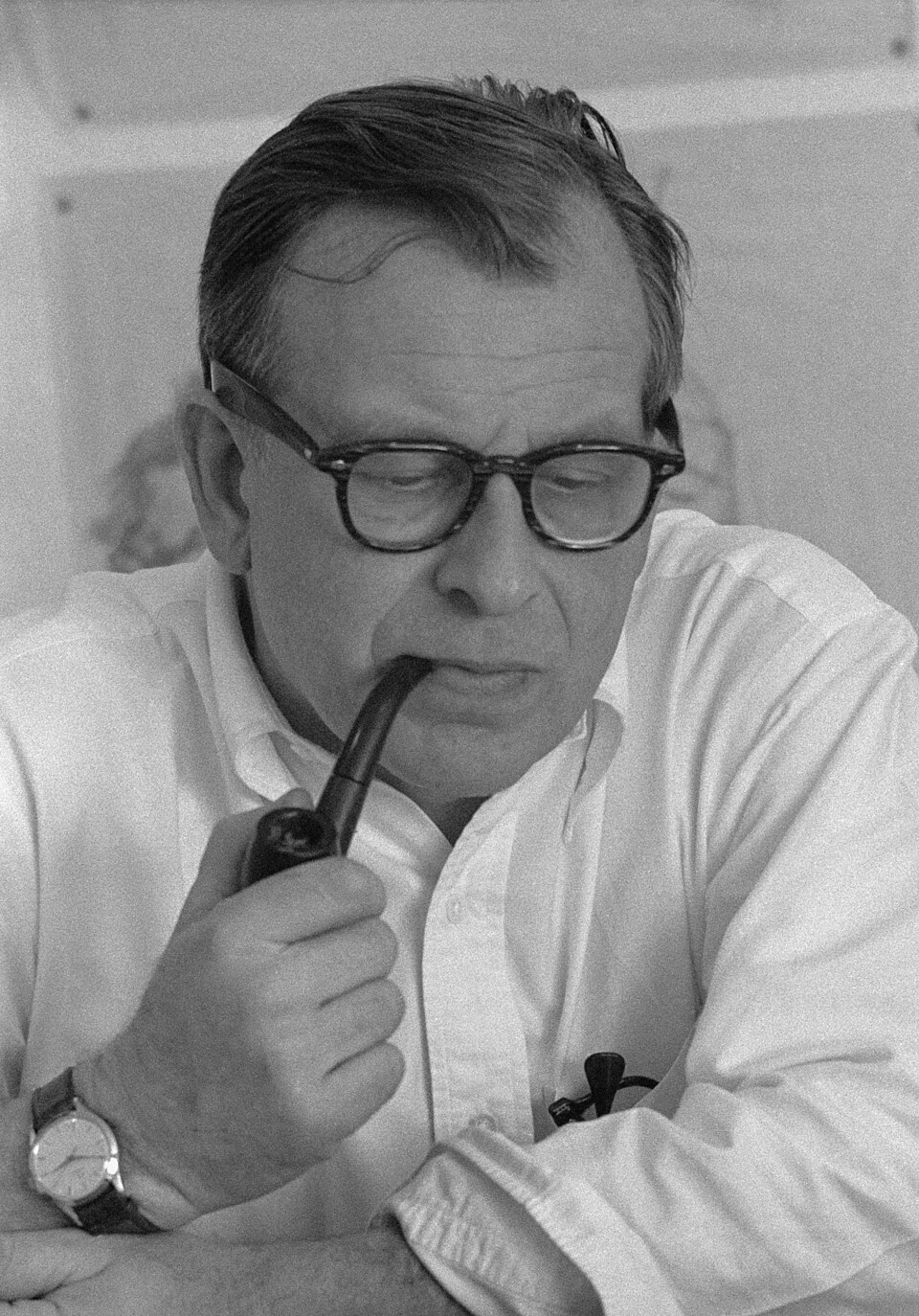
The Finnish-American architect who refused to repeat himself, designing the Gateway Arch, the TWA terminal, and Dulles Airport in the same decade — each from a wholly different formal premise.
Eero Saarinen never built the same building twice. Where other architects developed a signature style and refined it over a career, Saarinen began each project from the specific needs of the programme, the site, and the moment — producing a body of work so varied that critics struggled to categorise him, and so original that several of his buildings remain among the most photographed structures in America.
A Finnish education in America
Saarinen was born in Kirkkonummi, Finland, in 1910. His father Eliel, one of the most prominent architects in Finland, emigrated to the United States in 1923 after winning second prize in the Chicago Tribune Tower competition — a result that nonetheless launched a lucrative American career. Eero grew up in the architects' community at Cranbrook Academy of Art in Michigan, where his father taught.
He studied sculpture in Paris, then architecture at Yale, graduating in 1934. After a period of travel he joined his father's firm. Their collaboration on the General Motors Technical Center competition in 1945 — which they won — established Eero as a partner of equal standing.
The sculptural buildings
After his father's death in 1950, Eero ran the firm alone and entered the most productive decade of his life. The commissions were spectacular and the solutions were radical.
The Gateway Arch in St. Louis (designed 1947, completed 1965 after his death) — a 630-foot stainless steel catenary curve — is a pure structural sculpture, an arch with no building function but its own existence. The TWA Flight Center at Idlewild (now JFK) Airport, completed in 1962, was designed entirely in curved concrete, its two barrel-vaulted wings expressing flight without a single straight line. Dulles International Airport (1962) invented the concept of the mobile lounge to separate landside from airside, and its dramatic inward-leaning columns and sweeping cable-hung roof remain in use.
Each building must have its own reason for being.
Furniture and the organic line
Saarinen designed furniture throughout his career for Knoll Associates. The Womb Chair (1948) and the Tulip Chair (1956) — a pedestal chair with a single aluminium stem replacing the four conventional legs — were his most successful pieces. The Tulip in particular became an icon of mid-century modern design, aiming to clean up what Saarinen called "the slum of legs" beneath a table.
Legacy
Saarinen died of a brain tumour in September 1961, at fifty-one, while several of his major projects were still under construction. His partners completed them. He left no single recognisable style but a set of arguments: that architecture must be specific, that structure and expression are not separable, and that formal invention is a professional obligation.
The TWA terminal was designated a New York City landmark and reopened as the TWA Hotel in 2019. The Gateway Arch drew 2.7 million visitors in 2019. Dulles is still a major international airport.