Eileen Gray
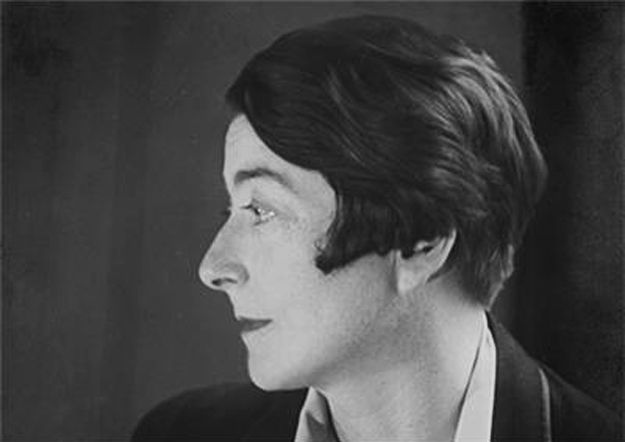
An Irish designer who mastered Japanese lacquerwork in Paris, built a landmark house on the Riviera, and spent decades in obscurity before the 20th century finally caught up to her work.
Eileen Gray moved to Paris at the turn of the century and spent the next seven decades making work that would not be fully understood until she was in her nineties. She learned lacquerwork from a Japanese craftsman, invented furniture that remains in production more than a century later, designed a house that is now listed among the great works of European modernism, and was consistently overlooked while contemporaries with noisier ambitions received the credit. Her reputation was secured only after decades of scholarly excavation and a 1972 exhibition that introduced her work to a generation who had never heard of her.
Formation
Gray was born in 1878 in Enniscorthy, County Wexford, into a privileged Anglo-Irish family. She studied at the Slade School of Fine Art in London, one of the few institutions then admitting women to serious fine art training. Around 1902 she moved to Paris, which would remain her primary base for the rest of her life. In Paris she encountered the Japanese craftsman Seizo Sugawara, from whom she learned the painstaking techniques of traditional lacquerwork — an art requiring multiple layers, extended drying times, and absolute precision. Her lacquer screens and panels were exhibited in the Salon des Artistes Décorateurs and attracted a clientele drawn to their severity and refinement.
Jean Désert and early furniture
In 1922 Gray opened a gallery in Paris called Jean Désert, through which she sold her own designs: lacquer panels, rugs she had designed, and increasingly, furniture. Her approach was not the ornamental luxury of Art Deco but something cooler — geometric, functional, attentive to how people actually inhabit a room. The Bibendum Chair of the 1920s, with its curved cushioned form, and the Dragon Chair, in lacquered wood and leather, exemplify the range: one soft and accommodating, the other precise and architectural. Neither was designed for display. Both were designed for use.
E-1027
Between 1926 and 1929, working with the architect and critic Jean Badovici, Gray designed and built a house at Roquebrune-Cap-Martin on the French Riviera. She named it E-1027 — a cipher: E for Eileen, 10 for J (the tenth letter) for Jean, 2 for B for Badovici, 7 for G for Gray. The house is a precise exercise in modernist planning: rooms open to the sea view, furniture built-in or purpose-designed for specific uses, circulation studied for freedom of movement. The E-1027 Adjustable Table, designed for the house, became one of the defining objects of 20th-century furniture — a circular top on a height-adjustable stem, intended for use in bed or beside a chair. That Le Corbusier later painted murals on the walls without Gray's permission, and claimed undue credit for the house, has been extensively documented.
Obscurity and rediscovery
Gray's reputation faded after the 1930s. She continued to design and to work, but exhibitions were few and her name rarely appeared in the accounts of modern design that were written in the 1940s and 1950s. In 1972, an exhibition at the Royal Institute of Architects of Ireland brought her work to renewed attention. A 1972 auction in Paris at which her furniture sold for high prices confirmed that collectors had recognised what critics had not. She was celebrated in the final years of her life and died in Paris on 31 October 1976, aged 98.
"A house is not a machine to live in. It is the shell of man, his extension, his release, his spiritual emanation."