Emily Brontë
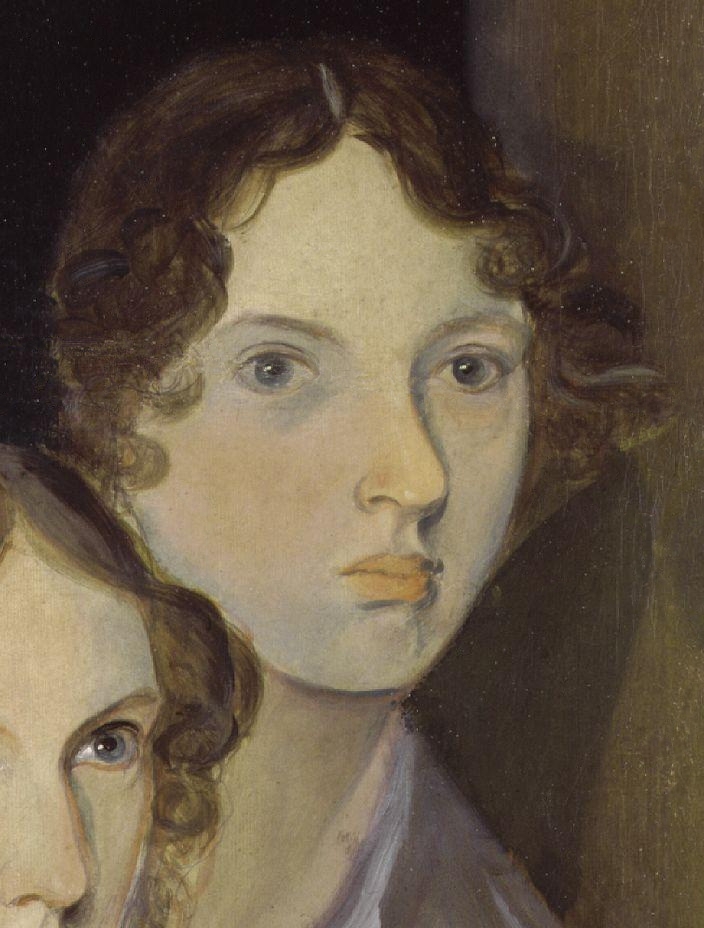
The Yorkshire novelist who published one book, wrote under a man's name, and produced what many consider the most forceful novel in English.
Emily Brontë published one novel and fewer than fifty poems under her own initiative. She died at thirty. The novel was Wuthering Heights, and the argument about what it means has not closed since 1847.
Haworth and solitude
Of the three Brontë sisters, Emily was the most permanently rooted in Haworth and the least able to exist elsewhere. Attempts to leave — a school at Roe Head, a position as teacher, a stay in Brussels with Charlotte — all ended in physical and psychological collapse. The moors were not romantic backdrop for Emily; they were structural necessity.1
She wrote prolifically in private. The Gondal saga, a shared mythology with her sister Anne, produced hundreds of poems. Most were not intended for publication. Charlotte discovered Emily's poems in 1845 and described the experience as a revelation of peculiar music, wild, melancholy, and elevating.
Wuthering Heights
The novel, published in December 1847 under the name Ellis Bell, operates by a system of narrative distance that was itself innovative — a narrator recounting a story told to him by a housekeeper, about events that occurred before either of them arrived. The effect is that Heathcliff and Catherine exist always slightly beyond reach, reported rather than directly witnessed.
Initial reviews were divided. The violence, the moral ambiguity, the absence of redemptive structure — these troubled Victorian critics accustomed to novels that concluded with virtue rewarded. Jane Eyre, published two months earlier by Currer Bell, was easier to place. Some reviewers suspected the same author.
I am Heathcliff — he's always, always in my mind — not as a pleasure, any more than I am always a pleasure to myself — but as my own being.
Death and posthumous reputation
Emily contracted tuberculosis, probably at Branwell Brontë's funeral in September 1848. She refused all medical attention. She died on 19 December 1848, aged thirty. She had been ill for three months and had not told anyone how ill.
Charlotte wrote a biographical note for the 1850 edition of Wuthering Heights that shaped interpretation of Emily for decades — framing her as a natural genius, untutored, barely conscious of what she had made. Later scholars questioned this portrait; the novel's structure is too deliberate for the myth of the untaught visionary to hold without qualification.
Footnotes
- Emily's bond with the Haworth moorland is a biographical constant. Her dog Keeper was said to have accompanied her body to the church; he lay outside the family pew and howled. ↩