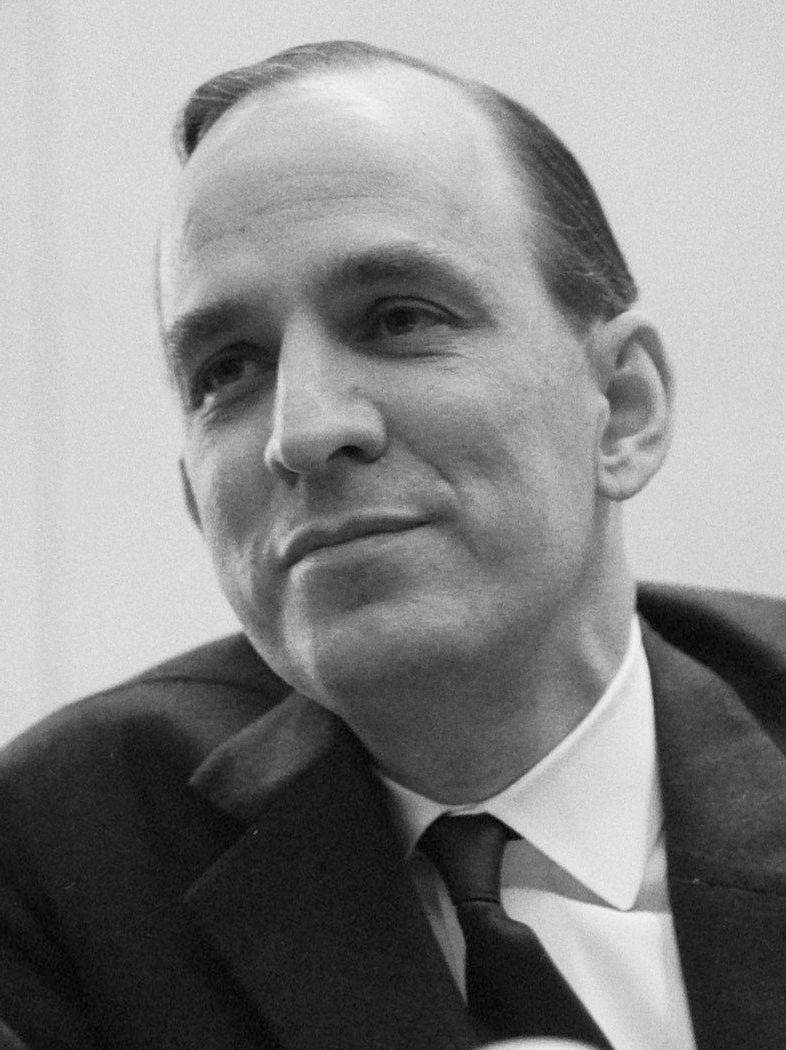
Francis Ford Coppola
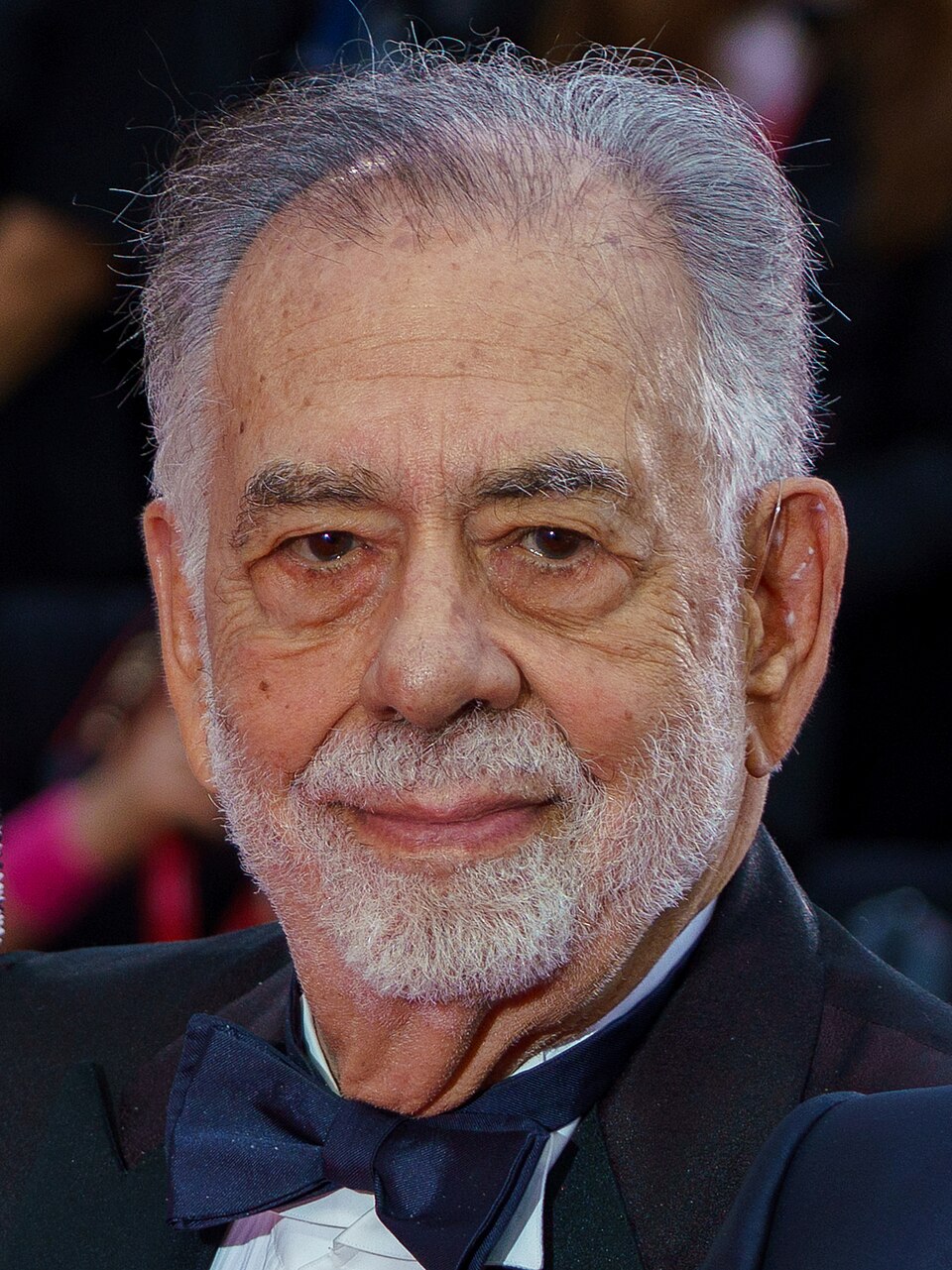
An American director whose 1970s films redefined the ambitions of studio cinema and whose later career became a decades-long argument for treating the medium as personal art rather than product.
Francis Ford Coppola stands among the leading figures of the movement later called New Hollywood, the generation of American directors who, from the late 1960s onward, brought personal authorship and formal ambition to the mainstream studio film. Across a career spanning more than six decades, he has won five Academy Awards, taken two Palmes d'Or at Cannes, and repeatedly staked his own resources on films that no studio would finance.
Formation and the New Hollywood
Coppola studied film at UCLA, part of a generation that emerged from university film programmes as much as from the studio system. He co-founded the production company American Zoetrope with George Lucas, conceived as an independent base for filmmakers working outside the traditional studio structure. He also publishes the literary magazine Zoetrope: All-Story, extending his interest in narrative beyond the screen. This combination — director, producer, and cultural patron — placed him at the centre of the New Hollywood generation, whose members treated the commercial feature film as a vehicle for personal vision.
The Godfather and the peak of the 1970s
The Godfather (1972) won the Academy Award for Best Picture and for Best Adapted Screenplay, the latter shared by Coppola with the novelist Mario Puzo. Two years later, The Godfather Part II (1974) again won Best Picture, with Coppola this time taking the awards for Best Director and, once more with Puzo, Best Adapted Screenplay. In the same year he released The Conversation (1974), a study of surveillance and paranoia that won the Palme d'Or at the Cannes Film Festival. The concentration of achievement in that single year — a Best Picture winner, a sweep of directing and writing honours, and a top prize at Cannes — is among the most concentrated runs of critical success in American cinema.
Apocalypse Now and the risks of scale
Apocalypse Now (1979), a loose adaptation of Joseph Conrad's Heart of Darkness set during the Vietnam War, gave Coppola his second Palme d'Or at Cannes. Its production became a byword for the perils of large-scale personal filmmaking. In total he has won five Academy Awards across his career, spanning writing, directing, and producing. Alongside these landmark projects he directed The Outsiders and Rumble Fish (both 1983), adaptations of S. E. Hinton novels, and Bram Stoker's Dracula (1992).
Later work and standing
In his later career Coppola has continued to pursue films on his own terms, most conspicuously with Megalopolis (2024), which he self-financed. His standing within the industry has been marked by two of its highest honours: the Irving G. Thalberg Memorial Award in 2010, given for consistent high quality in production, and the Kennedy Center Honors in 2024. His influence extends through his family as well — his daughter Sofia Coppola is a director, and his nephew Nicolas Cage an actor. Taken together, his body of work occupies a defining place in the transformation of American cinema in the second half of the twentieth century.
He was the New Hollywood director who most fully proved that a studio picture could carry the weight of personal art — and who spent much of the rest of his career defending that proposition on his own terms.