François Truffaut
The critic who became a filmmaker and made the act of growing up — and the act of making films — his permanent subject.
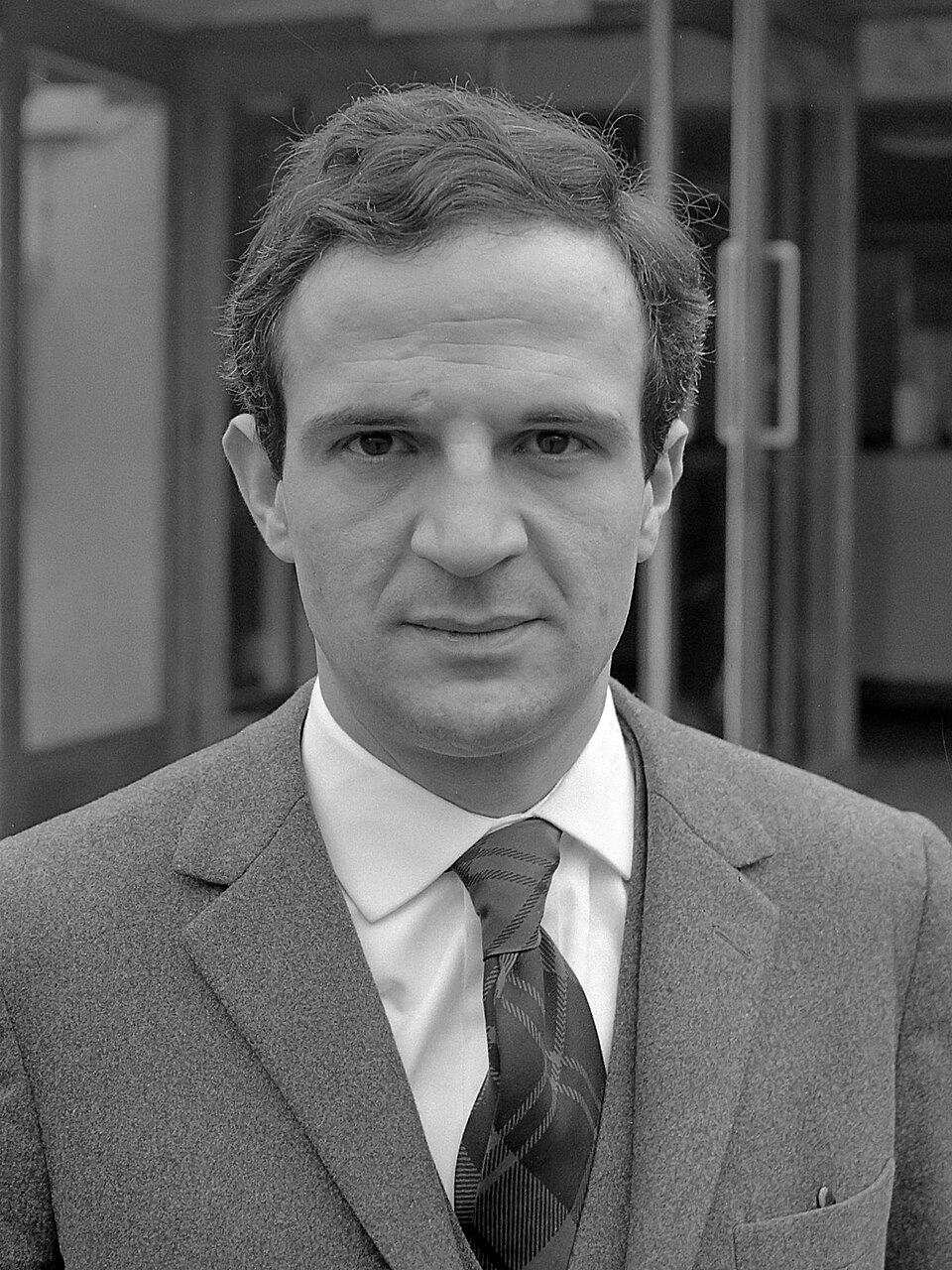
François Truffaut arrived in French cinema through its criticism. Writing for Cahiers du Cinéma under André Bazin, he developed and championed the auteur theory — the argument that the director is a film's primary author — before proving the idea with his own work. His debut feature, Les Quatre Cents Coups (1959), drew directly from his difficult childhood, launched the French New Wave internationally, and introduced the alter ego Antoine Doinel, who would recur across five films over two decades. Truffaut worked until his death at fifty-two, leaving a body of work spanning intimate autobiography, literary adaptation, and sustained love for the medium itself.
Criticism before cinema
Truffaut was an undisciplined student who left school early and was largely self-educated through the cinémathèques of Paris. André Bazin, the foundational theorist of postwar film criticism, took him under his care and secured him a position at Cahiers du Cinéma in 1953. Truffaut's criticism was polemical: his 1954 essay "A Certain Tendency of the French Cinema" attacked the established tradition of literary adaptation and argued for a cinema of personal vision. He was banned from the Cannes Film Festival in 1958 over his attacks on French film institutions — and returned the following year to win Best Director.
New Wave and the Doinel cycle
Les Quatre Cents Coups (1959) is semi-autobiographical: Antoine Doinel, played by Jean-Pierre Léaud, is a neglected Paris boy who drifts toward petty crime and reform school. The film's final freeze-frame became one of cinema's defining images. Truffaut returned to Doinel in Stolen Kisses (1968), Bed and Board (1970), and Love on the Run (1979), tracing the character through young adulthood, marriage, and middle age. The series is without close parallel in narrative cinema — a filmmaker using fiction to track, and revise, his own past.
Range and method
Truffaut resisted confinement to a single register. Jules et Jim (1962), based on Henri-Pierre Roché's novel, brought formal exuberance — freeze frames, voice-over, accelerated montage — to a story of a pre-war friendship destroyed by the same woman both men love. L'Enfant sauvage (1970), in which Truffaut himself played a doctor raising a feral child, was austere and methodical. Day for Night (La Nuit américaine, 1973), a comedy set during a film production in Nice, won the Academy Award for Best Foreign Language Film and remains the most affectionate portrayal of filmmaking ever made. He also acted in Steven Spielberg's Close Encounters of the Third Kind (1977).
Legacy
Truffaut's 1966 book of interviews with Alfred Hitchcock — conducted over eight days in Hollywood — remains a standard text in film studies and a model of critical conversation. His combination of theoretical conviction and practical warmth shaped how a generation of directors and critics understood the relationship between cinema and its makers. He died in Neuilly-sur-Seine on 21 October 1984, following treatment for a brain tumor.
"The film of tomorrow will resemble the person who made it."