Friedrich Schiller
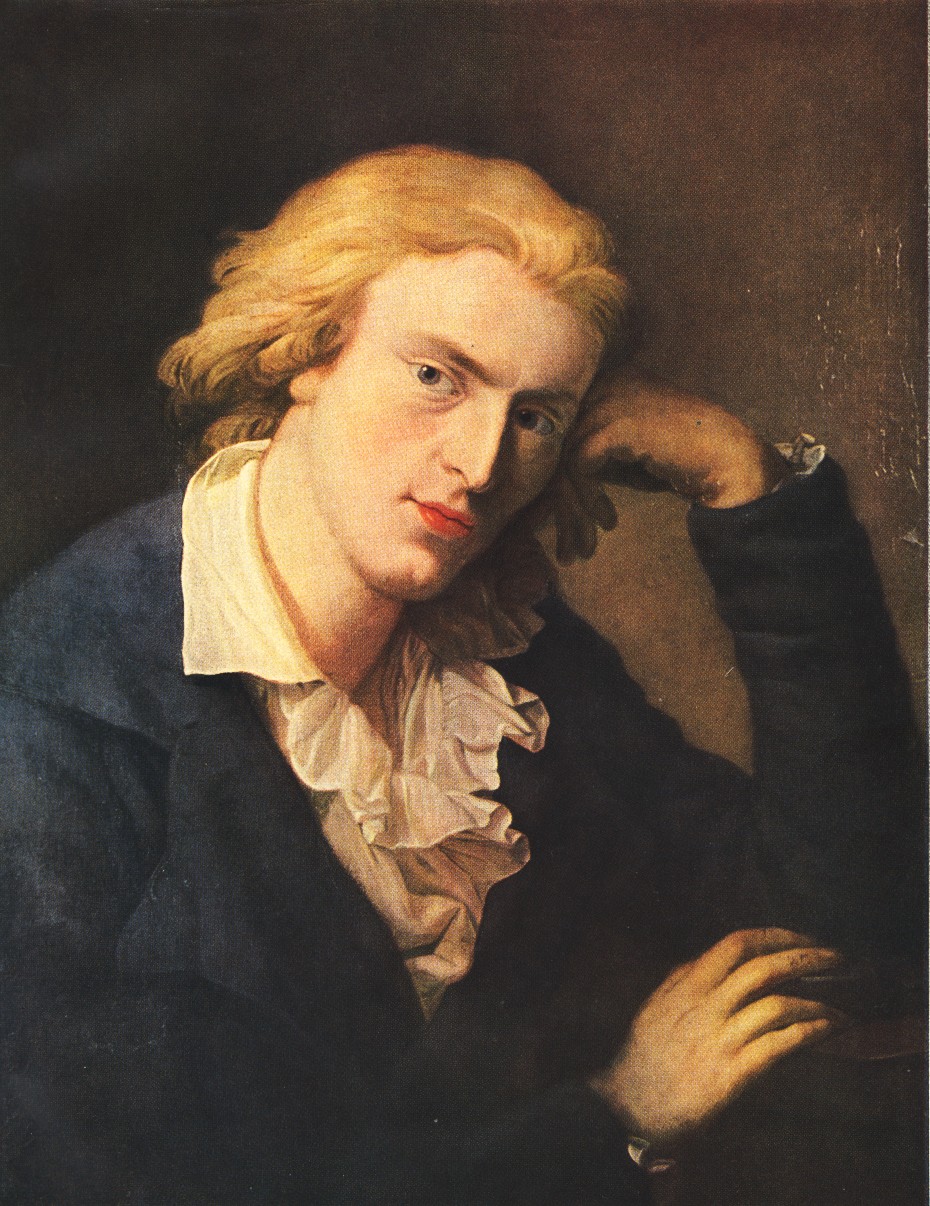
The playwright who married beauty to freedom and gave German classicism its moral fire.
Friedrich Schiller compressed an extraordinary creative life into forty-five years, producing dramas that set individual conscience against tyrannical power and poems that insisted freedom was not merely political but the condition of all genuine humanity.
Storm and beginning
Born in Marbach am Neckar in 1759, Schiller studied medicine at the Karlsschule in Stuttgart under strict ducal supervision. The institution's rigidity sharpened his opposition to authority. His debut play Die Räuber (The Robbers, 1781) erupted from that pressure: two brothers, outlawry, and a world where institutions corrupt rather than protect. Its premiere in Mannheim caused a sensation. Schiller attended without ducal permission and was subsequently forbidden to write further.
He fled Württemberg in 1782 and spent years moving between patrons, writing Kabale und Liebe (1784) and Don Carlos (1787) while working in poverty. He also turned to historiography — studies of the Dutch revolt and the Thirty Years' War — demonstrating that stage and archive served the same moral purpose.
Weimar and the classical turn
In 1794 Schiller began his celebrated correspondence with Goethe — the most productive literary partnership in the German tradition. Settling near Weimar and Jena, he moved from Sturm und Drang turbulence toward disciplined classicism. The Wallenstein trilogy (1798–1799) — a vast examination of a general who falls through his own ambition — marks the high point of his mature drama. Maria Stuart (1800) and Wilhelm Tell (1804) followed in quick succession.
Throughout this period Schiller also wrote aesthetic philosophy. His Letters on the Aesthetic Education of Man (1795) argued that beauty was the path to moral freedom — that art could reconcile the sensuous and rational drives that modern society had split apart.
Man only plays when he is fully human, and he is only fully human when he plays.
The lyric work
Schiller's poems range from philosophical odes to narrative ballads. "An die Freude" (Ode to Joy, 1785) — a hymn to universal brotherhood later set by Beethoven in the finale of his Ninth Symphony — is the most widely heard text he ever wrote. The ballads written in the late 1790s in friendly competition with Goethe gave German poetry a narrative muscularity it had not previously possessed.
Legacy
Schiller died in Weimar in 1805, exhausted by tuberculosis and years of overwork. His plays have remained in continuous performance in German-speaking theatres. Verdi's Luisa Miller and Donizetti's Maria Stuarda drew directly on his dramas; his aesthetic writings shaped Hegel and subsequent idealist philosophy. His insistence on human dignity as the ground of all political freedom has given his work a durability beyond its historical moment.