Gabriel García Márquez
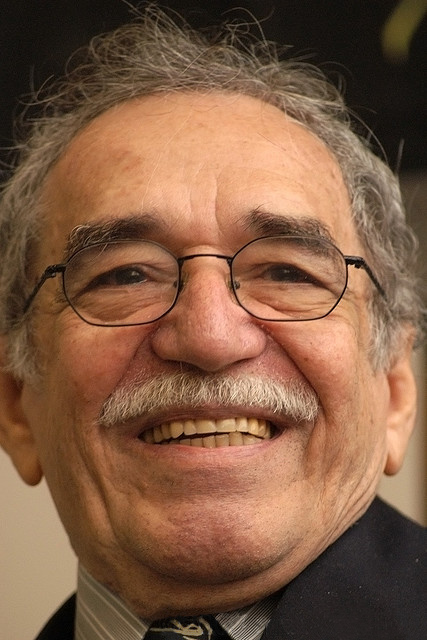
The Colombian novelist who fused Caribbean oral tradition with European modernism to produce a fiction of such authority that it permanently expanded what the novel could hold.
Gabriel García Márquez — known throughout Latin America as Gabo — wrote fiction in which the miraculous and the mundane share the same grammar. His novels transformed the international reception of Latin American literature and gave magical realism its most influential demonstration. When the Nobel Committee awarded him the Prize in Literature in 1982, they cited "a world of his own creation," one that had, by then, reshaped the novel in a dozen languages.
Aracataca and the Grammar of Stories
García Márquez was born in 1927 in Aracataca, a small town on Colombia's Caribbean coast, and spent his early years in the home of his maternal grandparents. His grandmother's manner of narrating supernatural events with complete matter-of-fact certainty — mixing legend, family history, and everyday life without apparent seam — is regularly cited by the author himself as the formative influence on his narrative voice.
He studied law at the Universidad Nacional de Colombia and later at the Universidad de Cartagena, leaving without completing his degree to pursue journalism. His early work as a reporter and critic for Colombian newspapers, and later as a foreign correspondent in Europe, gave him a political education and an eye for the telling detail. He spent time in Paris in the 1950s, where he read Faulkner and Hemingway carefully, and the influence of Faulkner in particular — the use of a mythologised geography, the weight of ancestral time — is audible throughout his mature work.
One Hundred Years of Solitude
In 1965, driving his family from Mexico City toward Acapulco, García Márquez turned the car around, went home, and began writing the novel that had suddenly arrived complete in his mind. He worked on it for eighteen months. When One Hundred Years of Solitude was published in Buenos Aires in 1967, it sold out its first edition in days. Within a year it had been translated into multiple languages; within a decade it had become one of the most widely read novels in the world.1
The book chronicles seven generations of the Buendía family in the fictional Colombian town of Macondo, from its founding through its apocalyptic end. Magical occurrences — levitation, clairvoyance, a rain of yellow flowers — are narrated in the same register as meals and wars and funerals. The effect is not fantasy but an argument: that this is how memory and myth actually function in a culture, and that the language of realism had been suppressing a dimension of human experience.
Journalism, Politics, and the Later Work
García Márquez never abandoned journalism, and he considered his reportorial writing a discipline equal to his fiction. The Story of a Shipwrecked Sailor (1970) and Chronicle of a Death Foretold (1981) — the latter formally structured as a criminal investigation — show the journalist's instinct for reconstruction and the novelist's ear for rhythm working together.
His friendship with Fidel Castro became one of the most discussed relationships between a writer and a political leader in the twentieth century. García Márquez defended his friendship while using his access on behalf of political prisoners and journalists; it was a position his critics found impossible to separate from complicity.
Love in the Time of Cholera (1985) — the story of a love that waits fifty years to be consummated — is his most widely read novel after One Hundred Years of Solitude. Where the earlier novel worked through the epic, this one worked through duration, patience, and the ordinary persistence of desire.
A person doesn't die when he should but when he can.
Footnotes
- García Márquez described the opening line of the novel — "Many years later, as he faced the firing squad, Colonel Aureliano Buendía was to remember that distant afternoon when his father took him to discover ice" — as the one that unlocked the entire book. The technique of anticipating future events in the past tense became a signature of the work. ↩