Geoffrey Chaucer
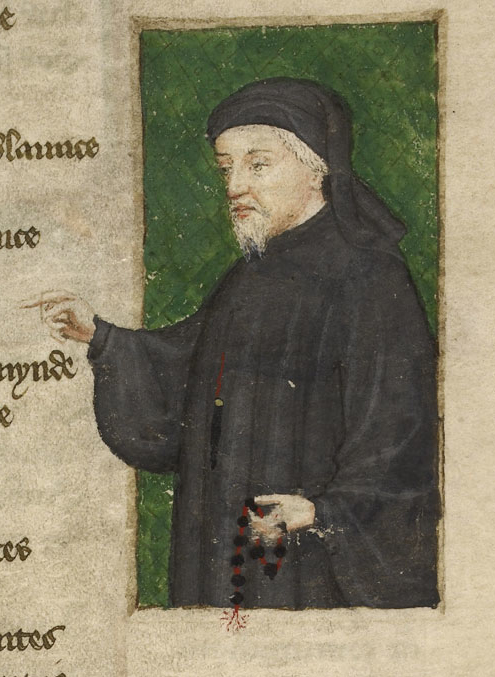
The first great English poet — a diplomat, customs official, and literary innovator who turned the vernacular of fourteenth-century London into the medium for a portrait of an entire society.
Geoffrey Chaucer wrote The Canterbury Tales, an unfinished collection of stories told by pilgrims travelling to Becket's shrine at Canterbury, and in doing so produced the first major work in the English literary tradition — a compendium of genres, social types, and human obsessions that established what English prose and poetry could do.
Life as official and poet
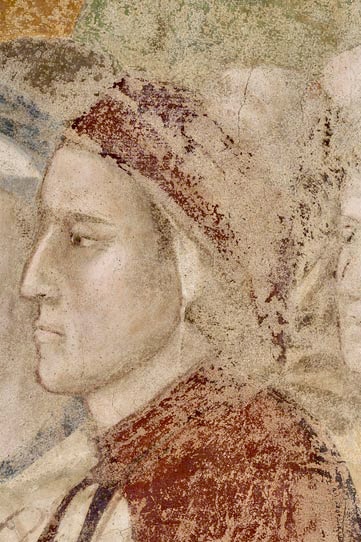
Chaucer was born around 1343 in London, the son of a wine merchant with connections at court. His career was primarily that of a royal servant and bureaucrat: he served in the Hundred Years War, was captured and ransomed, worked as a diplomat in Italy (where he encountered Boccaccio's Decameron and Dante's Commedia), and held positions as Controller of Customs and Clerk of the King's Works. Poetry was not his primary occupation but the activity that made him permanent.
His Italian travels were decisive. He absorbed the narrative scope and comic range of Boccaccio, the philosophical weight of Dante, and the formal sophistication of Petrarch, and brought these back to English with a difference: he was writing not in Latin or a prestige Romance language but in Middle English, the vernacular of his London contemporaries, which he handled with a precision and flexibility previously unprecedented in the language.
The Canterbury Tales
The Canterbury Tales, begun around 1387 and left unfinished at Chaucer's death, frames a collection of stories within the conceit of a pilgrimage: a group of pilgrims of varied social backgrounds travelling from London to Canterbury agree to tell stories to pass the time. The original plan — four stories per pilgrim, on the way there and back — was never completed; only 24 tales survive in varying states of finish.
The tales range across almost every genre available to medieval literature: chivalric romance (The Knight's Tale), fabliaux of bedroom comedy (The Miller's Tale, The Reeve's Tale), saint's life, Breton lay, sermon, beast fable. The frame provides more than convenience: the interaction between pilgrims, their responses to each other's tales, and the quarrels that break out between them constitute a social portrait of 14th-century England with no equivalent in medieval literature.
Whan that Aprill with his shoures soote / The droghte of March hath perced to the roote.
Language and innovation
Chaucer wrote in the East Midlands dialect of Middle English — essentially the dialect of London and the royal court — and his authority helped establish it as the prestige form of the language. His technical command of metre, his ability to render different social registers with precision, and his deployment of irony and moral complexity gave English writing its first model of the narrator who is unreliable, complicit, and more knowing than he admits.
He was also the first writer buried in what became Poets' Corner in Westminster Abbey — a burial that retrospectively organised the English literary tradition around him.
Legacy
Chaucer's influence on English literature is foundational: Shakespeare read him; Spenser called him "the well of English undefyled"; every subsequent writer in the language has written in the tradition he established. The Canterbury Tales' combination of social observation, genre variety, and moral ambiguity — its refusal to resolve the contradictions it dramatises — is a template for the novel as much as for poetry.