Georges Méliès
The magician who became cinema's first fantasist — inventing the language of special effects before anyone knew there was a language to invent.
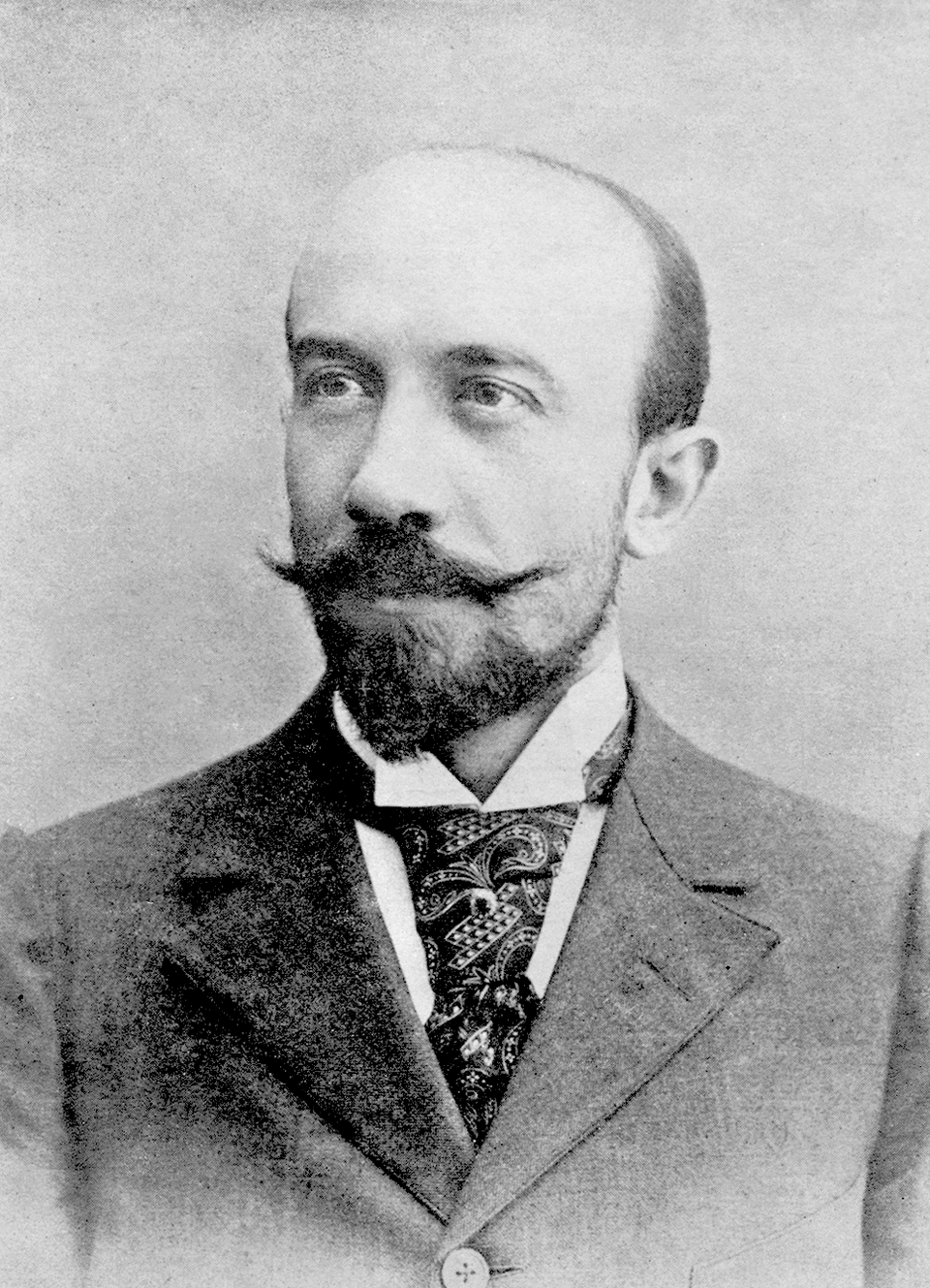
Georges Méliès was the first filmmaker to grasp that cinema was not just a recording device but a tool for fabrication — for making visible what could not exist. Working as a stage magician who had seen the Lumière brothers' first public film screening in 1895 and immediately understood what he wanted to do with the technology, he produced more than five hundred films, pioneered the special effects vocabulary that all cinema subsequently inherited, and then was bankrupted, forgotten, and rediscovered selling toys at a railway station kiosk.
Magician into filmmaker
Méliès was born in Paris in 1861 to a wealthy shoe manufacturer. He trained in London as a stage magician and on returning to Paris purchased the Théâtre Robert-Houdin, a celebrated conjuring theatre, which he ran and performed in from 1888. When the Lumières presented their first Cinématographe screening at the Grand Café in December 1895, Méliès was in the audience. He attempted to buy the technology; rebuffed, he obtained an Edison Kinetoscope through a British intermediary and began adapting it for projection.
His first films, from 1896, were simple actualities in the Lumière manner. The discovery that would define his career was reportedly accidental: a camera jam while filming Paris street traffic caused a bus to appear to transform into a hearse when the film was developed. Whether the story is precisely true or embellished, the principle it captures is real — the substitution splice, stopping and restarting the camera with objects repositioned, became his central technique.
The Star Film Company and trick films
Méliès built a purpose-designed glass-roofed studio at Montreuil, east of Paris, in 1897 — one of the world's first film studios. Under his Star Film Company banner he produced trick films, fantasy films, féeries, and recreations of current events at an extraordinary rate. Many films from this period survive only in fragments or not at all; the catalogue suggests something like five hundred titles between 1896 and 1913.
The techniques he systematised include substitution splices, multiple exposures (filming the same strip of film twice), dissolves, fade-outs, split screens, hand-painted colour applied frame by frame, and time-lapse. He was also among the first filmmakers to use storyboards, planning complex sequences in advance on paper before shooting.
Cinema is the art of making dreams visible.
A Trip to the Moon and The Impossible Voyage
A Trip to the Moon (1902), fourteen minutes long and drawn loosely from Jules Verne and H. G. Wells, is his most famous film and the best-known work of early cinema. A rocket fired from a cannon lands in the eye of the moon — a shot so immediately recognisable it has become a cultural shorthand for cinema's origins. The film was hand-tinted in colour for one distribution print, a version lost for decades and eventually restored from a surviving copy in the 2000s.
The Impossible Voyage (1904) followed — longer, more elaborate, and demonstrating an increasing ambition in staging and narrative complexity.
Ruin and rediscovery
The First World War destroyed his commercial position. He could not compete with American film companies with their larger production budgets and distribution networks. By 1915 he had stopped filmmaking; by 1923 he was bankrupt and had been forced to burn much of his studio and film archive. He was found in the 1930s selling candy and toys at the Gare Montparnasse by the journalist Madeleine Malthête-Méliès, his granddaughter. A public benefit and a residence in a château for retired artists followed. He was honoured by the French film industry before his death in Paris in 1938.