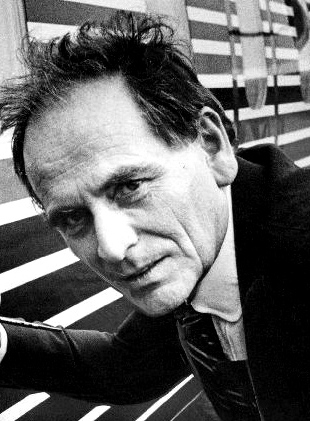
Gianni Versace
The Calabrian designer who made opulence a system — baroque pattern, Medusa mythology, and an unwavering belief that fashion should detonate.
Gianni Versace built an Italian fashion empire on a single conviction: that luxury should be loud. His designs — Byzantine prints, gold chain hardware, body-conscious cuts — rejected the quiet authority of Milanese minimalism and created a new grammar of visible wealth that defined the celebrity culture of the 1980s and 1990s.
Reggio Calabria to Milan
Versace was born in 1946 in Reggio di Calabria, at the toe of the Italian boot, a city whose ancient Greek ruins and vivid southern light stayed with him. His mother ran a dressmaking atelier; he grew up between fabric samples and client fittings. He moved to Milan in 1972 to work for the fashion industry and began designing for several houses before launching his own label in 1978. The Gianni Versace label debuted that year with a women's collection shown in Milan.
The house
Versace built his aesthetic around classical sources reinterpreted through excess: Greco-Roman mosaic motifs, the Medusa head as brand symbol, and a palette that favoured jewel tones and gold. He was equally interested in new materials — he pioneered the use of metal mesh (Oroton) in fashion, creating liquid, chain-mail-like garments that moved with the body. His tailoring for men drew on Italian suiting traditions but broke them open: unbuttoned to the sternum, cut close, in materials that shimmered.
He cultivated a social circle that extended from Princess Diana and Elizabeth Taylor to Elton John and Naomi Campbell, and he was among the first designers to understand that dressing celebrities was its own form of runway show, played out in newspaper photographs.
Don't be into trends. Don't make fashion own you, but you decide what you are, what you want to express by the way you dress and the way to live.
Costume and theatre
Beyond the runway, Versace designed costumes for ballet and opera throughout his career. His work for La Scala and collaborations with choreographers gave him a platform for the theatrical scale he loved — and reinforced the link between fashion and performance that his retail work embodied.
Legacy
Versace was shot dead outside his Miami Beach mansion on 15 July 1997. He was fifty. His sister Donatella, already the house's vice president and creative director for younger lines, assumed leadership and has continued the brand. The Versace aesthetic — logo-intensive, body-forward, unapologetically luxurious — had an enormous influence on the late-1990s fashion mainstream and on the streetwear and luxury crossover that followed in the 2000s and 2010s. The house was acquired by Capri Holdings in 2018.