Greta Gerwig
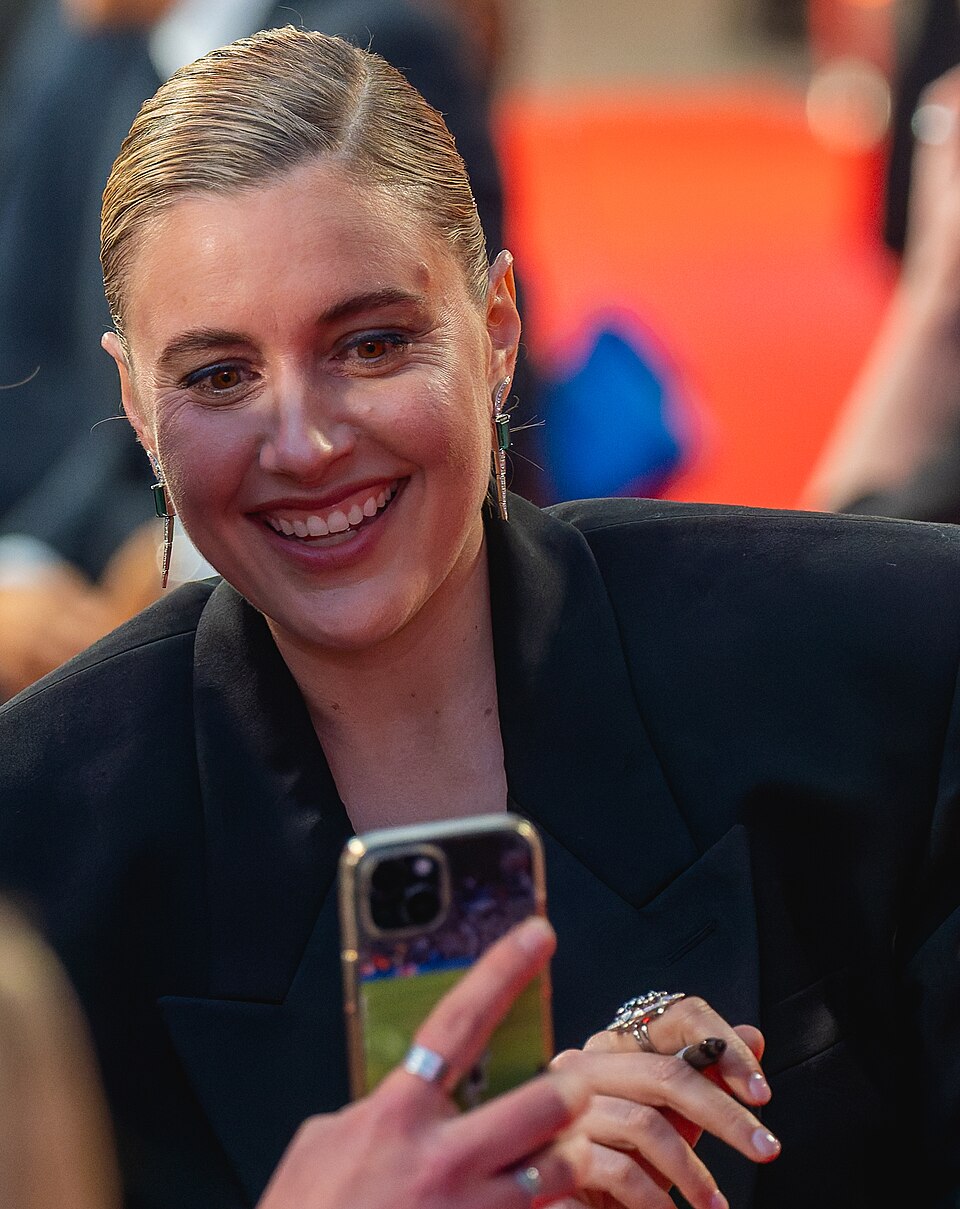
The American filmmaker who moved from mumblecore margins to major studio releases while keeping her eye on the specific, unguarded truth of how women inhabit their own lives.
Greta Gerwig arrived in American cinema through the deliberately low-fi mumblecore movement, where actors improvised and budgets barely existed, and translated that training in naturalism into a directorial voice sharp enough to handle both intimate coming-of-age drama and one of the highest-grossing films ever made.
Origins and Early Work
Gerwig studied philosophy and English at Barnard College, intending to become a playwright. She fell into acting through the mumblecore circuit — a loose network of micro-budget filmmakers working in the mid-2000s who favoured overlapping dialogue, non-professional performance styles, and the texture of actual life over genre convention. Films like Hannah Takes the Stairs (2007) and Nights and Weekends (2008) made her an identifiable figure within independent cinema.
Her collaboration with writer-director Noah Baumbach proved a turning point. She co-wrote and appeared in Frances Ha (2012), a black-and-white portrait of a young woman navigating friendship, failure, and ambition in New York. The film's tone — generous, observant, shot through with earned melancholy — anticipated the concerns of her directorial work.
The Directorial Turn
Lady Bird (2017) was Gerwig's solo directorial debut. Semi-autobiographical, set in Sacramento in 2002, the film follows a teenager negotiating the distance between who she is and who she wants to be, between her mother and herself, between small-city life and the idea of a larger world. It was received as one of the finest American films of its year, earning Academy Award nominations for Best Picture and Best Director — the latter making Gerwig only the fifth woman nominated in that category at the time.1
Little Women (2019) demonstrated her range: adapting Louisa May Alcott's novel for the fourth time in Hollywood's history, she structured the narrative non-chronologically, interweaving past and present in a way that emphasised the characters' retrospective understanding of their own choices.
Method and Style
Gerwig has spoken of her interest in what she calls the specific detail that cannot be invented — the precise way a character moves through a room, the exact phrasing a person uses when they are not quite saying what they mean. Her direction of actors prioritises discovery over pre-determined performance, a habit formed in the improvised spaces of mumblecore.
Her visual sensibility is warm but unsentimentalised: she does not protect her characters from embarrassment or failure, but she consistently extends them understanding. Colour, costume, and production design in her films function as emotional shorthand rather than decoration.
Legacy
Barbie (2023), co-written with Baumbach and produced by Warner Bros., became one of the highest-grossing films ever released, demonstrating that Gerwig's sensibility — which had previously found its home in the art-house circuit — could operate at global scale without dilution. The film's concurrent success with mass audiences and serious critical discussion was an unusual achievement.
The specific is always more universal than the general.
Footnotes
- The five women nominated for Best Director before 2018 were Lina Wertmüller, Jane Campion, Sofia Coppola, Kathryn Bigelow (who won for The Hurt Locker), and Gerwig. ↩