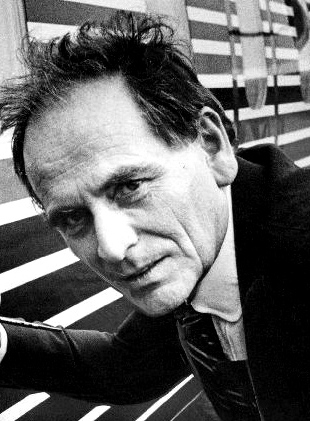
Halston
The American designer who distilled the 1970s into cashmere and jersey — minimalist, body-conscious, and inseparable from the decade's idea of effortless glamour.
Halston stripped American fashion down to its essentials — a bias cut, a single seam, a length of ultrasuede — and made the result feel like a statement rather than an omission. In the 1970s he was the closest thing the United States had to a fashion auteur, and his partnership with New York's social scene turned his clothes into the uniform of a particular idea of liberation.
From hats to ready-to-wear
Roy Halston Frowick was born in Des Moines, Iowa, in 1932. He studied at the Art Institute of Chicago and moved to New York, where he established himself as a milliner — a hat designer — at Bergdorf Goodman. His pillbox hat for Jacqueline Kennedy at the 1961 inauguration gave him his first moment of wide visibility. Through the 1960s he moved from millinery toward fashion, launching his ready-to-wear label in 1968.
The 1970s
The decade was entirely his. Working in jersey, ultrasuede, chiffon, and cashmere, Halston produced clothes that used the body as their structure — no boning, minimal tailoring, shapes that depended on the wearer rather than imposing a silhouette from outside. The aesthetic was simultaneously easy and precise. A Halston dress might be a single piece of fabric cut on the bias; it would still hang with an authority that was the result of obsessive attention to proportion.
He dressed Liza Minnelli, Bianca Jagger, and a rotating cast of New York celebrities, and his presence at Studio 54 — then the city's most visible social arena — made fashion visible in a way it had not been before. He collaborated with the cosmetics company Revlon in 1973 on a perfume bearing his name, and the Halston brand extended into accessories and home goods.
You're only as good as the people you dress.
Decline and loss of control
In 1973 Halston sold his brand to Norton Simon Industries, retaining creative control. In 1983 he signed a licensing deal with JCPenney to produce a budget line — a decision that led Bergdorf Goodman to drop his mainline collection, on the grounds that his name now implied mass-market goods. He lost creative control of the brand in 1984. The episode became a cautionary tale in the fashion industry about the risks of over-licensing.
He died in 1990 in San Francisco from AIDS-related complications, aged fifty-seven.
Legacy
Halston's influence on American sportswear and minimalist fashion is substantial. His emphasis on fabric behaviour rather than structural construction anticipated the direction taken by designers including Donna Karan and later Calvin Klein in the 1980s and 1990s. The Halston name has been revived by successive owners; the original body of work from 1968–1984 remains the reference point.