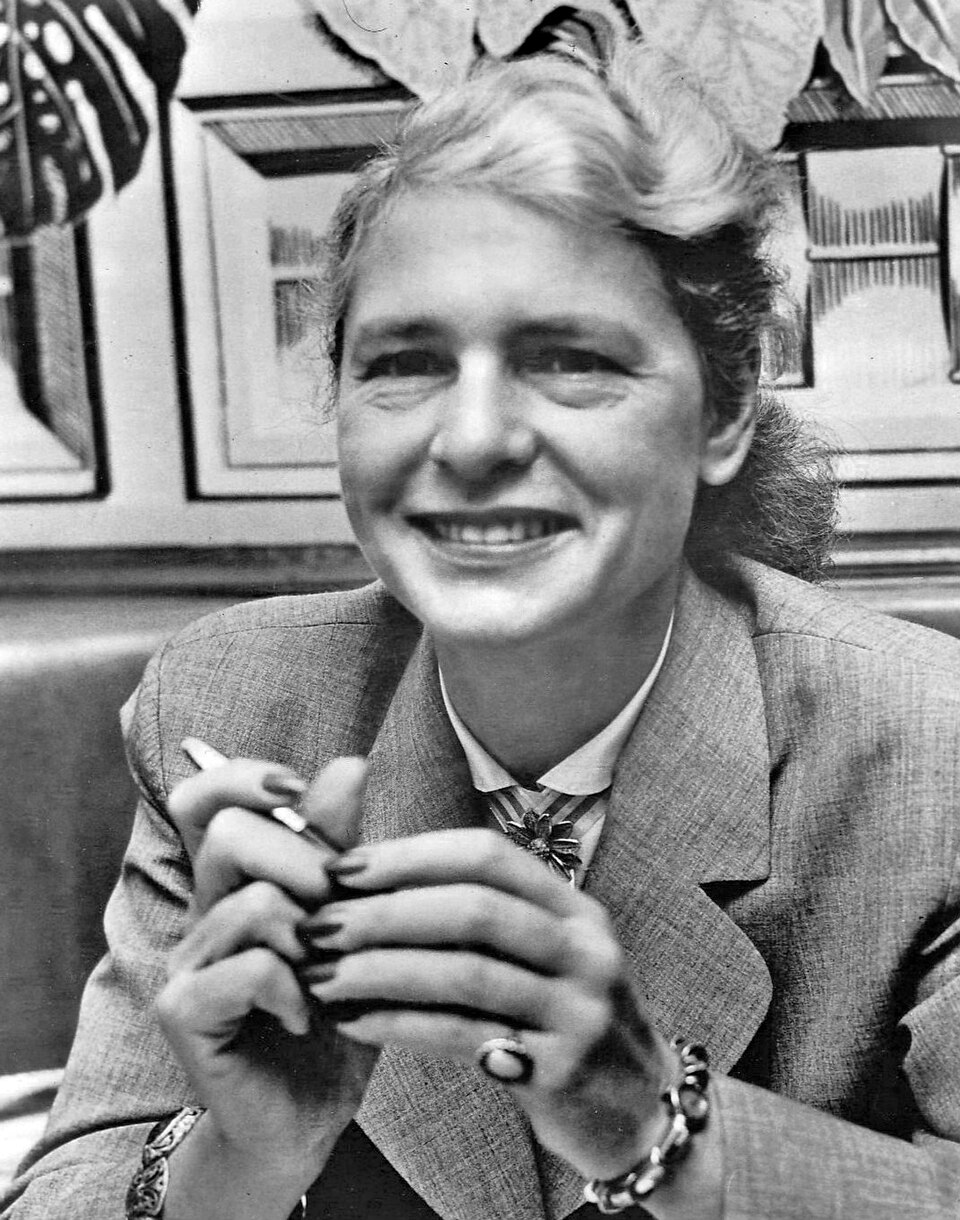
Henri Cartier-Bresson
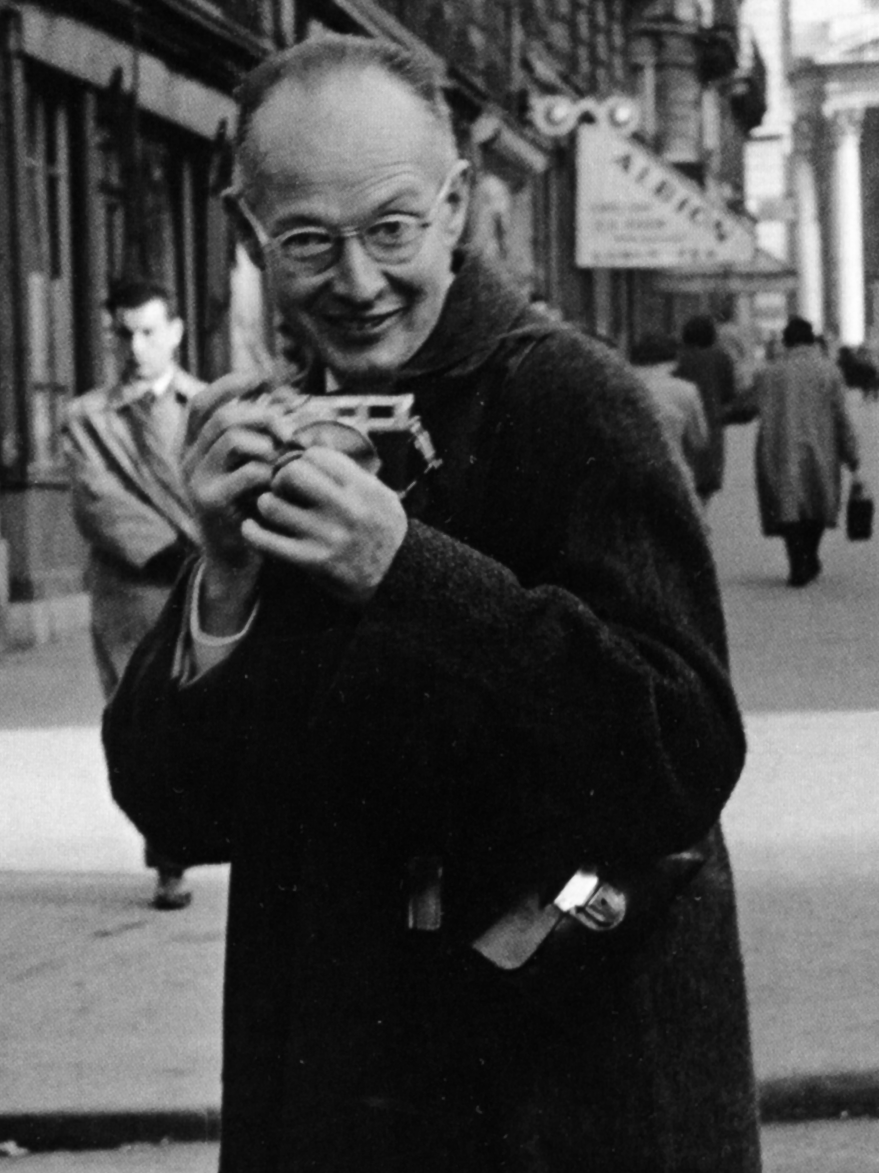
The French photographer who turned the fleeting instant into a moral and aesthetic category, making the street a theatre of human truth.
Henri Cartier-Bresson spent six decades with a small Leica pressed to his eye, distilling the chaos of modern life into images of uncanny stillness. He called the instant of perfect composition the "decisive moment" — and that phrase became the central term of twentieth-century photography.
Origins and artistic formation
Cartier-Bresson grew up in a prosperous bourgeois family outside Paris and trained as a painter under the Cubist artist André Lhote. Surrealism absorbed him next; he absorbed its hunger for the irrational event caught in broad daylight. A Leica III and a trip to Africa in 1931 redirected everything. The 35mm camera, small enough to disappear into a coat pocket, allowed him to move unseen through crowds and corridors — a prerequisite for the candid approach he was developing. By 1932 he had the photograph of a man leaping over a puddle behind the Gare Saint-Lazare, a study in geometry and chance that would become one of the most reproduced images of the century.
The decisive moment
His 1952 book Images à la Sauvette — published in English as The Decisive Moment — codified his method. The title phrase came from a passage by Cardinal de Retz: "There is nothing in this world that does not have a decisive moment." For Cartier-Bresson it named the simultaneous alignment of form and content, the split-second in which geometry and human gesture coincide. He shot in black and white exclusively, refused to crop, and famously taped over his camera's red logo to avoid drawing attention. The resulting photographs — of Spain under Franco, of Gandhi's funeral, of the liberation of Paris — read as pure fact while achieving near-painterly composition.1
Method and visual discipline
| Principle | Practice |
|---|---|
| No cropping | Composition fixed at the moment of exposure |
| Available light only | No flash, no studio setup |
| Black and white | Colour deemed distracting |
| Anonymity | Camera body taped, approach unannounced |
In 1947 he co-founded Magnum Photos alongside Robert Capa, David Seymour, and George Rodger — an agency structured as a photographers' cooperative that gave members ownership of their negatives and editorial independence. Magnum's model shaped documentary photography globally.
Legacy
His influence extends across every branch of photography that values proximity to unposed life. Photographers from Garry Winogrand to Martin Parr acknowledge the debt. The Centre Pompidou and the Bibliothèque nationale de France hold major bodies of his work, and the Fondation Henri Cartier-Bresson in Paris, established in 2003, continues to exhibit his archive alongside other photographers he admired.
To me, photography is the simultaneous recognition, in a fraction of a second, of the significance of an event as well as of a precise organization of forms which give that event its proper expression.
Footnotes
- He later returned to painting and drawing, largely abandoning photography after 1975, treating the camera as one tool among many for a visual artist. ↩