Hirokazu Kore-eda
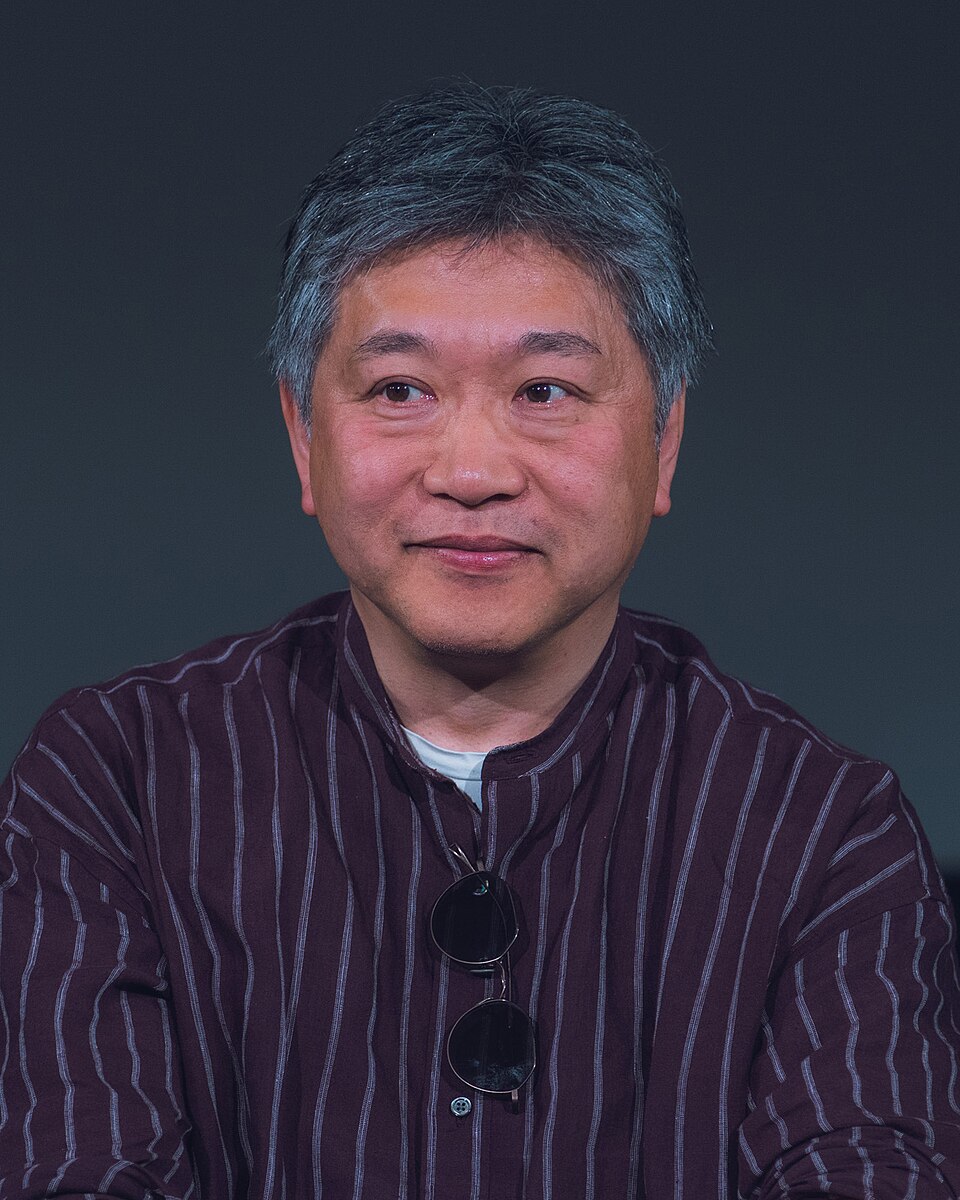
The Japanese filmmaker who finds irreducible complexity in ordinary family life, building films of quiet moral gravity from the smallest domestic details.
Hirokazu Kore-eda makes films about families — about the silences between parents and children, the love that fails to speak, the bonds that form outside biological connection. Working from documentary habits honed in television, he brings an observer's patience and a novelist's understanding of character to fiction films of rare emotional precision.
Early career in documentary
Kore-eda was born in Tokyo in 1962 and began his career as a television documentary filmmaker for Fuji Television in the 1980s and early 1990s. This documentary formation — working with non-professional subjects, attending to mundane rhythms, building portraits through accumulation rather than incident — is legible throughout his fictional work. He directed social-issue documentaries on subjects including welfare reform and homelessness before making his first fiction feature.
Maborosi (1995), his fiction debut, was a spare, elliptical account of a young widow trying to understand her husband's unexplained suicide. Its visual restraint — long static takes, natural light, careful attention to domestic space — established the template for everything that followed.
Nobody Knows and the family films
Nobody Knows (2004), based on a real 1988 case in which a Tokyo mother abandoned four children in an apartment, brought Kore-eda to international attention. Using the children as his primary characters and maintaining a restrained, observational distance from their slow-motion crisis, he produced a film of devastating cumulative power. Yūya Yagira, who played the eldest child, became the youngest winner of the Best Actor award at Cannes.
Still Walking (2008), Like Father, Like Son (2013), and subsequent films refined his approach to family narrative. Like Father, Like Son, in which two families discover their sons were switched at birth, won the Jury Prize at the 66th Cannes Film Festival. The film's concern — what makes a father, biological inheritance or daily presence? — is characteristic of his moral seriousness.
I want to make films that take the time that life takes.
Shoplifters and international recognition
Shoplifters (2018) won the Palme d'Or at Cannes, the highest prize in world cinema. The film depicts a family of shoplifters — or rather a group of people who have constituted themselves as a family outside any legal or biological bond — living in careful poverty in contemporary Tokyo. Its final act, which does not resolve but opens into ambiguity, demonstrated Kore-eda's commitment to moral complexity over narrative satisfaction.
He subsequently worked internationally: The Truth (2019) was shot in France with Catherine Deneuve and Juliette Binoche; Broker (2022) was shot in South Korea. Both extended his interest in improvised and chosen family forms.
Legacy
Kore-eda is the preeminent Japanese filmmaker of his generation. His films have made the Cannes competition a near-annual presence, and the Palme d'Or for Shoplifters confirmed an international standing that his decade of earlier work had built steadily. His influence on younger Asian filmmakers — particularly his method of working with children and non-professional actors — is increasingly documented.