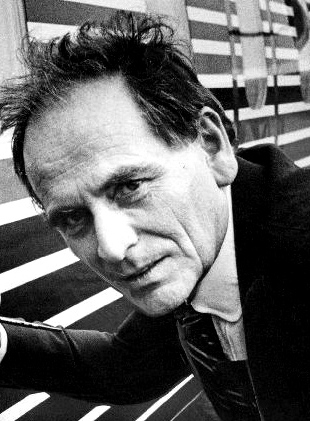
Hubert de Givenchy
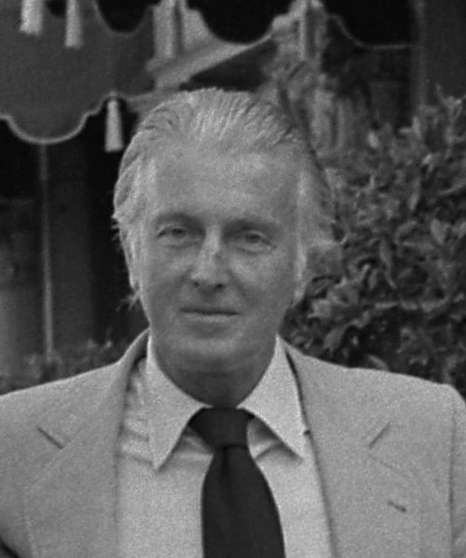
The French couturier who built one of postwar fashion's great alliances — with Audrey Hepburn — and in doing so defined a new register of elegance: streamlined, youthful, and emotionally precise.
Hubert de Givenchy opened his couture house at twenty-four with a radical proposition — separates rather than full ensembles, simple lines in fine fabrics — and then spent four decades proving that restraint, applied with absolute confidence, is the most demanding form of luxury.
Early training in Paris
Givenchy was born in Beauvais in 1927 into a family with artistic interests — his grandfather had designed Beauvais tapestries. He moved to Paris as a teenager and trained with a sequence of the city's leading couturiers: Jacques Fath, Robert Piguet, Lucien Lelong, and Elsa Schiaparelli, whose sense of the theatrical he absorbed while quietly forming his own contrary instincts toward simplicity.
In 1952, aged twenty-four, he opened his own house on the rue Alfred de Vigny. He could not afford full ensembles in luxury fabric, so he showed coordinated separates — blouses and skirts that could be mixed — in high-quality shirting fabrics, a pragmatic constraint that produced an aesthetic statement: versatile, modern, and democratic in spirit if not in price.
The Hepburn alliance
The collaboration with Audrey Hepburn began in 1953 when she arrived at his atelier while preparing for Sabrina. The partnership lasted the rest of their lives. Givenchy designed the clothing for many of her films — including the black Breakfast at Tiffany's dress (1961), which became perhaps the most referenced garment in twentieth-century film — as well as her personal wardrobe for decades.
The alliance was more than a commercial arrangement. Hepburn embodied what Givenchy was trying to say: that a woman's presence could be enhanced rather than overwhelmed by her clothes, that elegance came from confidence and proportion rather than opulence. The influence flowed both ways — Hepburn's silhouette shaped Givenchy's vocabulary as much as his cuts shaped hers.
Elegance is not about being noticed, it is about being remembered.
The house's vocabulary
Givenchy's design language was defined by a few persistent principles: structured simplicity, precise cut, monochromatic or restrained palettes, and a preference for the wearer's identity over the garment's. He pioneered the "sack dress" silhouette in 1957, cutting away from the body rather than conforming to it — a significant departure from the waist-emphasising New Look that had dominated the previous decade.
He also designed for Jacqueline Kennedy, including clothing worn during the Kennedy administration, and his 1970 induction into the International Best Dressed List Hall of Fame acknowledged the enduring consistency of his aesthetic vision.
Givenchy retired in 1995, handing the house to a succession of designers — John Galliano, Alexander McQueen, Julien Macdonald, and Riccardo Tisci — who each reinterpreted its heritage in their own terms.