Issey Miyake
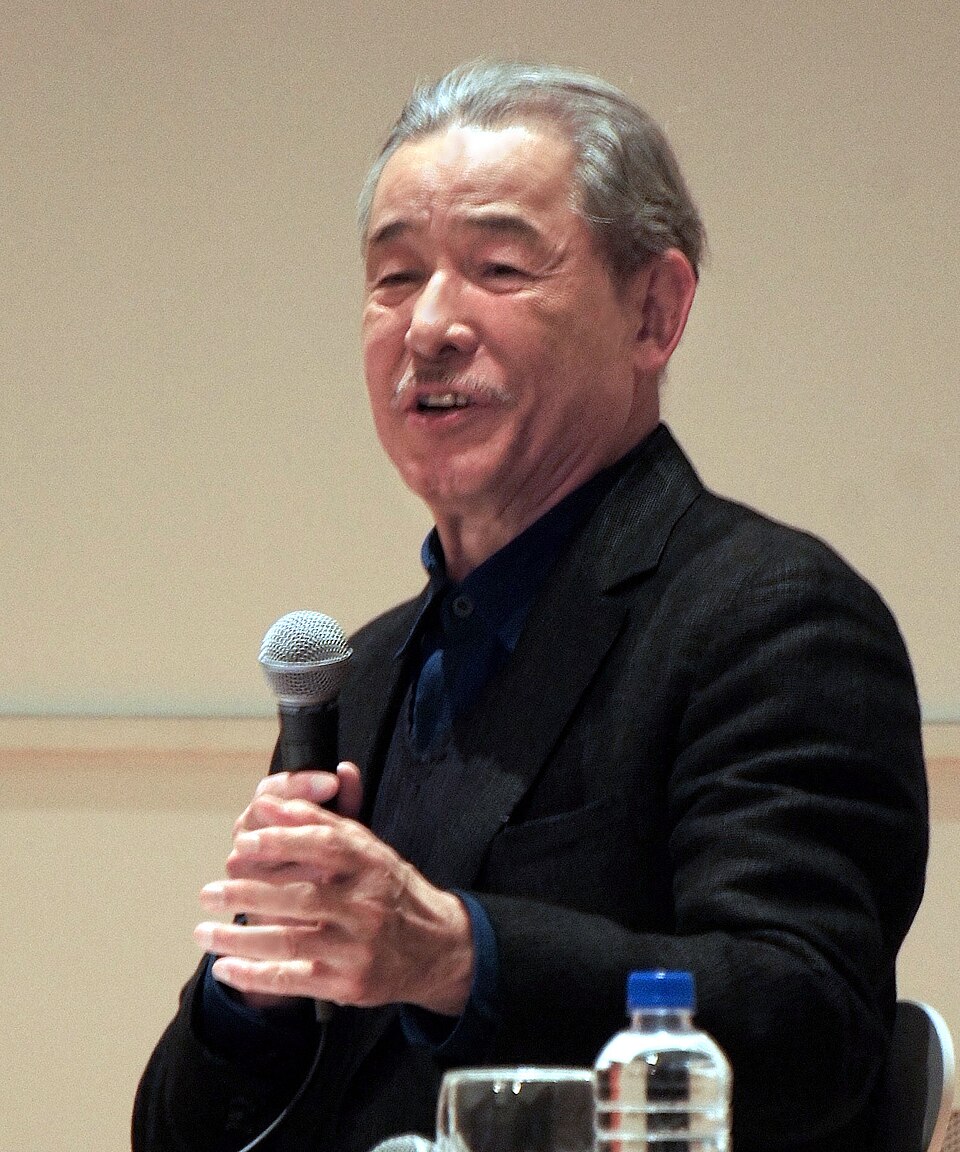
A Japanese designer who dissolved the boundary between clothing and technology, making pleated fabric as fundamental to late-twentieth-century dress as denim.
Issey Miyake spent half a century treating the garment as a problem of engineering as much as aesthetics. His research into pleating, heat-bonded synthetics, and single-bolt construction produced clothes that moved like sculpture and packed into a bag — work that redefined what fashion could ask of its wearer.
Origins and training
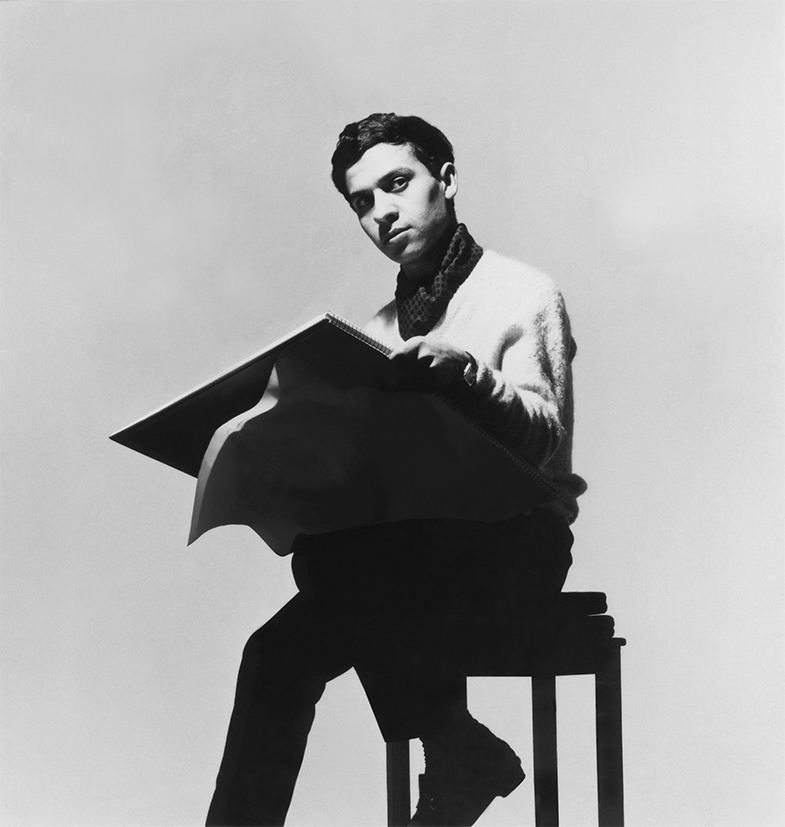
Miyake was born in Hiroshima in 1938; he was seven years old when the atomic bomb was dropped on his city, an experience he rarely discussed publicly but which many observers read into his lifelong preoccupation with renewal and transformation. He studied graphic design at Tama Art University in Tokyo before leaving for Paris, where he trained at the ateliers of Guy Laroche and Hubert de Givenchy in the 1960s. A brief stint in New York followed before he returned to Tokyo and founded Miyake Design Studio in 1970. From the start he showed in Paris, refusing to confine himself to a single fashion capital.1
The defining work
The Pleats Please line, introduced in 1993, was Miyake's most commercially successful and conceptually rigorous statement. Garments were cut oversized, sandwiched between layers of paper, and fed through a heat press that permanently set hundreds of fine pleats into the polyester fabric. The result was machine-washable, colour-saturated, crease-resistant, and body-inclusive — the pleating accommodated every shape without alteration. A single garment could be rolled into a tube and shipped in a small cylinder.
Earlier, the A-POC (A Piece of Cloth) project, developed with engineer Dai Fujiwara from 1997, took the opposite approach: a tubular knit produced by a single computerised loom from which the wearer could cut their own silhouette along pre-set lines. The seam was eliminated before the garment existed.
Method and material
Miyake's studio functioned less like a couture house than a design research laboratory. He collaborated consistently with engineers, materials scientists, and textile specialists, and regarded the Pleats Please heat-press machine with the same seriousness as a loom or a sewing machine. His 1999 exhibition Making Things at the Fondation Cartier in Paris foregrounded process over product — the tools and tests that preceded the garments were displayed alongside the finished work.
| Project | Period | Core innovation |
|---|---|---|
| Pleats Please | 1993– | Heat-set polyester micro-pleating |
| A-POC | 1997– | Single-thread tubular knit, cut-to-shape |
| 132 5. | 2010– | Flat-folded geometric recycled polyester |
Legacy
Miyake handed design direction of his mainline to Naoki Takizawa in 1999 and later to Dai Fujiwara, concentrating on the Pleats Please and A-POC projects himself. The 21_21 Design Sight museum in Tokyo, which he co-founded with Tadao Ando and graphic designer Kenya Hara, opened in 2007 and remains a leading venue for design research in Japan. His fragrances, particularly L'Eau d'Issey (1992), brought his aesthetic to a mass audience. The directional influence of his material research is visible in contemporary performance sportswear, sustainable fashion, and the ongoing collapse of the boundary between clothing and engineering.
My dream is to create clothes that are like a second skin — not the clothes that we wear, but the clothes that become part of us.
Footnotes
- Miyake showed his first collection under his own name in Tokyo in 1970 and in New York in 1971, ahead of his Paris debut. ↩