Italo Calvino
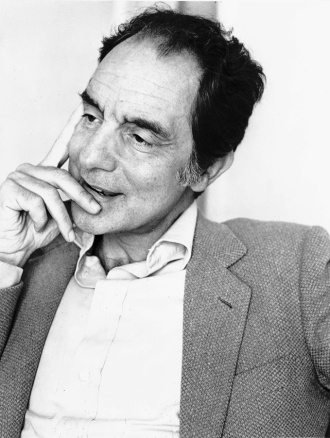
An Italian writer who dismantled and reassembled the novel itself, turning structural experiment into a literature of pure, playful intelligence.
Italo Calvino began his career writing neorealist tales of partisan resistance and ended it designing books that could be read in almost any order — a trajectory that maps the full ambition of postwar Italian letters. Across six decades he produced work that was simultaneously rigorous and enchanting, always asking what a story is before telling one.
Origins and early career
Calvino was born in Cuba in 1923 to Italian scientist parents and raised in San Remo on the Ligurian coast. During the Second World War he joined the Italian Communist Party and fought with partisan brigades in the Maritime Alps — experience that fed directly into his first novel, The Path to the Spiders' Nests (1947), a neorealist account of the Resistance seen through a child's eyes. He studied and then worked at the publishing house Einaudi in Turin, where relationships with Cesare Pavese and Elio Vittorini sharpened a literary intelligence already inclined toward fable.
The Our Ancestors trilogy and the fairy-tale turn
The 1950s brought a decisive pivot. The three novellas collected as Our Ancestors — The Cloven Viscount (1952), The Baron in the Trees (1957), and The Nonexistent Knight (1959) — established Calvino's signature mode: allegorical fantasy used to examine ethics, identity, and freedom with comic precision. The Baron in the Trees, in which a young eighteenth-century nobleman vows never to descend from the tree canopy again, remains one of the most delightful thought experiments in modern European literature. Calvino also produced a monumental collection of Italian Folktales (1956), gathering and retelling 200 tales from regional oral traditions — a project he compared to what Grimm had done for Germany.1
The structural laboratory
Calvino's time in Paris in the 1960s and his association with the Oulipo group — Raymond Queneau, Georges Perec — radicalised his interest in form. Cosmicomics (1965) placed a single narrator, Qfwfq, at the origin of the universe and at every subsequent cosmological event, producing stories that are both scientifically literate and absurdist comedy. Invisible Cities (1972), his most celebrated single work, unfolds as a dialogue between Marco Polo and Kublai Khan in which Polo describes 55 fantastical cities, each named after a woman — a meditation on memory, desire, and the limits of description disguised as travelogue. If on a winter's night a traveler (1979) addressed its reader directly in the second person, fracturing the very act of reading into its subject.
Legacy
Calvino died in Siena in September 1985, days before he was to deliver the Charles Eliot Norton Lectures at Harvard; the preparatory notes were published posthumously as Six Memos for the Next Millennium (1988), an enduring manifesto for literary values: lightness, quickness, exactitude, visibility, multiplicity. His influence runs through the work of Paul Auster, Salman Rushdie, and a generation of writers for whom the novel's architecture is itself a subject.
My working method has more often than not involved the subtraction of weight.
Footnotes
- Calvino spent three years on the folktale project, working from dialect sources across all Italian regions. He regarded it as central to understanding the national literary imagination. ↩