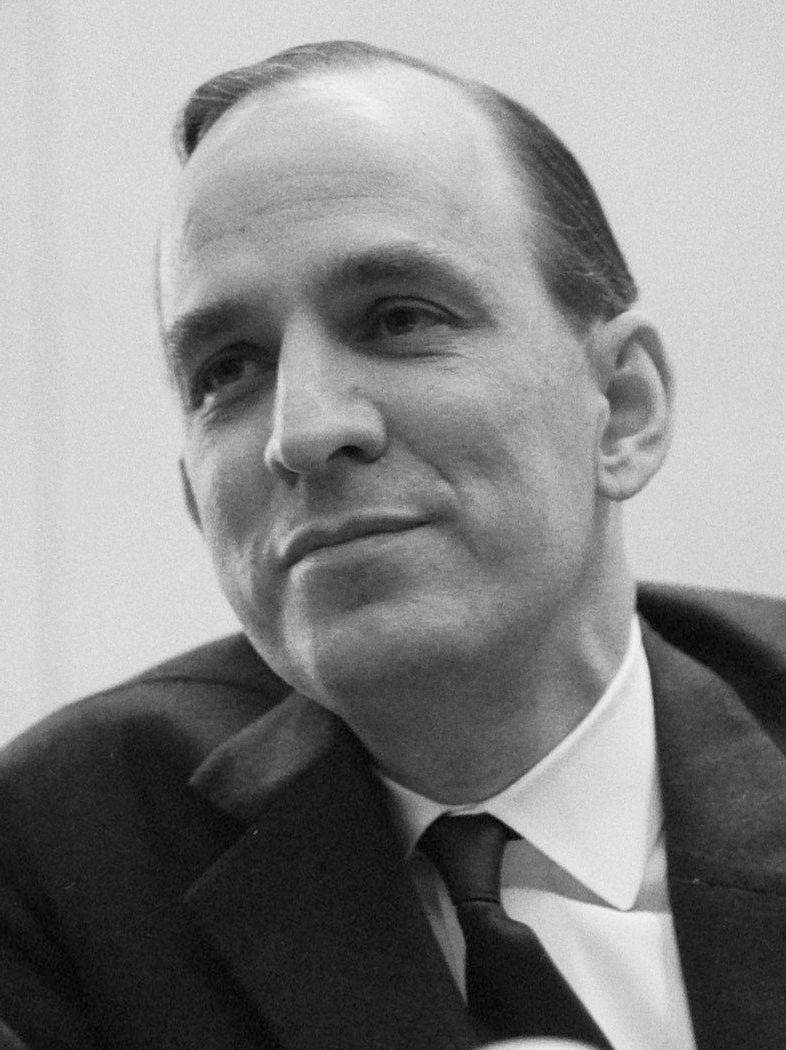
Jacques Tati
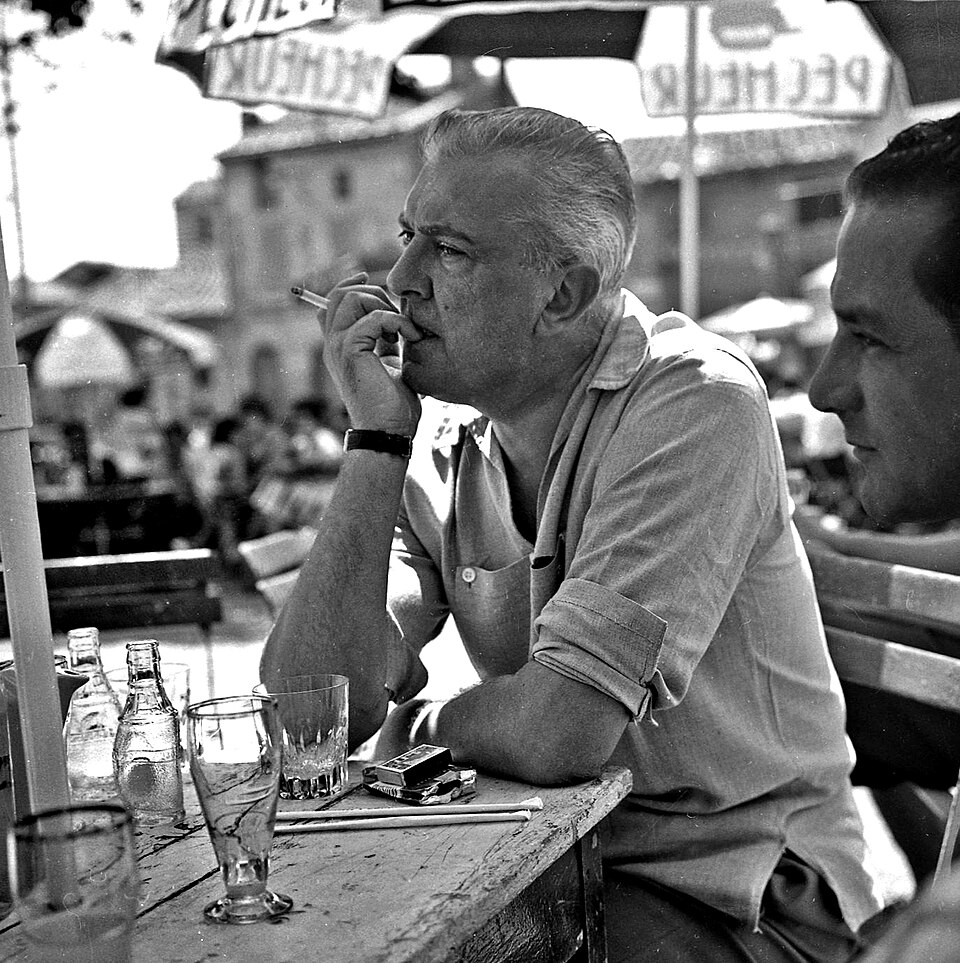
A mime turned filmmaker who built silent comedies inside a world gone entirely too loud, too fast, and too modern.
Jacques Tati invented a comedy of observation so precise and so quiet that it required audiences to do the work — to scan the frame, catch the gag at the edge of the image, and register the joke without any editorial nudge. His four major films featuring Monsieur Hulot are studies in what happens when a gentle, baffled human being walks into a world that has been designed entirely without him in mind.
The mime and the screen
Born Jacques Tatischeff in Le Pecq near Paris in 1907, Tati came to performance through music hall and mime, developing physical routines — sporting parodies, imitations of athletes and pedestrians — before moving to short films in the late 1930s. The postwar period gave him the form he needed: the feature-length comedy in which gags accumulate not as punchlines but as textures of a whole world.
His first feature as director, Jour de Fête (1949), set in a rural village, established the method: close observation of communal behaviour, gags that emerge from the logic of the situation rather than being imposed on it, and an affection for characters who are not comic grotesques but people caught in slightly wrong circumstances.
Monsieur Hulot
The character who became Tati's alter ego and vehicle — Monsieur Hulot, with his pipe, his raincoat, his too-short trousers, and his earnest inability to fit into social space — appeared first in Les Vacances de Monsieur Hulot (1953). The film's setting, a seaside holiday resort, allowed Tati to observe the rituals of French leisure with affection and mild alarm.
Mon Oncle (1958), which won the Academy Award for Best Foreign Language Film, placed Hulot at the border between old Paris — disorderly, human, neighbourly — and the gleaming, automated villa of his sister's family. The contrast was not satirical so much as melancholy: the modern world works perfectly; it has simply forgotten to include people.
Playtime
Playtime (1967) is the culmination and the catastrophe. Tati spent years and an enormous budget constructing a replica of a glass-and-steel Paris, then filled it with hundreds of actors performing interlocking routines — none of them centred on Hulot, who drifts through the film as one figure among many. The film requires active viewing: jokes happen simultaneously in multiple parts of the wide frame, and no editing guides the eye toward the correct spot.
The production bankrupted Tati. Playtime failed commercially on release and forced the sale of his studio. It is now regarded as one of the most ambitious and original films ever made.
Legacy
Tati's influence on comedy is structural rather than stylistic: the idea that the frame is a field of action rather than a delivery mechanism for jokes, that silence is funnier than noise, and that the modern world's efficiency is itself the best comic material. Playtime in particular has been studied by filmmakers and architects alike as a vision of how designed environments produce and deny human behaviour.
Comedy is not a matter of jokes. It is a matter of seeing.