Jane Campion
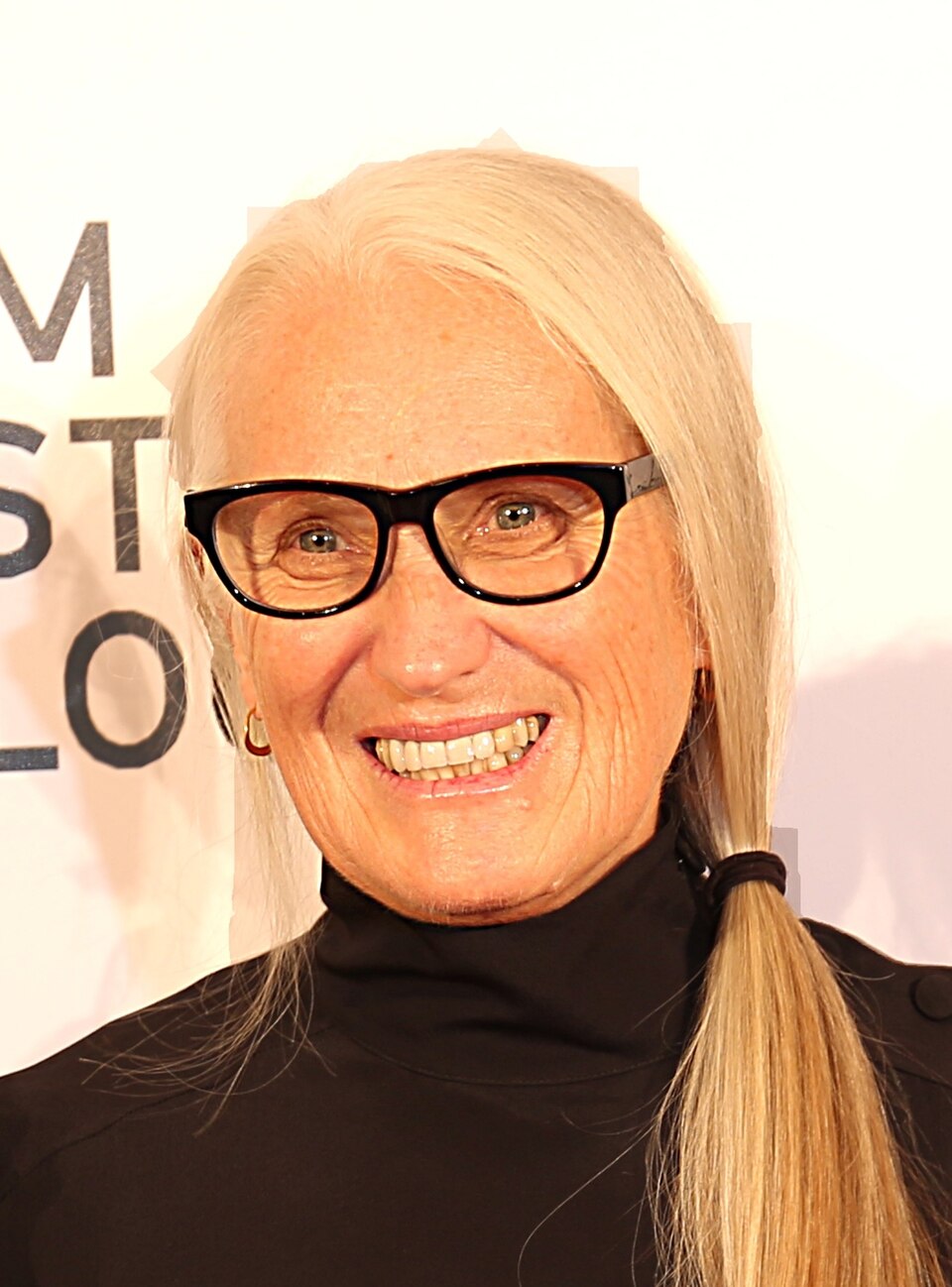
The New Zealand filmmaker who brought feminist interiority and sensory precision to world cinema, winning the Palme d'Or twice across three decades.
Jane Campion's cinema is defined by the bodies of women: what they feel, what they cannot say, and what they refuse. From her debut shorts to The Power of the Dog, she has made an oeuvre of rare consistency — formally bold, psychologically dense, and rooted in a view of desire and constraint that has no precise equivalent in contemporary film.
Formation
Campion was born in Wellington, New Zealand, to parents who worked in theatre. She studied anthropology and painting before training at the Australian Film Television and Radio School in Sydney, where her early short films drew immediate attention. Her short Peel (1982) won the Short Film Palme d'Or at Cannes in 1986, an early signal of the international recognition that would follow.
Her first feature, Sweetie (1989), introduced the qualities that would mark her work: an unsettling visual grammar, a fascination with damaged family intimacy, and an unwillingness to resolve what it raises.
The Piano and international recognition
The Piano (1993) made Campion a global figure. Set in colonial New Zealand, it follows a mute Scottish woman — Ada, played by Holly Hunter — transported with her daughter to marry a local landowner. The film won the Palme d'Or at Cannes, making Campion the first woman to receive that award. Hunter won the Academy Award for Best Actress; Anna Paquin, aged eleven, won Best Supporting Actress; Campion won Best Original Screenplay.
The film's achievement was its total integration of visual, musical, and narrative register. Michael Nyman's score and Stuart Dryburgh's cinematography function as extensions of Ada's interiority, making the landscape itself an expressive instrument.
I'm drawn to stories where the social and the psychological intersect — where what is forbidden shapes what is felt.
Method and style
Campion's visual style tends toward intimacy and strangeness simultaneously: close-ups that hold a beat too long, wide landscapes that dwarf the human figure, compositions that feel both beautiful and slightly wrong. She is attentive to texture — fabric, skin, mud, grass — in ways that physicalise psychological states.
Her adaptations — Henry James's The Portrait of a Lady (1996), Susanna Moore's In the Cut (2003) — demonstrate both her command of literary source material and her tendency to pull narratives toward more ambivalent, often darker, conclusions than their originals. Her television series Top of the Lake (2013–2017) extended her reach into long-form narrative without diluting her formal control.
Power of the Dog and the second Palme d'Or
The Power of the Dog (2021), adapted from Thomas Savage's 1967 novel, won Campion the Palme d'Or at the Venice Film Festival and the Academy Award for Best Director — making her only the third woman to win that prize. Benedict Cumberbatch's performance as a Montana rancher concealing his own nature anchors a film about masculinity, cruelty, and the cost of self-repression. It confirmed that Campion's formal intelligence had not diminished across the thirty years since The Piano.