John Ford
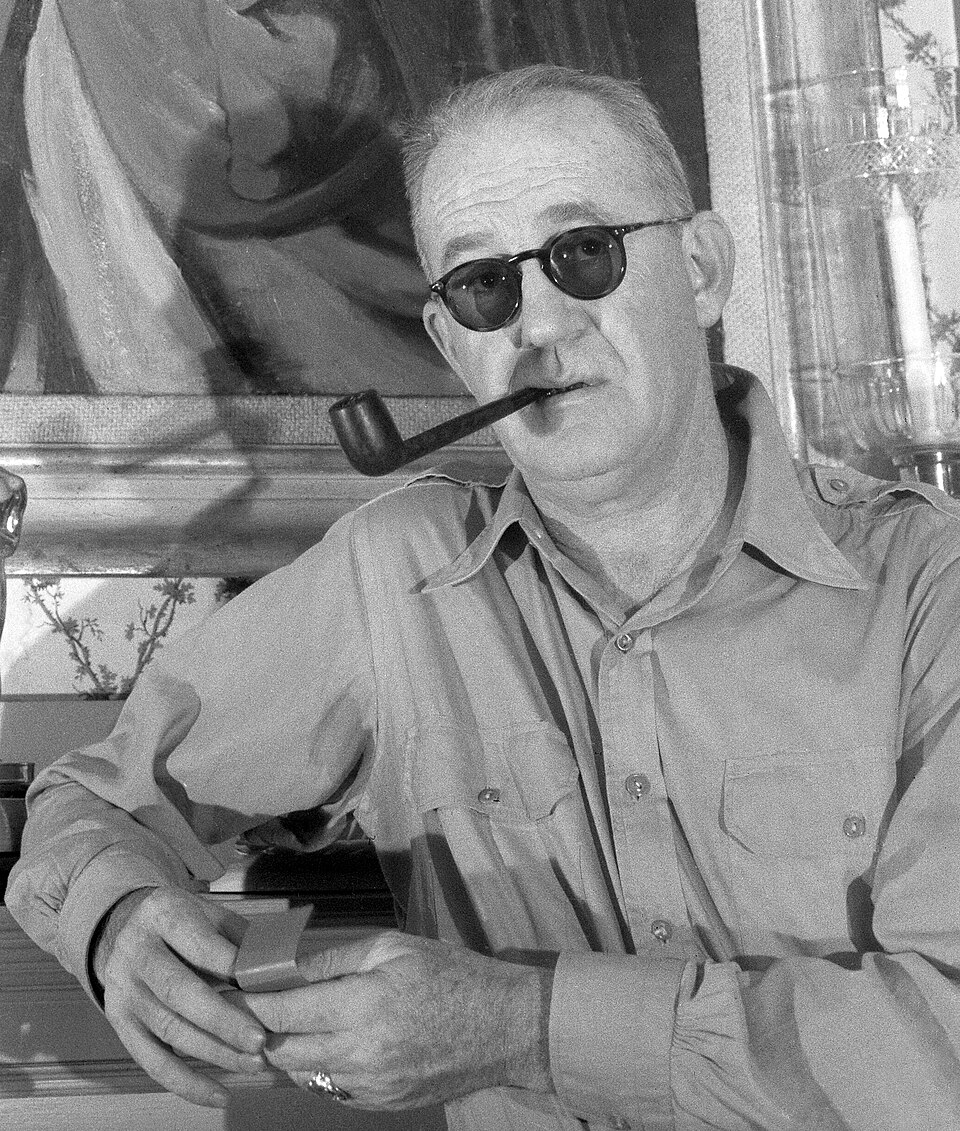
The director who gave the American western its visual grammar and who held four Best Director Oscars while insisting he was just a man who made pictures.
John Ford directed more than 130 films across half a century and received four Academy Awards for Best Director — a record that stands. He worked in silence and sound, in black-and-white and colour, in melodrama and war documentary, but it was the western that made him, and he made the western into something that could carry tragedy.
From Maine to Hollywood
John Ford was born John Martin Feeney in Cape Elizabeth, Maine, on 1 February 1894, the son of Irish immigrants. He followed his older brother Francis to Hollywood in 1914 and began working as a prop man and stuntman before directing his first films — mostly two-reel westerns — from 1917. He changed his name to John Ford early in his career.
The silent era gave him his first major recognition: The Iron Horse (1924), an epic western about the transcontinental railroad, announced an ambition that went beyond the genre conventions of the day. Ford was already working with long shots that placed figures in vast landscape and editing rhythms that gave physical action its own weight.
Monument Valley and the language of the western
Ford's sound westerns of the late 1930s and 1940s defined the visual vocabulary that audiences still associate with the genre. Stagecoach (1939) introduced Monument Valley, Utah — the sandstone buttes and mesas that became as much Ford's signature as any actor. It also introduced John Wayne to leading-man status. The partnership between Ford and Wayne continued for decades, producing Fort Apache (1948), She Wore a Yellow Ribbon (1949), The Searchers (1956), and others.
The Searchers is now widely regarded as his finest work: a western that uses the genre's conventions to examine racism and obsession without resolving either, ending with a shot — a framed doorway, a retreating figure — that lodged itself in American cinema's visual memory.
The West was harsh but beautiful, and so were the people who lived there. I was drawn to the complexity of that.
Grapes of Wrath and the documentary impulse
Ford's range extended far beyond the western. The Grapes of Wrath (1940), adapted from Steinbeck's novel, is among the bleakest social-realist films produced by a Hollywood studio. How Green Was My Valley (1941), about a Welsh mining family, brought him a third Oscar in consecutive years. Both films use close family structures to contain larger historical forces — a method Ford applied consistently.
During World War II Ford served as a naval reserve officer and commanded a film unit. His documentary The Battle of Midway (1942) was shot under fire; it won the Academy Award for Documentary Feature. After the war he returned to features and continued to complicate the western's mythology with films increasingly critical of American expansionism and its violence toward native peoples.