John Locke
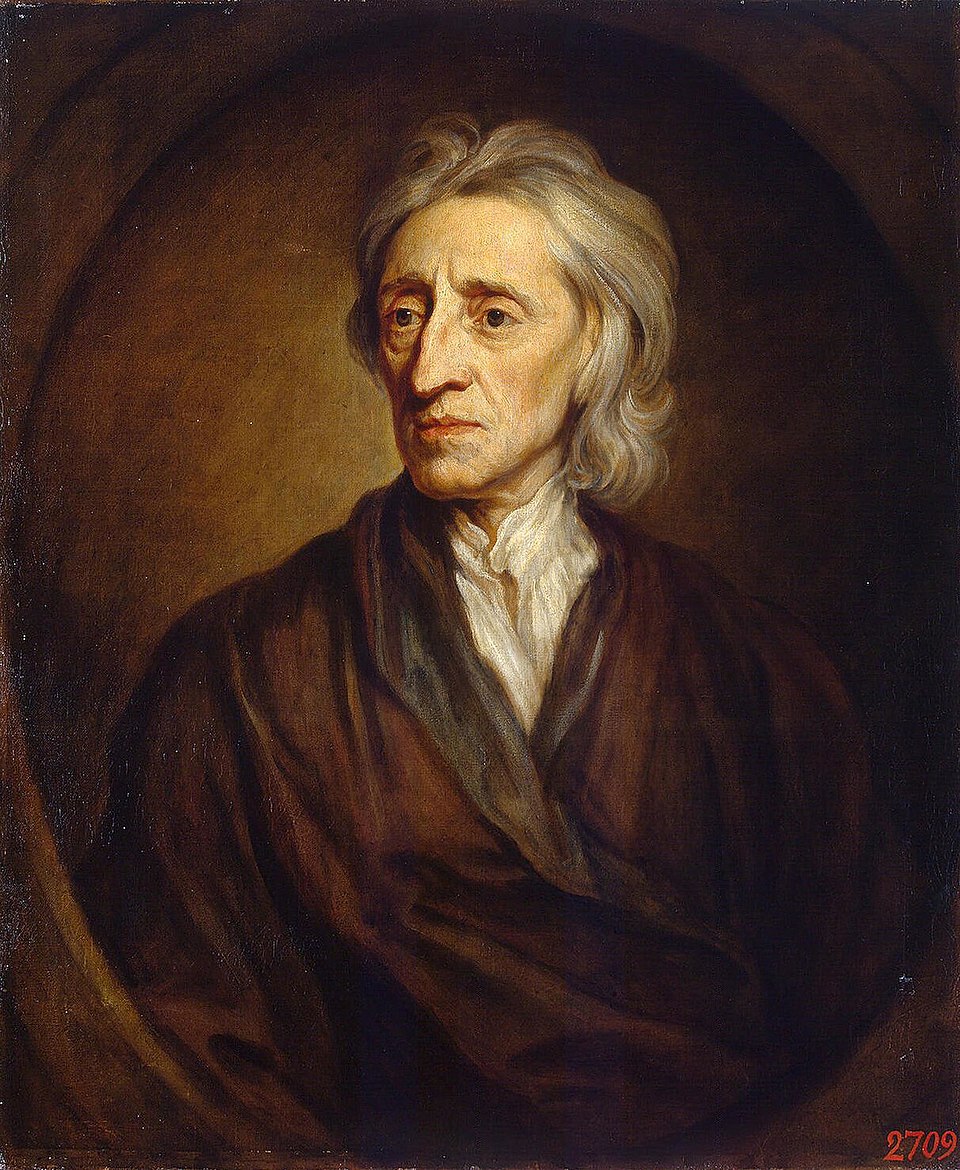
The father of liberalism: a physician-philosopher who made consent of the governed the bedrock of modern political thought and planted the seed of every liberal constitution that followed.
John Locke remade political philosophy by insisting that legitimate government rests on nothing more, and nothing less, than the ongoing consent of those it governs. His arguments for natural rights, religious toleration, and the right to resist tyranny passed directly into the constitutional vocabulary of the modern world — reaching their most famous expression in Jefferson's Declaration of Independence.
Early life and education
Locke was born on 29 August 1632 in Wrington, Somerset, to a Puritan lawyer who fought on the Parliamentarian side in the English Civil War. He was educated at Westminster School and Christ Church, Oxford, where he later lectured in Greek and moral philosophy. Oxford's scholastic curriculum frustrated him; he found more nourishment in Descartes and the emerging natural philosophy of Robert Boyle. He trained as a physician and, though he never practised formally, medicine gave him a commitment to empirical observation that would mark everything he wrote.
His career turned on his association with Anthony Ashley Cooper, the first Earl of Shaftesbury, whose household he entered in 1667 as physician and confidential adviser. Through Shaftesbury he was drawn into the volatile politics of the Exclusion Crisis — the conflict over whether a Catholic could inherit the English throne — and spent years in exile in the Netherlands when the political climate turned dangerous.
The blank slate and the theory of knowledge
In An Essay Concerning Human Understanding (1689/90) Locke argued against the existence of innate ideas. The mind at birth, he held, is a tabula rasa — a blank slate — and all knowledge derives from sensory experience and reflection upon it. This was a direct challenge to the Cartesian position and laid the foundation for the British empiricist tradition that Hume and Berkeley would carry forward. The Essay also developed the distinction between primary qualities (extension, motion, solidity — inherent in objects) and secondary qualities (colour, taste, smell — products of our perception), a distinction that shaped the subsequent history of epistemology.
Government by consent
Locke's Two Treatises of Government (1689), published anonymously, demolished the doctrine of divine right and replaced it with a theory grounded in natural rights. In the state of nature, he argued, every person possesses rights to life, liberty, and property. People enter civil society by consenting to surrender certain freedoms in exchange for their protection. A government that violates those natural rights — that becomes tyrannous — loses its claim to obedience, and the people retain the right to replace it.
These arguments were precise instruments aimed at the political crises of his own time, yet their reach extended far beyond it. The language Thomas Jefferson reached for when drafting the Declaration of Independence in 1776 — the self-evident truths, the consent of the governed, the right to alter or abolish destructive government — draws unmistakably on Locke's framework.1
Toleration and its limits
A Letter Concerning Toleration (1689), also published anonymously, made the case that religion is an affair of individual conscience, not state enforcement. The church, Locke argued, is a voluntary association; the state has no authority to compel belief, and persecution produces only hypocrites. The argument had limits — he excluded Catholics (whom he suspected of owing loyalty to a foreign power) and atheists — but the principle of separating civil authority from ecclesiastical coercion was a radical departure that fed directly into Enlightenment anti-clericalism and, eventually, into constitutional guarantees of religious freedom.
The care of souls cannot belong to the civil magistrate.
Footnotes
- Jefferson later acknowledged Locke, Bacon, and Newton as the three greatest men who ever lived. The Declaration's phrase "life, liberty and the pursuit of happiness" adapts Locke's triad of life, liberty, and property. ↩