John Milton
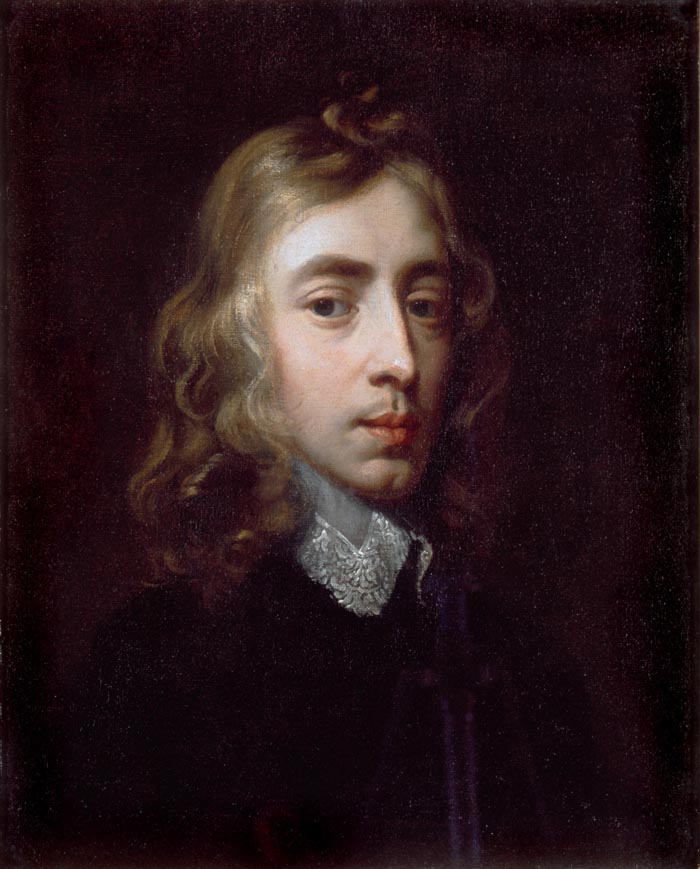
The English poet who wrote Paradise Lost blind and in political defeat — an epic of the Fall that became one of the most consequential and contested poems in the language.
John Milton published Paradise Lost in 1667, blind, politically defeated, and in retirement under a restored monarchy that had executed some of his associates — and produced what many regard as the greatest epic poem in the English language: an account of Satan's rebellion, humanity's Fall, and the nature of obedience and freedom that has been argued over ever since.
Formation and the Republic
Milton was born in Cheapside, London, in 1608, the son of a scrivener with musical gifts and ambitions for his son's education. He attended Christ's College, Cambridge, and spent years afterward in private study at his father's house in Hammersmith and Horton, reading widely in Greek, Latin, Italian, and Hebrew. A tour of Italy in 1638–1639, during which he met intellectuals including possibly Galileo, confirmed his classical formation.
The Civil War drew him out of literary retirement into political controversy. He became a passionate advocate for the parliamentary cause, wrote a controversial defence of divorce, argued for freedom of the press in Areopagitica (1644), and after the regicide defended the execution of Charles I in The Tenure of Kings and Magistrates (1649). He served as Secretary for Foreign Tongues under the Council of State — essentially the Latin secretary to the Commonwealth — from 1649 under Cromwell.
Blindness and Paradise Lost
By around 1652 Milton had gone completely blind, almost certainly from glaucoma. He dictated his work to amanuenses, including his daughters. The Restoration of 1660 ended his political career, briefly threatened his life, and left him in private retirement to complete the great poems he had long planned.
Paradise Lost, published in 1667 (in ten books, revised to twelve in 1674), tells the story of Satan's rebellion against God, his fall and that of his fellow angels, their corruption of Adam and Eve, and the expulsion from Eden. Written in blank verse — unrhymed iambic pentameter — with a syntactical complexity and periodic sentence structure that reach toward the Latin models he had absorbed, it is a poem of extraordinary ambition: to "justify the ways of God to men."
The problem that has haunted its reception since William Blake is that Satan is more compelling than God. Blake wrote that Milton "was of the Devil's party without knowing it." This reading — that the poem's moral drama escapes Milton's conscious intent — has never been satisfactorily refuted, only debated.
Better to reign in Hell, than serve in Heaven.
Late works
Paradise Regained (1671), a shorter epic on Christ's temptation in the wilderness, and Samson Agonistes (1671), a closet drama about the blind, captive Samson, completed his major work. Samson Agonistes in particular reads as a self-portrait: the great servant of a defeated cause, sightless, surrounded by enemies, waiting for one final act of consequence.
Milton died in 1674 and was buried at St Giles' Cripplegate in London.
Legacy
Milton's influence on English poetry is second only to Shakespeare's. Wordsworth, Keats, Tennyson, and almost every major poet writing in English felt the weight of his example — a presence so large it produced as much anxiety as emulation. His political prose, particularly Areopagitica, has been repeatedly invoked in arguments about press freedom and censorship. The figure of Satan in Paradise Lost became a template for the Romantic hero — solitary, defiant, self-defining — whose traces run through Byron, Shelley, and beyond.