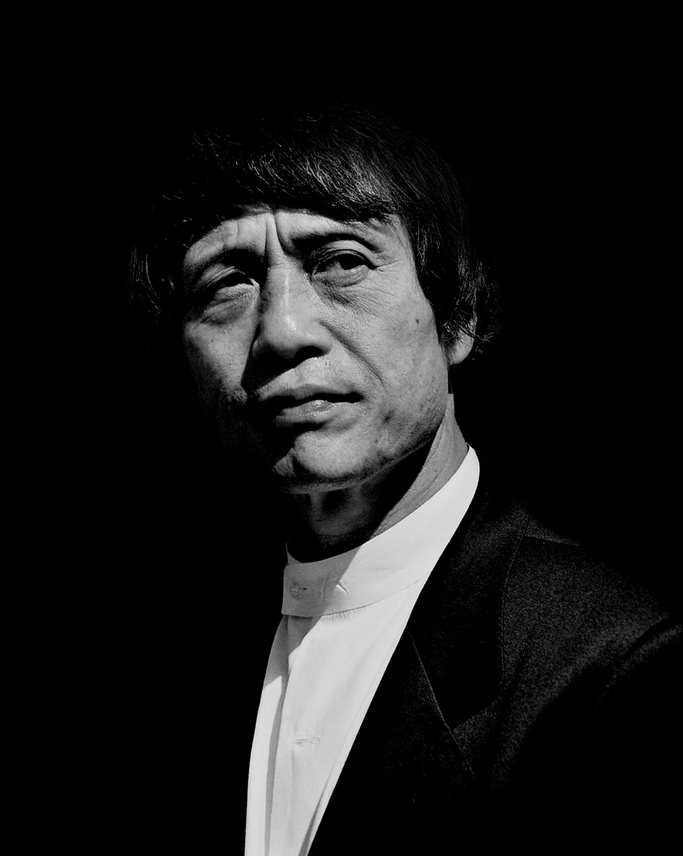
Josef Hoffmann
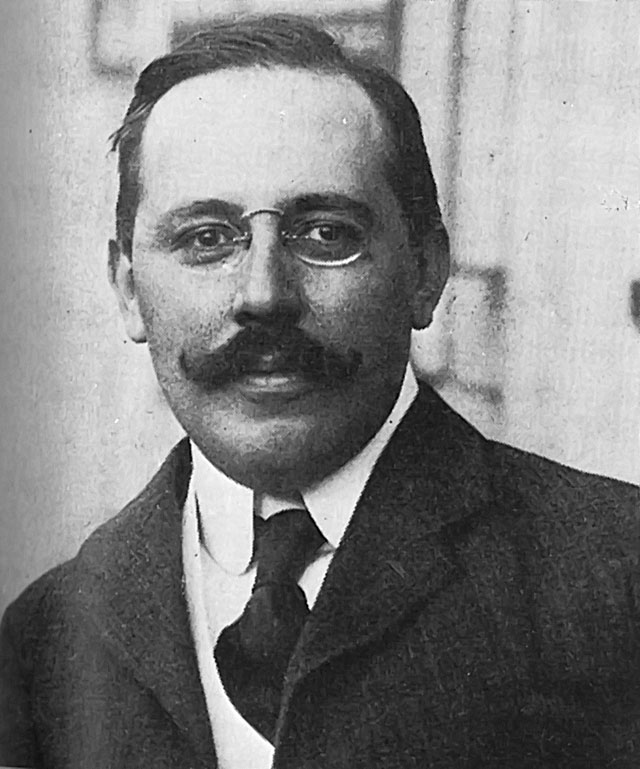
The Austrian architect who co-founded the Wiener Werkstätte and designed the Stoclet Palace: a building in which every object, from the mosaic to the teaspoon, was a considered whole.
Josef Hoffmann pursued the idea that a building and everything in it — its furniture, textiles, cutlery, door handles, and wall decorations — should form a single coherent design. It was the Gesamtkunstwerk, the total work of art, taken from Wagnerian theory and applied to domestic and civic architecture with rigorous practical commitment. The Stoclet Palace in Brussels, which he designed between 1905 and 1911 with the Wiener Werkstätte, remains the most complete realisation of that ambition in the history of European architecture.
Brtnice and Vienna formation
Hoffmann was born in 1870 in Brtnice, Moravia, then part of the Austro-Hungarian Empire. He studied architecture at the Vienna Academy under Otto Wagner, who was the dominant figure in Viennese architecture at the time and whose commitment to modern materials and rational structure formed Hoffmann's professional outlook.
Wagner's studio produced an entire generation of Viennese architects: Hoffmann was joined there by Joseph Maria Olbrich, Rudolf Schindler, and others who went on to define the look of early twentieth-century Vienna. In 1897, at twenty-six, Hoffmann was among the co-founders of the Vienna Secession alongside his teacher and colleagues including Gustav Klimt.
The Wiener Werkstätte
In 1903, with the textile artist and designer Koloman Moser and the financier Fritz Waerndorfer, Hoffmann founded the Wiener Werkstätte (Vienna Workshop) — a cooperative of artists and craftspeople modelled on Charles Ashbee's Guild and School of Handicraft in London and the Arts and Crafts movement's vision of integrating design and production.
The Werkstätte produced furniture, metalwork, textiles, glassware, ceramics, jewellery, and graphic design under a unified aesthetic: clean geometric forms, often using a characteristic grid or square motif that earned Hoffmann the nickname "Quadratl-Hoffmann" (Square Hoffmann). The work was expensive and reached a small, wealthy clientele, but its influence on European design was substantial.
The Stoclet Palace
Hoffmann's commission from the Belgian industrialist Adolphe Stoclet, begun in 1905 and completed in 1911, gave him the opportunity to realise a total design on an exceptional budget without constraint. The Brussels palace — a white marble exterior with geometric bronze coping, a single tower, severe and elegant — contains interiors designed in full collaboration with Klimt, who provided the dining-room mosaic frieze, and with Werkstätte craftspeople who made every element of the furnishings, metalwork, and decorative objects.
The Stoclet Palace was designated a UNESCO World Heritage Site in 2009. Its interior remains in private hands and is rarely accessible.
Later work and influence
After World War I Hoffmann continued to design buildings, exhibitions, and objects in Vienna. He represented Austria at several Venice Biennales in the 1920s and 1930s. His influence on subsequent design — particularly the Art Deco movement and the development of European modernism — operated through the Werkstätte's wide dissemination of its aesthetic.
He died in Vienna in 1956, aged eighty-five.
Our purpose is to create an island of tranquillity in our own country, which, amid the joyful hum of arts and crafts, would be welcome to anyone who professes faith in Ruskin and Morris.