Judith Butler
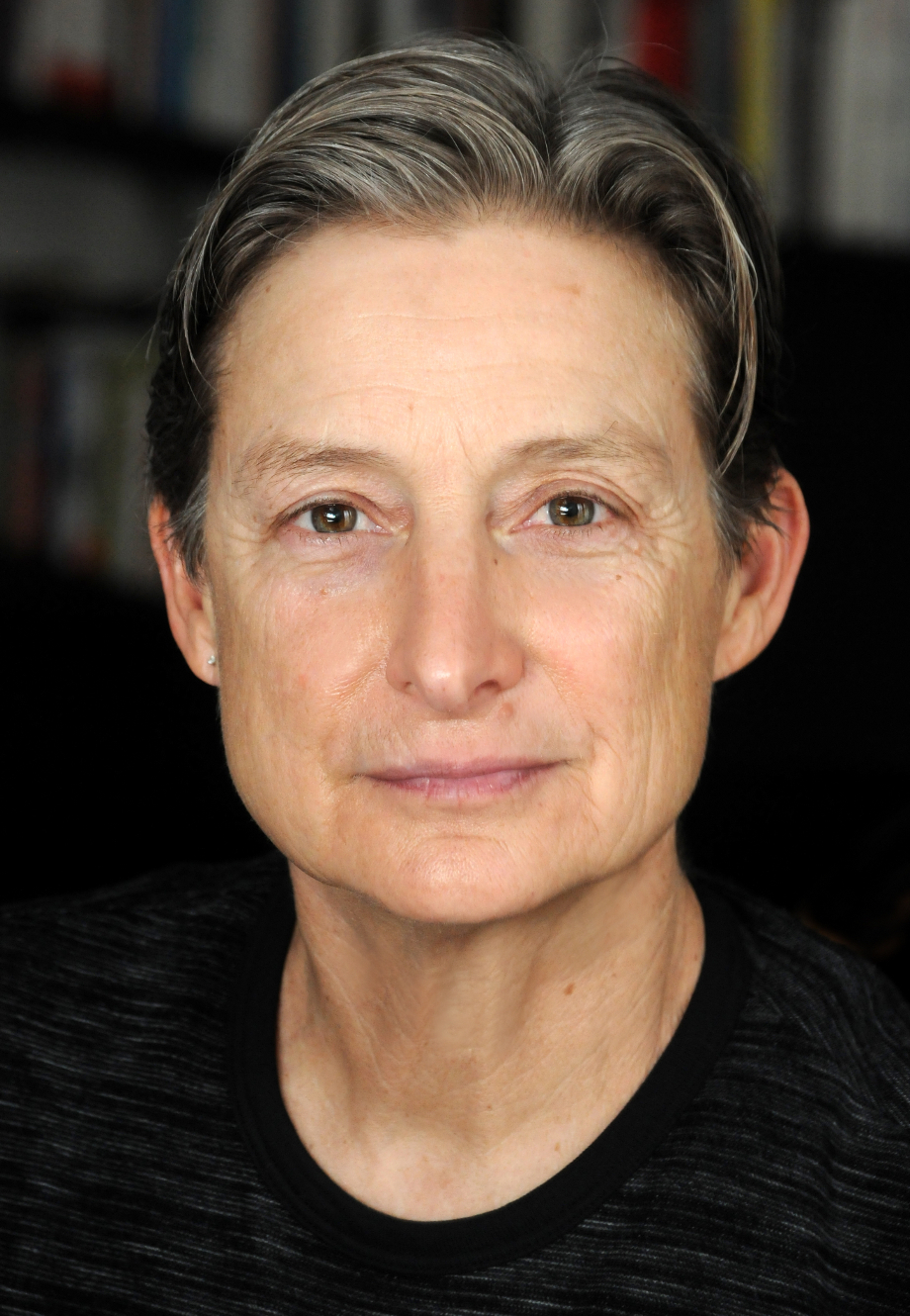
The American philosopher who argued that gender is not a fixed identity but a performance repeated daily — and that this repetition is also the site of possible change.
Judith Butler's 1990 book Gender Trouble arrived as a theoretical intervention and became something wider: a framework through which millions of people understood experiences they had not previously had language for. Its central claim — that gender is performative, not expressive, constituted through repeated acts rather than flowing from an inner nature — reshaped feminist theory, queer studies, and the philosophy of identity.
Cleveland and the formation of a philosopher
Butler was born in Cleveland, Ohio, on 24 February 1956. She studied philosophy at Bennington College and then at Yale, where she completed her doctorate in 1984 on French reception of Hegel's philosophy of desire. The dissertation became her first book, Subjects of Desire (1987). Her intellectual formation moved through Hegel, Freud, Lacan, Foucault, and Derrida — a continental European tradition that she brought into conversation with Anglo-American feminist philosophy.
She joined the faculty at the University of California, Berkeley, where she holds the Maxine Elliot chair in the Department of Comparative Literature.
Gender Trouble and performativity
Gender Trouble (1990) begins with a challenge to a feminist assumption: that feminism requires a stable subject — "women" — to act in the name of. Butler argued that "women" is not a natural category but one produced by the same systems of power that feminism seeks to contest. To found politics on the category is to reinforce it.
The productive claim of the book is gender performativity: gender is not an expression of an inner essence but a set of performances — acts, gestures, speech, dress — that are repeated over time and produce the illusion of a stable gendered self underlying them. Butler drew on speech act theory (particularly J. L. Austin's concept of the performative utterance) and on Foucauldian accounts of how power produces subjects.
The book's consequences extended well beyond academic philosophy. Its vocabulary — performativity, citationality, the matrix of intelligibility — became the working language of queer theory and gender studies, and its argument entered popular discourse in ways few academic works achieve.
Gender is not something one has, it is something one does.
Bodies That Matter and subsequent work
The sequel, Bodies That Matter (1993), addressed criticism that a constructivist account of gender left no room for the materiality of bodies — and that it implied gender could be changed at will. Butler argued that materiality itself is produced through regulatory norms, and that the constructedness of gender does not make it arbitrary or easily escapable.
Her subsequent work broadened in scope. Excitable Speech (1997) examined hate speech and censorship. Precarious Life (2004) and Frames of War (2009) engaged with contemporary political violence, the ethics of mourning, and the conditions under which some lives are counted as grievable. Her later writing has addressed anti-Semitism, Palestinian politics, and academic freedom — all controversially.