Julio Cortázar
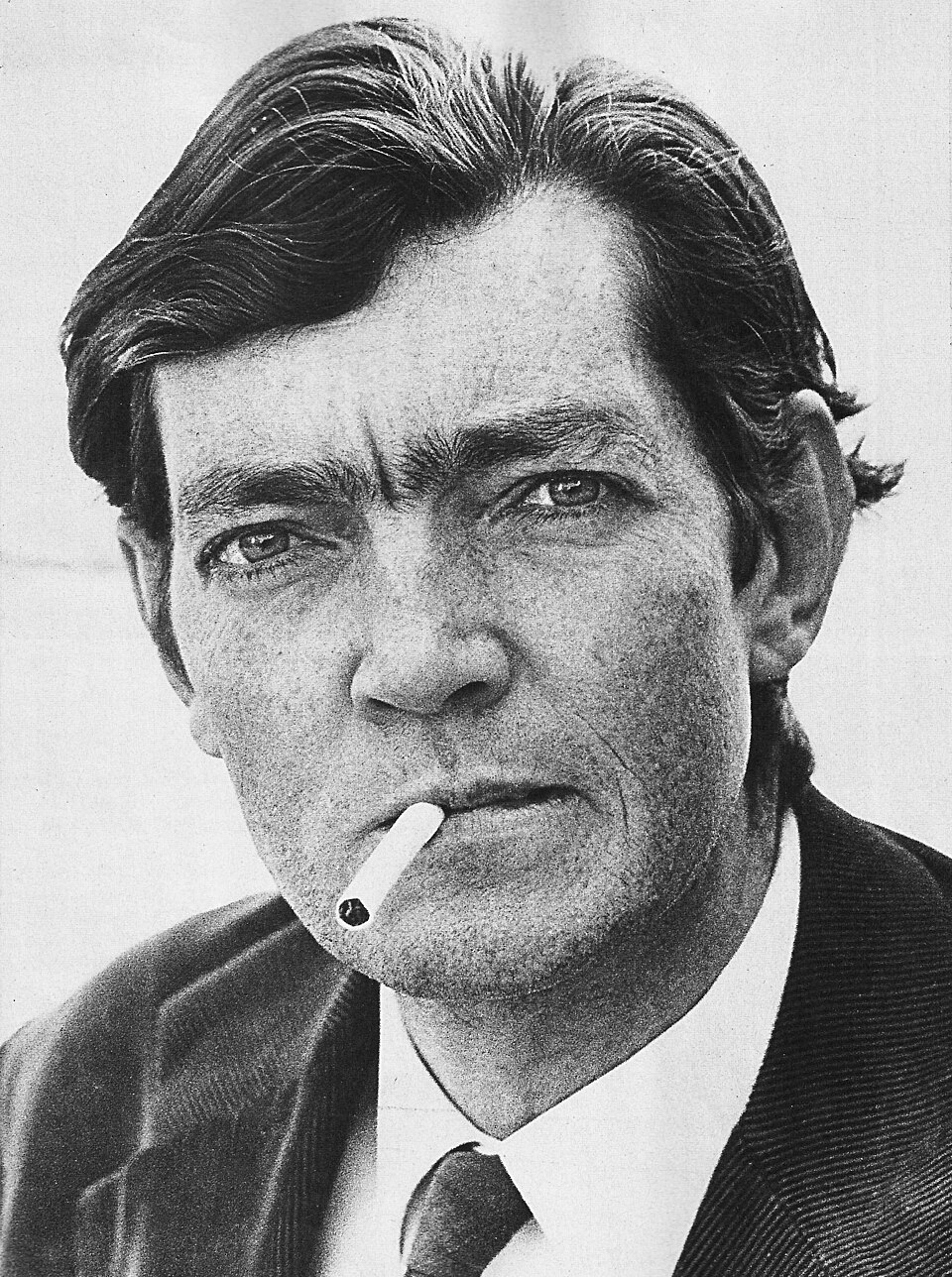
The Argentine writer who turned the short story into a philosophical instrument and the novel into a game that let the reader decide which book they were reading.
Julio Cortázar wrote short stories that began in ordinary Buenos Aires apartments and ended somewhere the laws of physics could not quite explain, and a novel — Rayuela (Hopscotch) — that offered 155 chapters and two reading orders, one of which produced a different book from the other. He was, simultaneously, a rigorous craftsman and an enthusiast for the irrational, and the tension between those impulses generated some of the most formally inventive fiction in the Spanish language.
Brussels, Buenos Aires, and a double formation
Cortázar was born in Brussels on 26 August 1914, where his Argentine father was posted on a business assignment. The family returned to Argentina when he was four, and he grew up in Banfield, a suburb of Buenos Aires. He trained as a teacher and taught literature in secondary schools in provincial Argentina before completing a degree in letters in Buenos Aires in 1945.
His early intellectual formation was literary in the broadest sense: French surrealism, Edgar Allan Poe (whom he translated for UNESCO), classical music, and the Argentine literary tradition centred on the journal Sur and on Jorge Luis Borges, whose influence he acknowledged but whose metaphysical coldness he warmed with a more sensuous, urban, jazz-inflected voice.
In 1951 he moved to Paris, where he lived for the rest of his life. He worked as a translator for UNESCO while writing fiction, which gave him the economic stability to take formal risks that the Buenos Aires market might not have supported.
Bestiario and the short story as form
His first major collection, Bestiario (1951), established the method: domestic realism interrupted by a single impossible or inexplicable element that the story refuses to explain or resolve. In "Casa tomada" (House Taken Over) a couple retreats room by room from an advancing, unnamed presence until expelled from their own house. In "Carta a una señorita en París" the narrator vomits small rabbits. The strangeness is not ornamented — it is stated flatly, in the same tone as everything else.
Final del juego (1956) and Las armas secretas (1959) extended the method. The latter contains "El perseguidor" — a long story modelled on the life of Charlie Parker — which Cortázar considered his breakthrough into moral seriousness.
Rayuela and the structure of reading
Rayuela (1963) is his largest and most discussed work. It follows Horacio Oliveira, an Argentine intellectual in Paris and then Buenos Aires, through a series of encounters, conversations, and crises. But the novel is also an instruction set: Chapter 7 provides a "Table of Instructions," offering two reading sequences. One reads chapters 1–56 in order; the other jumps between chapters according to a printed map, incorporating 99 additional "expendable chapters." The two readings produce related but distinct experiences of the same material.
The novel was a primary text of the Latin American Boom — the moment in the 1960s when Latin American fiction became internationally visible — alongside García Márquez, Vargas Llosa, and Fuentes.
What I wanted was for the extraordinary to arise from within the ordinary, as a natural consequence.