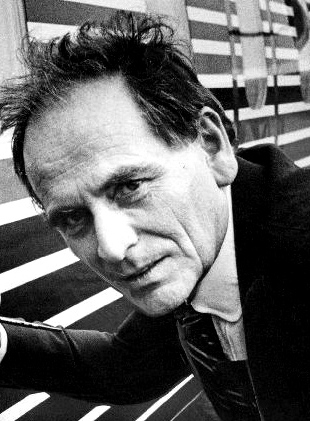
Karl Lagerfeld
The relentless creative director who remade Chanel as a global luxury empire while simultaneously pursuing photography, publishing, and an endless reinvention of himself.
Karl Lagerfeld spent more than half a century operating at the centre of European fashion, designing simultaneously for Chanel, Fendi, and his own label while photographing his own campaigns, editing his own books, and projecting a persona so controlled it became as recognisable as any garment he made.
Formation and early career
Lagerfeld was born in Hamburg in 1933 and left for Paris as a teenager in the early 1950s. He won a design competition run by the International Wool Secretariat in 1954 — in the coat category, with Yves Saint Laurent placing in dresses — and quickly entered the couture orbit, assisting Pierre Balmain and then working at Jean Patou. Through the 1960s and 1970s he freelanced across houses, most importantly beginning his decades-long association with the Italian house Fendi, where he reshaped fur and ready-to-wear into international statements.
Chanel and the luxury reinvention
The appointment to artistic director of Chanel in 1983 defined his reputation. The house had been commercially dormant since Gabrielle Chanel's death in 1971. Lagerfeld retained the code — the interlocked Cs, the tweed suit, the camellia, the chain-strap bag — but theatricalised it at unprecedented scale: runway shows staged in supermarkets, rocket launchpads, and airport terminals turned Chanel into spectacle as much as fashion. Under his direction Chanel's revenues grew from a struggling couture house into one of the world's most valuable luxury brands.
He remained at Fendi concurrently, overseeing fur innovation and the FF monogram's eventual emergence as one of the most copied logos in streetwear.
I am like a shark — I have to keep moving forward or I sink.
Method and persona
Lagerfeld was a voracious reader and draughtsman who sketched by hand in quantities that alarmed his assistants. He maintained a private library of tens of thousands of books and ran a small publishing imprint. His photography — used extensively for Chanel campaigns — gave him direct editorial control from concept to final image. He learned digital techniques late in his career and adapted without interrupting his output.
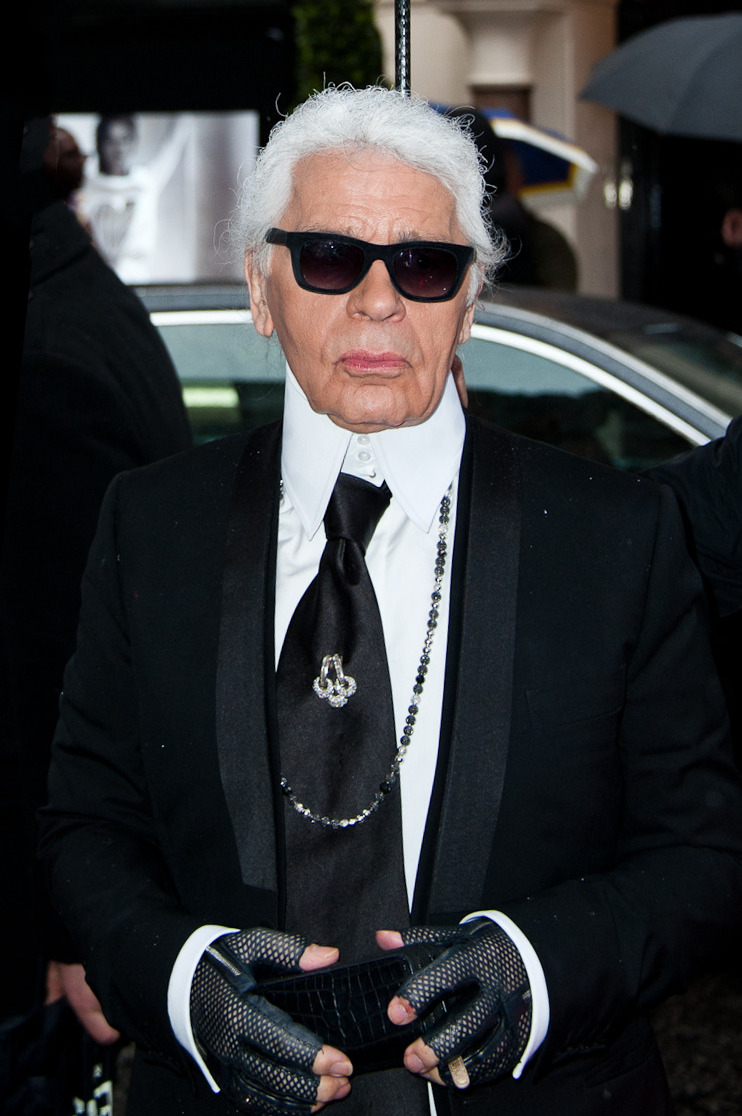
The managed persona — the powdered ponytail, the fingerless gloves, the uniform of dark jacket and high white collar — was itself a design object, maintained with the same consistency he applied to a seasonal collection.