Kenji Mizoguchi
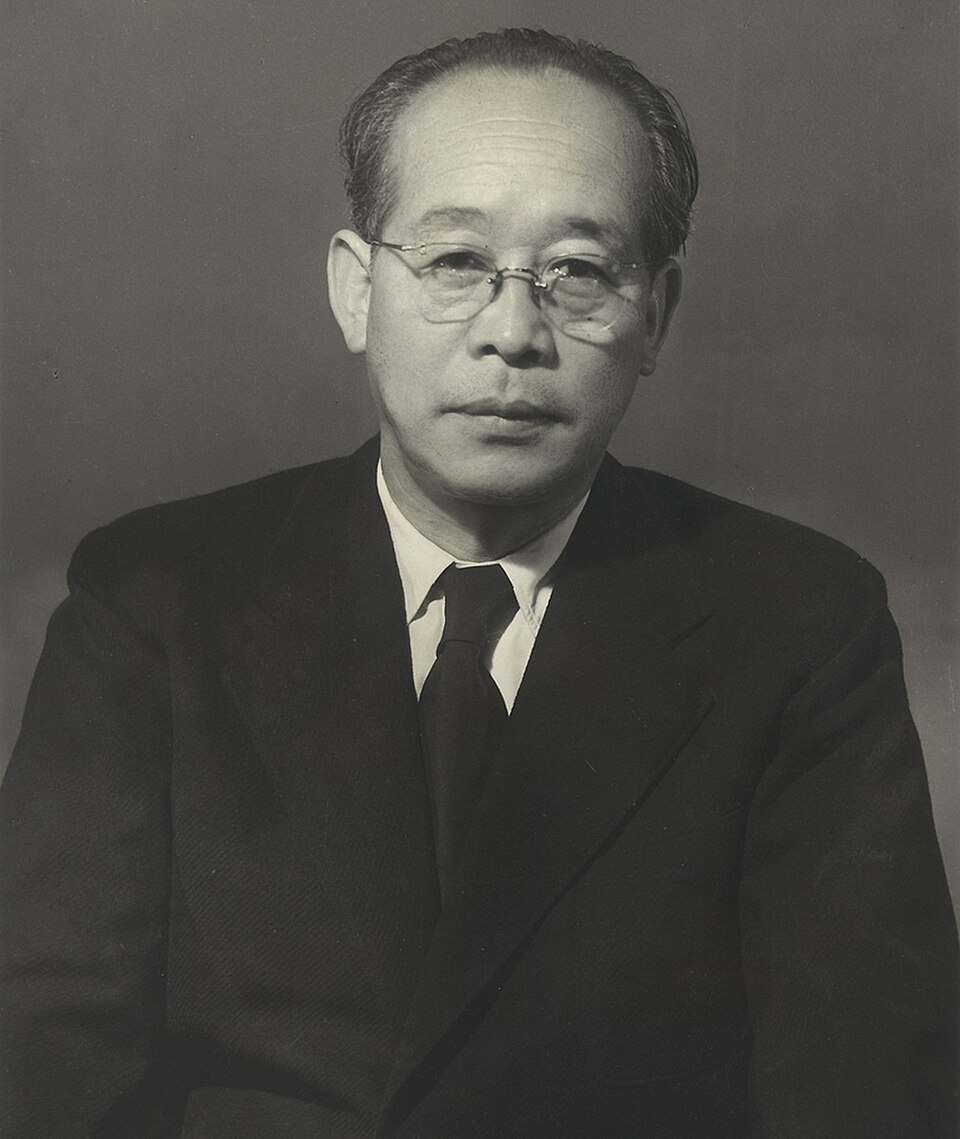
The Japanese master who spent thirty years refining a cinema of long takes and sustained compassion, placing women's suffering at the centre of history.
Kenji Mizoguchi directed nearly one hundred films across three decades, yet his reputation rests on a handful of late masterworks in which style and subject converged completely — films about women's oppression in feudal and modern Japan, realised in sequences of extraordinary visual calm that make the suffering they depict all the more unbearable.
Origins and early career
Mizoguchi was born in Tokyo in 1898 into a working-class family whose financial collapse forced his older sister to become a geisha — an experience that shaped his lifelong preoccupation with women's social precarity. He entered the film industry in 1922, initially as an actor and set decorator, and directed his first film in 1923. The silent period and most of the 1930s output is largely lost to fire and wartime destruction; Mizoguchi himself is estimated to have directed approximately one hundred films, of which fewer than thirty survive in watchable form.
His style crystallised through the late 1930s. The Story of the Last Chrysanthemums (1939) demonstrated the long-shot, long-take approach — keeping the camera at a sustained distance, allowing scenes to unfold without editorial interference — that would define his mature work.
The Venice trilogy
Between 1952 and 1954 Mizoguchi produced the three films that secured his international reputation. The Life of Oharu (1952), tracing a court lady's descent through successive social degradations, won the Silver Lion at Venice. Ugetsu (1953) — a ghost story set during civil war, in which a potter is seduced by a spirit while his wife suffers and dies — won the Silver Lion the following year. Sansho the Bailiff (1954), depicting siblings sold into slavery in feudal Japan and their mother's desolate wait, won the Silver Lion again. Three consecutive years, three prizes, three films that are consistently ranked among the greatest in cinema history.
The films share a moral architecture: individual desire or ambition leads to catastrophe; women pay for it; the world is indifferent to their suffering; and that indifference is what Mizoguchi's measured camera records without flinching.
I owe everything to women.
Style and method
Mizoguchi's signature technique is the one-scene, one-cut approach — shooting entire dramatic scenes in a single uninterrupted take from a fixed or slowly moving camera. Where contemporary Hollywood would have cut to close-ups at moments of emotional peak, Mizoguchi held back, maintaining the frame's distance. The effect is not coldness but an almost unbearable accumulation of feeling.
He worked repeatedly with screenwriter Yoshikata Yoda and cinematographer Kazuo Miyagawa, who shot Ugetsu and Sansho the Bailiff. Miyagawa's ability to realise Mizoguchi's spatial vision — tracking shots through fog-lit water, compositions in which the camera seems to hover at a respectful remove from human grief — was essential to the late masterworks.
Legacy
Mizoguchi's place in the canon was confirmed by his inclusion, alongside Akira Kurosawa and Yasujirō Ozu, in the "golden age" of Japanese cinema. His influence on international filmmakers — on Theo Angelopoulos's long-take poetics, on Hou Hsiao-hsien's sustained observation — has been widely acknowledged. His consistent focus on women's experience in patriarchal and feudal societies gave his work a political dimension that has only grown clearer with time.