Lise Meitner
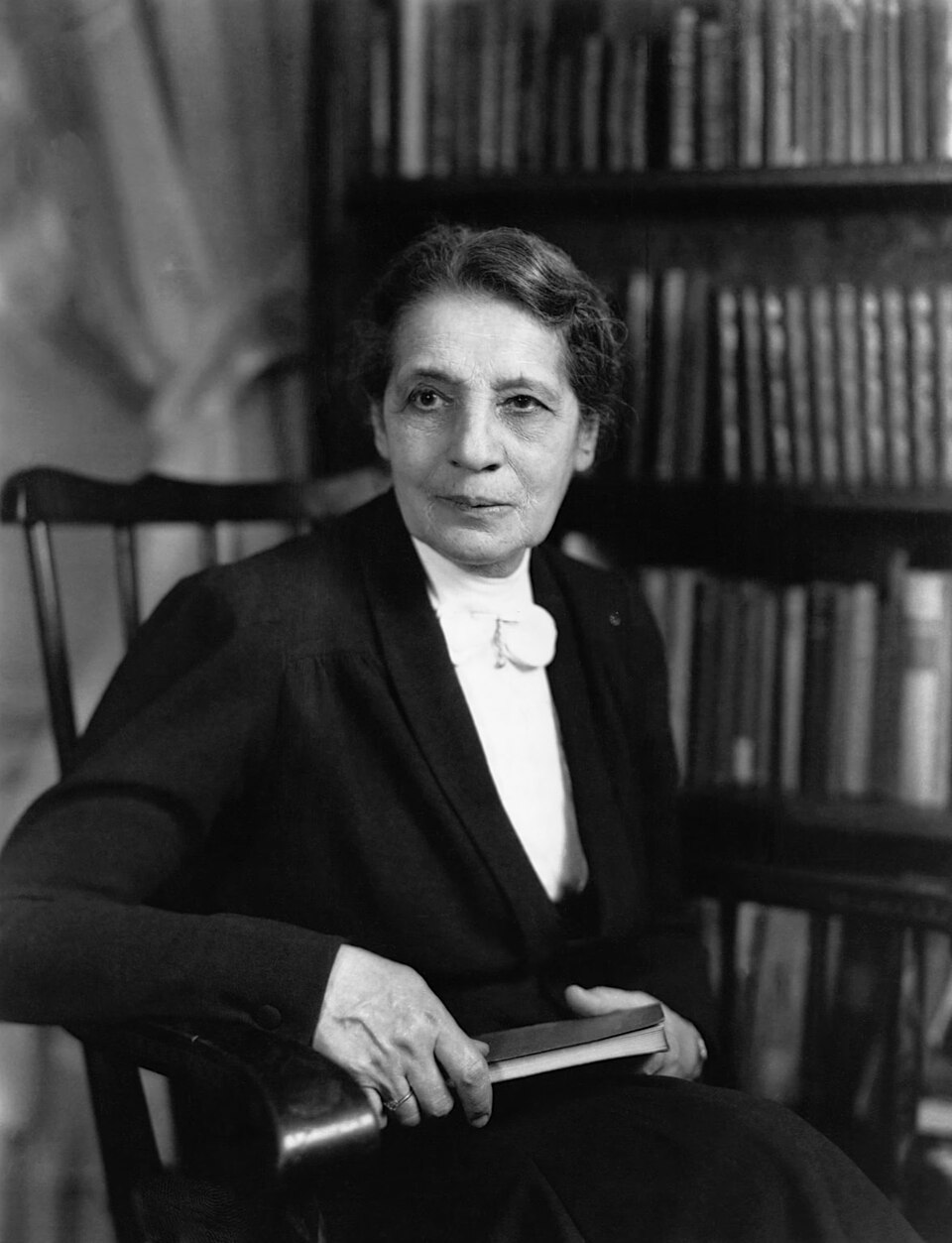
She worked out the physics of nuclear fission while in exile — and watched someone else collect the Nobel Prize for it.
Lise Meitner spent thirty years doing the physics that made nuclear fission conceivable, was forced from Germany by racial law, and then — from a hotel room in Sweden — supplied the theoretical framework that explained the experiment her former partner had just performed. The Nobel Committee gave the prize to him alone.
Origins and barriers
Born in Vienna in 1878 into a Jewish family, Meitner came of age when Austrian universities were still effectively closed to women. She persisted through private study and, when the University of Vienna opened its doctoral programme to women, enrolled immediately. In 1906 she earned her doctorate in physics under Ludwig Boltzmann — one of the first women to do so at that institution. The following year she moved to Berlin, where the real work would begin.
The Berlin years
At the Kaiser Wilhelm Institute in Berlin, Meitner and chemist Otto Hahn formed one of the most productive partnerships in the history of physics. For three decades they worked on radioactivity and the structure of the nucleus. In 1918 they jointly identified protactinium, element 91. By the 1930s Meitner was head of her own physics section and held a professorship at the University of Berlin — remarkable standing in a field and an institution where women were a rarity. When the National Socialists came to power the position became untenable: stripped of her professorship in 1933 and at physical risk by 1938, she fled Germany in July of that year, crossing into the Netherlands by train with two small diamond rings smuggled in her coat to bribe border guards if necessary.
The discovery of fission
She landed in Stockholm with almost nothing, a position at the Nobel Institute that paid too little to live on, and no laboratory of her own. In December 1938, Hahn wrote to tell her his experimental results: bombarding uranium with neutrons produced barium, a much lighter element — something the existing model of the nucleus could not explain. Meitner and her nephew Otto Robert Frisch worked through the problem over a walk in the Swedish snow and calculated that the uranium nucleus had split, releasing energy precisely predicted by Einstein's mass-energy equivalence. They named the process fission. Frisch confirmed it experimentally in January 1939; they published in Nature that February. In 1944, the Nobel Committee awarded the prize in chemistry to Hahn alone. Meitner was not mentioned.
To leave the work behind is one injury. To watch it recognised without you is another kind entirely.
Legacy
Meitner refused every invitation to participate in the Manhattan Project, describing the atomic bomb as something she wanted no part of. She spent her later years in Sweden and eventually in England, receiving recognition that accumulated slowly and late: the Max Planck Medal in 1949, the Otto Hahn Prize in 1955, and — shared with Hahn and Fritz Strassmann — the Enrico Fermi Award in 1966, two years before her death in Cambridge. In 1997, the International Union of Pure and Applied Chemistry named element 109 meitnerium in her honour, placing her permanently in the periodic table she spent a lifetime studying.