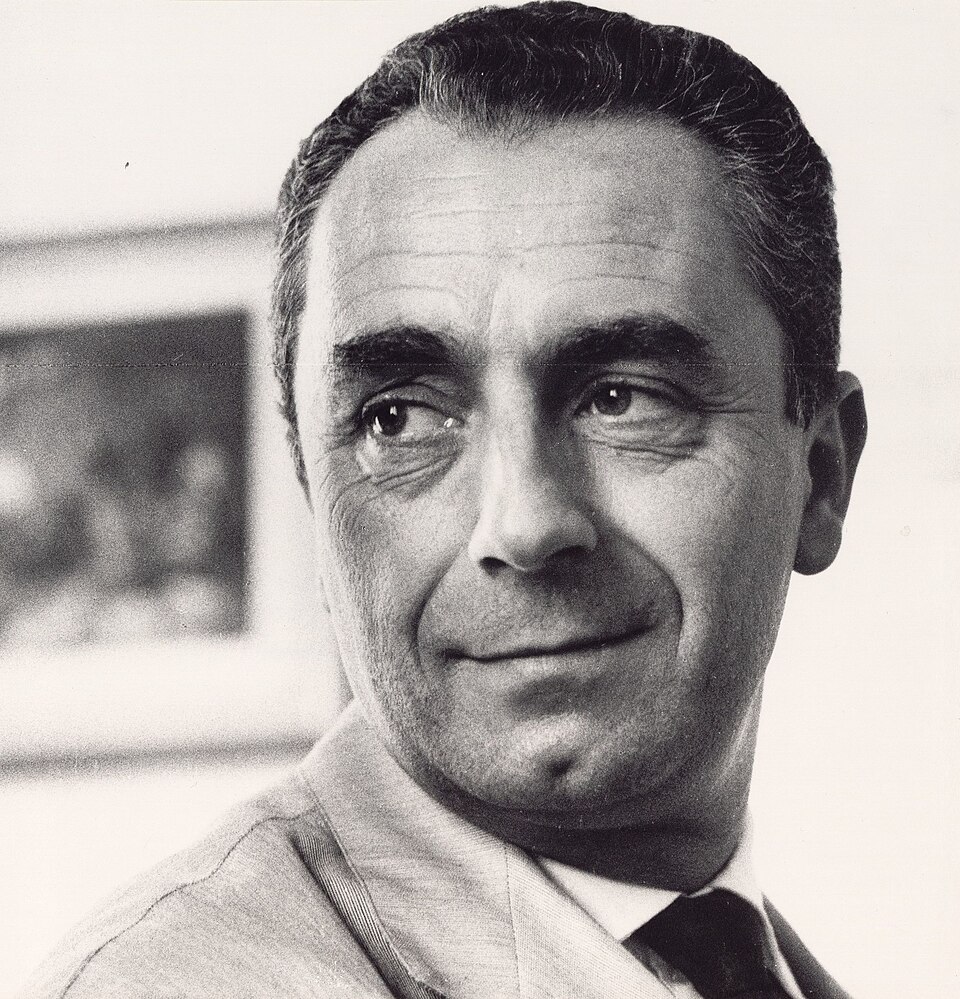
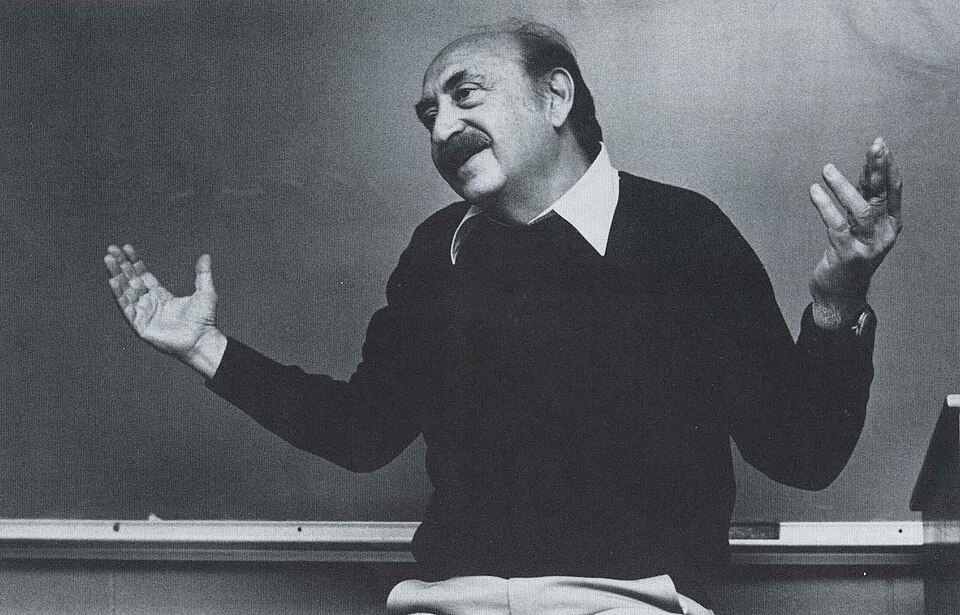
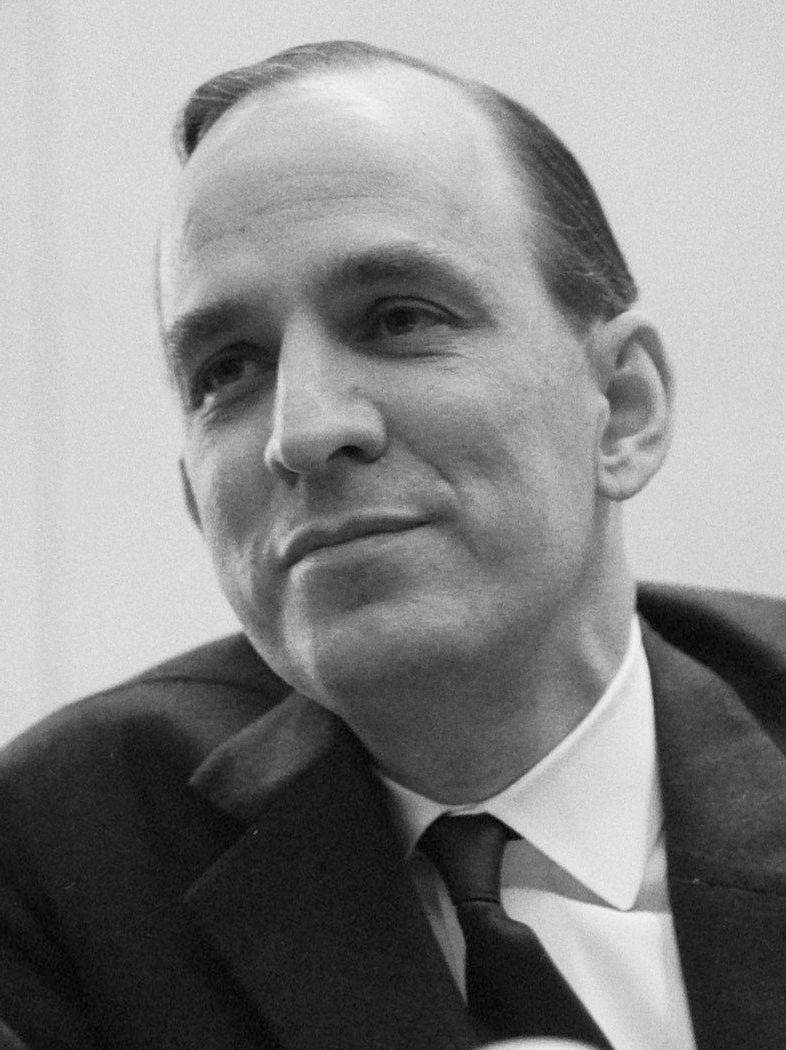
Luchino Visconti
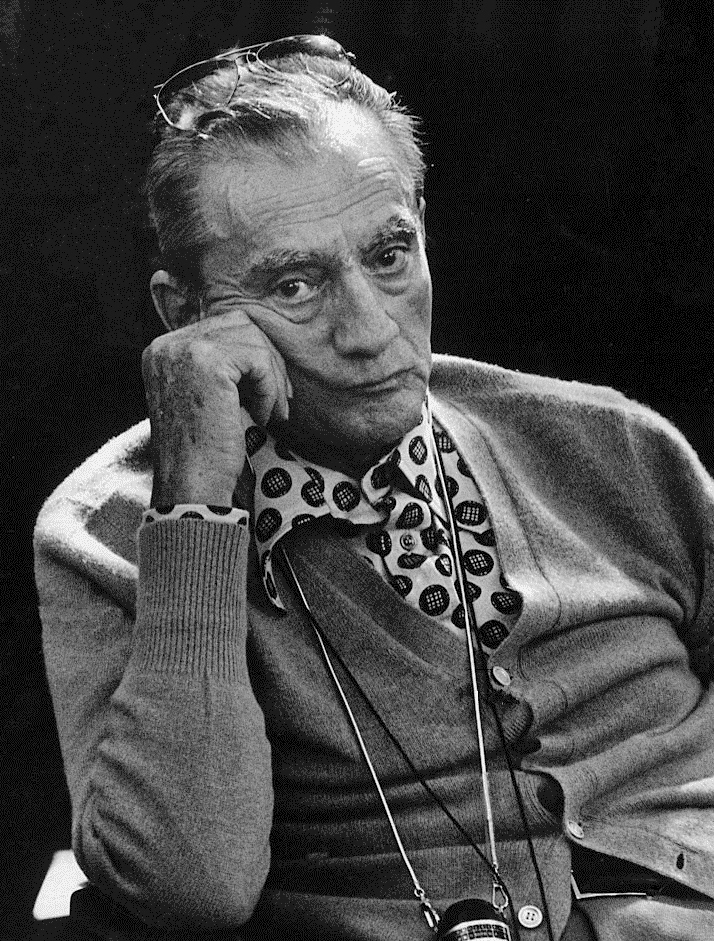
An aristocrat who made films about the destruction of aristocracy — tracing the beauty of decay across operatic canvases that no other director could have conceived.
Luchino Visconti began as a neorealist and ended as something closer to Proust — a filmmaker for whom the material weight of the past, the visual luxuriance of passing worlds, and the knowledge that all beauty is already dying constituted the only subjects worth pursuing at length. His trajectory from Ossessione to The Innocent spans one of the widest arcs in European cinema.
Aristocrat and communist
Born in Milan in 1906 as Luchino Visconti di Modrone, Count of Lonate Pozzolo, he came from one of the oldest families in Lombardy. His father was a duke; his childhood was spent between Milanese palazzi and estates in the countryside. The combination of this background with a lifelong commitment to Marxism and membership in the Italian Communist Party defined his artistic character: he understood from within the class whose end he documented.
He came to cinema through Jean Renoir — working as Renoir's assistant in Paris in the late 1930s — and through a circle of intellectuals including Antonio Gramsci. His first feature, Ossessione (1943), an unofficial adaptation of James M. Cain's The Postman Always Rings Twice, is often cited as a precursor of neorealism: shot on location in the Po Valley, bleak and sensual, wholly unlike the official Italian cinema of the Fascist period.
Neorealism and beyond
La Terra Trema (1948), a documentary-fiction hybrid about Sicilian fishermen shot entirely with non-professional actors speaking in dialect, was Visconti's most committed neorealist statement and also a sign of where his interests lay: the visual grandeur of poverty and landscape, the operatic scale of collective suffering.
Bellissima (1951) and Senso (1954) showed the range expanding. Rocco and His Brothers (1960) placed a southern Italian family in industrial Milan and treated their disintegration with the scale and intensity of nineteenth-century melodrama. The film's length and emotional density marked the point at which Visconti ceased to be a neorealist and became something harder to classify.
The late epics
The Leopard (Il Gattopardo, 1963), adapted from Giuseppe Tomasi di Lampedusa's novel about the Sicilian aristocracy during Italian unification, is his most sustained achievement. Burt Lancaster as the aging Prince Salina — watching his class pass from power while understanding perfectly why it must — gives the film its moral weight. The ball sequence in the final hour is one of cinema's great set pieces: beautiful, exhausted, conclusive.
Death in Venice (1971), Ludwig (1972), and The Innocent (1976) formed a final trilogy of films about obsession, beauty, and death. He died before completing all his planned projects.
Theatre and opera
Visconti also directed major theatrical productions and opera throughout his career, including celebrated stagings at La Scala in Milan. His work with Maria Callas on La Traviata and La Sonnambula was historically significant. The operatic sensibility — slowness, grandeur, emotional maximalism — moved freely between his stage work and his films.
I am interested in the moment before the end, when a world is still present enough to be mourned.