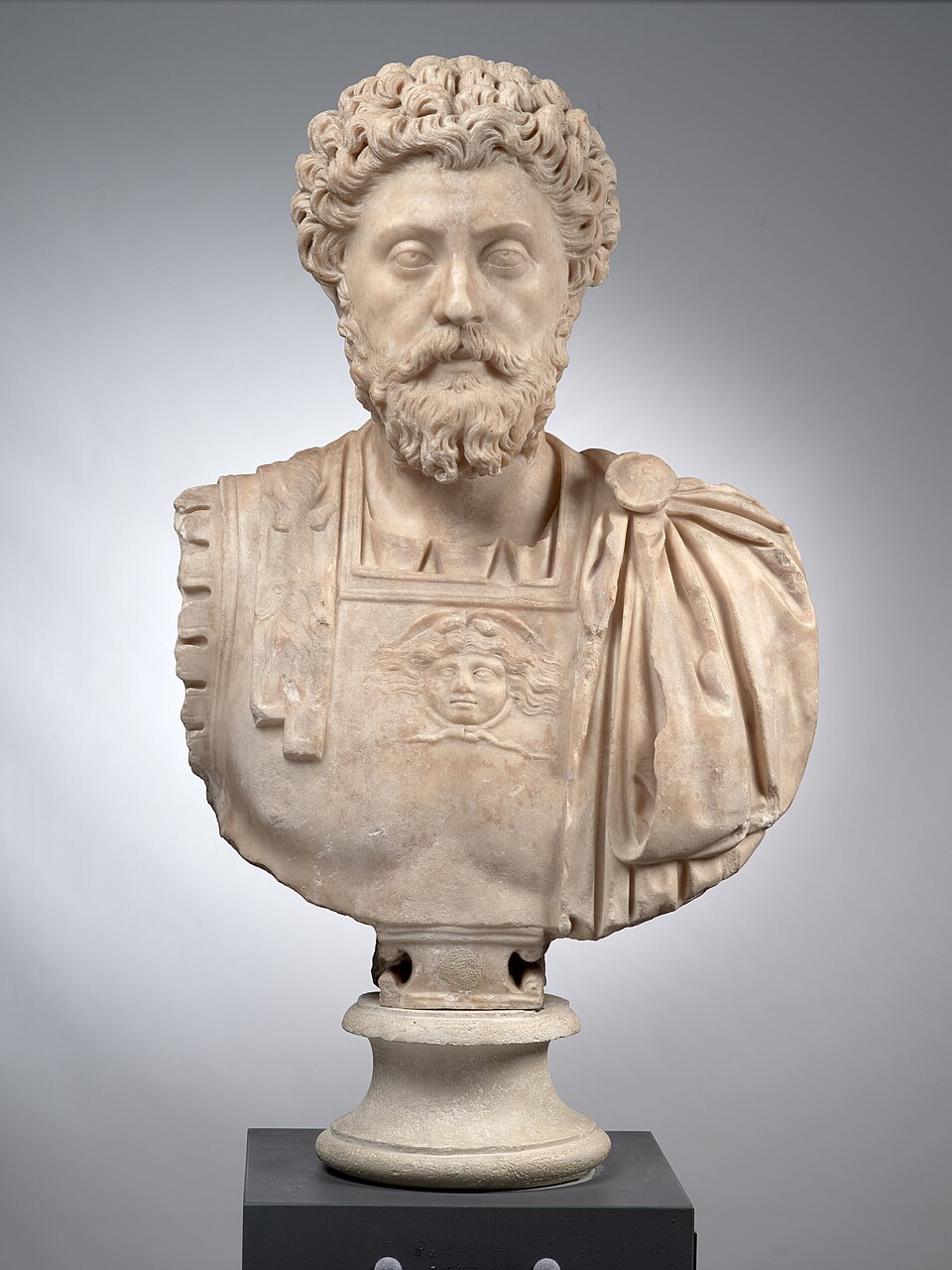
Ludwig Wittgenstein
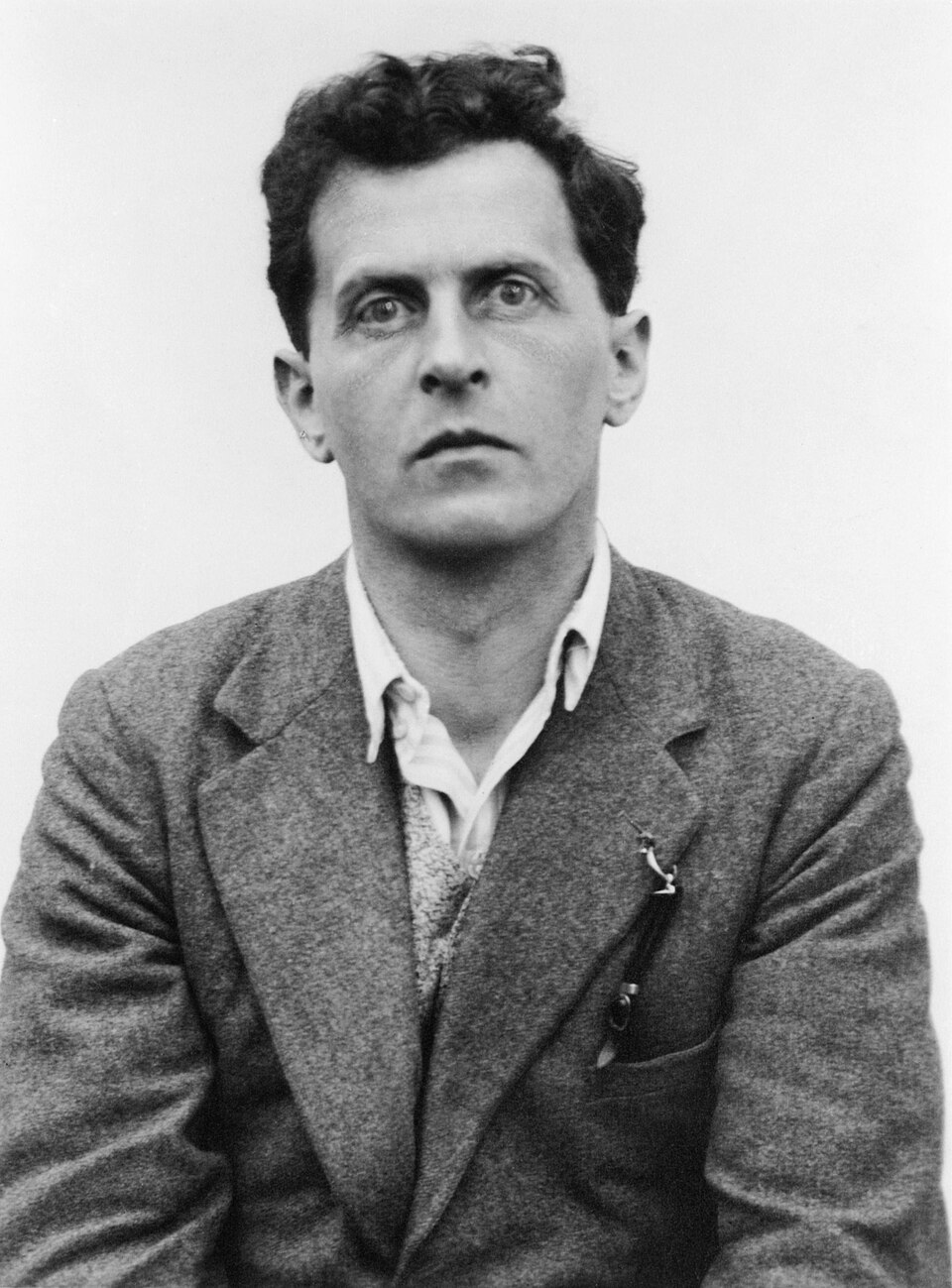
A Viennese millionaire's son who gave away his fortune, fought in two world wars, and twice rewrote the foundations of philosophy from scratch.
Ludwig Wittgenstein produced two philosophies: the first, set out in the Tractatus Logico-Philosophicus (1921), held that language pictures facts and that whatever cannot be said must be passed over in silence; the second, developed at Cambridge across the 1930s and 1940s and published posthumously as Philosophical Investigations (1953), dismantled the first and argued that meaning is use — that philosophical puzzles dissolve once we attend to how language actually operates in human life. No other thinker of the twentieth century so completely repudiated his own earlier work and remained, in both phases, equally influential.
Vienna and Cambridge
Wittgenstein was born on 26 April 1889 in Neuwaldegg, a suburb of Vienna, the youngest of eight children of Karl Wittgenstein, one of the wealthiest industrialists in the Austro-Hungarian empire. The household was a centre of Viennese cultural life: Johannes Brahms and Gustav Mahler were frequent guests. Three of his brothers died by suicide; the pianist Paul Wittgenstein lost his right arm in the First World War and commissioned left-hand concerti from Ravel and Prokofiev. Ludwig studied mechanical engineering in Berlin and then at Manchester, where his interest shifted to the mathematics of aeronautics and then, reading Gottlob Frege's Grundgesetze, to logic and the philosophy of mathematics. He wrote to Frege in 1911; Frege directed him to Cambridge to work under Bertrand Russell. Russell quickly recognised his student's gifts and encouraged him to abandon engineering entirely. In 1913 Wittgenstein retreated to a remote cottage in Skjolden, Norway, to work alone on logic. When war broke out in 1914 he volunteered immediately for the Austrian army, serving on the Eastern Front and later in Italy, carrying the manuscript of what would become the Tractatus in his rucksack.
The Tractatus
Logisch-Philosophische Abhandlung was published in German in 1921 and in English, as Tractatus Logico-Philosophicus, in 1922, with a preface by Russell. The book is written in numbered propositions — 7 at the top level, subdivided into decimal notation — and argues that language has meaning insofar as it pictures facts about the world. Atomic propositions correspond to atomic facts; complex propositions are truth-functions of atomic ones. Logical atomism — also held, in a different form, by Russell — implied that the logical structure of language mirrors the metaphysical structure of reality. Whatever can be said can be said clearly; the rest — ethics, aesthetics, the meaning of life, the existence of God — lies beyond the reach of meaningful assertion. The book closes with proposition 7:
Whereof one cannot speak, thereof one must be silent.
Wittgenstein believed the Tractatus had solved the central problems of philosophy. He gave away his share of the family fortune, trained as a primary school teacher, and spent six years teaching in remote Austrian villages. When he concluded, in the late 1920s, that the Tractatus was fundamentally mistaken, he returned to Cambridge.
The later philosophy
Back at Cambridge from 1929, Wittgenstein lectured in a style unlike any other — without notes, thinking aloud, demanding his students follow each step with him. He was appointed to a chair in 1939. He again served in wartime, this time as a hospital porter in London and a laboratory assistant in Newcastle. He resigned his Cambridge professorship in 1947 to concentrate on writing. The Philosophical Investigations, completed in its near-final form by 1949 but not published until 1953 — two years after his death — marks a complete break from the Tractatus. Language is not a picture but a practice. Words have meaning through their use in language games — the countless overlapping activities in which language is embedded: giving orders, describing objects, reporting events, speculating, joking, translating. There is no single essence of language any more than there is a single essence of a game. Philosophical puzzles arise when language goes "on holiday," when expressions are extracted from the context that gives them life and examined in the abstract. The task of philosophy is not to construct theories but to describe ordinary practice closely enough that the puzzles dissolve. Concepts such as rule-following, private language, and family resemblance became central to subsequent philosophy of mind and language.
Legacy
Wittgenstein died of prostate cancer in Cambridge on 29 April 1951. His last words, reportedly, were: "Tell them I've had a wonderful life." He left an enormous quantity of manuscript material, much of it organised and published posthumously by his literary executors. The early and late philosophies have each generated distinct traditions: logical positivism (the Vienna Circle) drew heavily on the Tractatus; ordinary language philosophy at Oxford (Ryle, Austin, Strawson) and subsequent analytic philosophy of mind, language, and mathematics drew on the Investigations. Philosophers as different as Saul Kripke, Elizabeth Anscombe, and Stanley Cavell have located their own work in sustained engagement with his. Wittgenstein is now ranked among the most important philosophers of the twentieth century — and, by many accounts, one of the most important of any century.