Marshall McLuhan
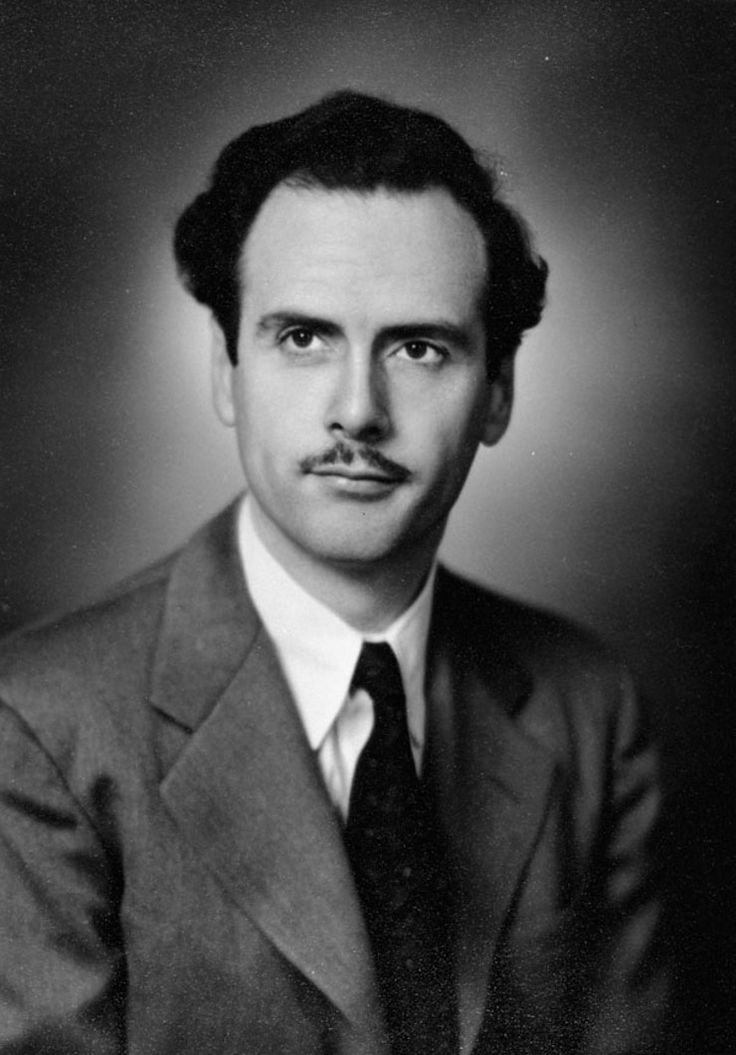
The Canadian scholar who declared the medium is the message, anticipating the digital age with uncanny precision from inside the age of television.
Marshall McLuhan trained as a literary scholar in the tradition of F. R. Leavis and I. A. Richards before becoming the twentieth century's most provocative theorist of communications media. His insistence that the form of a medium — not its content — is its primary message shaped how scholars, technologists, and artists think about television, the internet, and the total environment of information.
From Winnipeg to Cambridge
McLuhan was born in Edmonton and raised in Winnipeg, Manitoba. He studied English at the University of Manitoba, graduating in 1933, and then proceeded to the University of Cambridge, where he read English under the influence of I. A. Richards and the New Criticism, earning his BA in 1936 and later his PhD in 1943 with a dissertation on the history of classical rhetoric — a subject that would prove foundational to all his later thinking. He converted to Roman Catholicism in 1937. His early academic career was spent in the United States, at Wisconsin and Saint Louis, before he joined the University of Toronto in 1946, where he remained until his death.
The defining ideas
McLuhan's breakthrough came with The Mechanical Bride (1951), a satirical analysis of advertising and popular culture. The Gutenberg Galaxy (1962) argued that the invention of movable-type printing had restructured Western consciousness — producing linear, sequential thinking — and that electronic media were reversing this process, creating what he called the global village: a world in which simultaneous, multi-sensory communication dissolves the isolation of print culture.1 Understanding Media: The Extensions of Man (1964) consolidated his fame with the aphorism "the medium is the message," meaning that the characteristics of a communication technology — its speed, its sensory ratios, whether it demands active or passive engagement — transform society more profoundly than any particular message carried through it.
| Concept | Book | Year |
|---|---|---|
| "The medium is the message" | Understanding Media | 1964 |
| Global village | The Gutenberg Galaxy | 1962 |
| Hot / cool media | Understanding Media | 1964 |
| The Mechanical Bride | The Mechanical Bride | 1951 |
Method and controversy
McLuhan's method was deliberately associative and aphoristic — he called his books "probes" rather than systematic arguments. Critics objected that his claims were untestable, his historical evidence selective, and his prose deliberately obscurantist. He embraced the critique: his work was itself a product of the mosaic, non-linear thinking he associated with electronic media. He was enormously famous through the late 1960s and 1970s — appearing in television programmes, advertising campaigns, and Woody Allen's Annie Hall (1977), in which he appears on screen to correct a pompous academic's misreading of his work.
Legacy
McLuhan suffered a major stroke in 1979 that left him unable to speak and died on New Year's Eve 1980. The rise of the internet prompted a significant revival of his work in the 1990s; Wired magazine named him its "patron saint" in 1993. His concepts of hot and cool media, the global village, and the idea that information technologies reshape human perception more than their content does are now foundational to media studies, digital humanities, and technology criticism. His aphorisms continue to circulate in discourse about social media and artificial intelligence.
The medium is the message.
Footnotes
- The phrase "global village" appeared in The Gutenberg Galaxy (1962) and was developed further in War and Peace in the Global Village (1968). ↩