Martin Scorsese
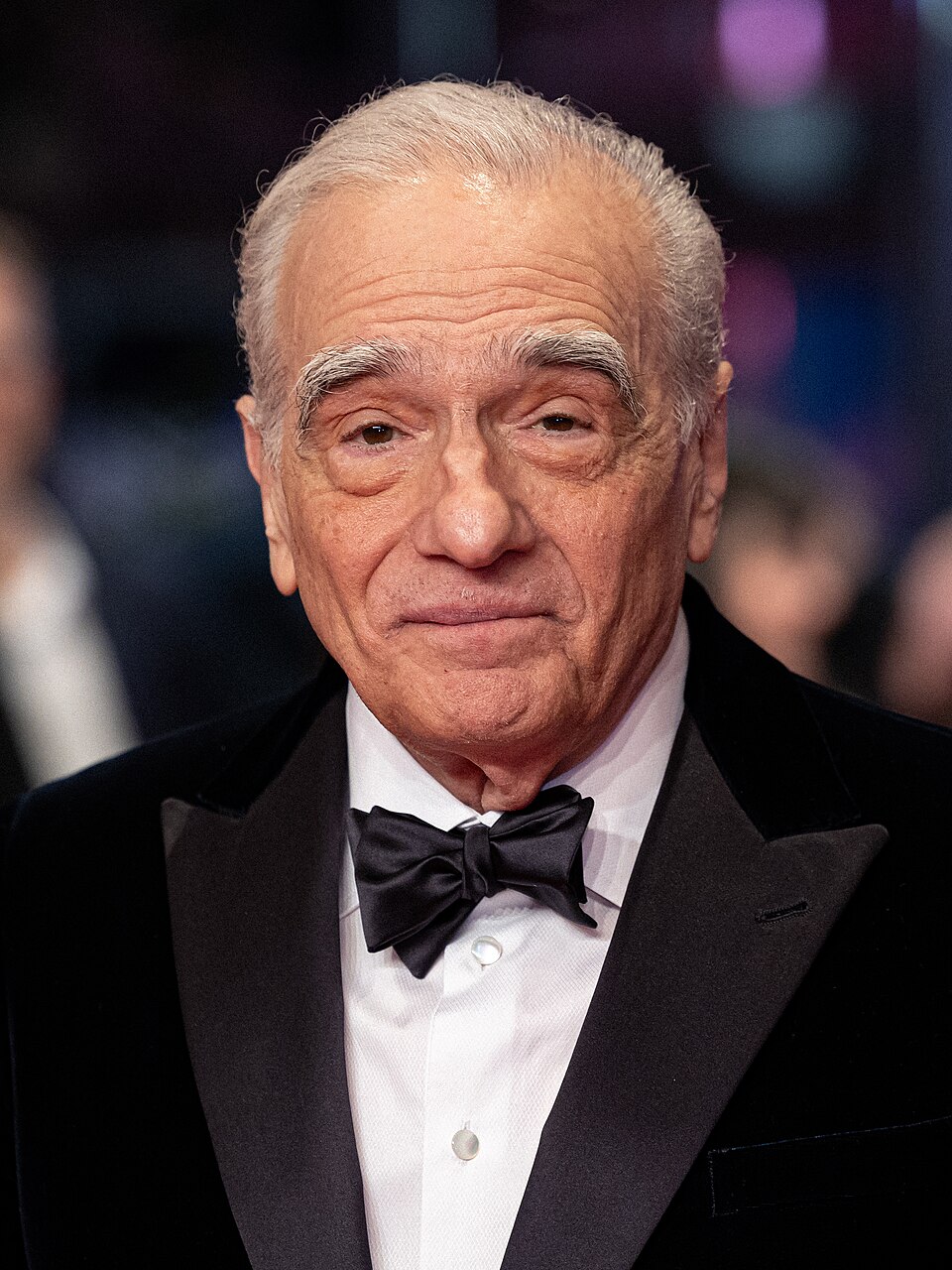
The pre-eminent chronicler of American violence, guilt, and Catholic conscience — a New York filmmaker who turned neighbourhood mythology into world cinema.
Martin Scorsese grew up in the Little Italy neighbourhood of Manhattan, and that tight geography — its codes of loyalty, violence, and Catholic shame — has animated his filmmaking for more than five decades. He is both a major popular entertainer and one of cinema's most rigorous stylists, equally at home with the operatic sweep of Gangs of New York and the claustrophobic interiority of Taxi Driver.
Formation
Scorsese was born in Queens in 1942 and raised on Elizabeth Street in lower Manhattan, the son of Sicilian-American parents. Severe asthma kept him indoors; he found relief at the movies. He enrolled at New York University's film school, where he directed a series of shorts and encountered the French New Wave and Italian neorealism. His debut feature Who's That Knocking at My Door (1967) introduced the themes — male friendship, neighbourhood loyalty, religious guilt — that would recur throughout his career.
The New Hollywood decade
The 1970s confirmed Scorsese as a central figure of the New Hollywood movement. Mean Streets (1973) used Robert De Niro and Harvey Keitel to examine life on the margins of Italian-American crime culture with a rawness that felt documentary. Taxi Driver (1976), written by Paul Schrader, placed an alienated Vietnam veteran — De Niro's Travis Bickle — in a hallucinatory New York and produced one of the most discussed protagonists in American cinema. Raging Bull (1980), shot in black and white by Michael Chapman, raised the sports film to the level of moral tragedy; the American Film Institute later named it among the greatest American films ever made.
Method and collaboration
Scorsese works with close, long-standing collaborators: De Niro across eight films; Leonardo DiCaprio across six; editor Thelma Schoonmaker across virtually his entire career, a partnership often cited as one of the most significant in film history.^1 His use of popular music as counter-commentary — the Stones, Phil Spector, Elton John — became influential shorthand for a generation of directors. He is also a committed film preservationist, co-founding the Film Foundation in 1990 to restore endangered cinema.
| Collaborator | Relationship |
|---|---|
| Robert De Niro | Lead actor, 8 films (1973–1995) |
| Leonardo DiCaprio | Lead actor, 6 films (2002–2023) |
| Thelma Schoonmaker | Editor, films from 1967 onward |
| Michael Ballhaus | Cinematographer, multiple films |
Legacy
Scorsese won the Academy Award for Best Director for The Departed (2006) after multiple nominations. His later work — The Wolf of Wall Street (2013), Silence (2016), The Irishman (2019), Killers of the Flower Moon (2023) — has continued to expand in moral scope and formal ambition. He remains a vocal critic of the reduction of cinema to content, and a defender of the theatrical experience.
Cinema is a matter of what's in the frame and what's out.