Mary Shelley
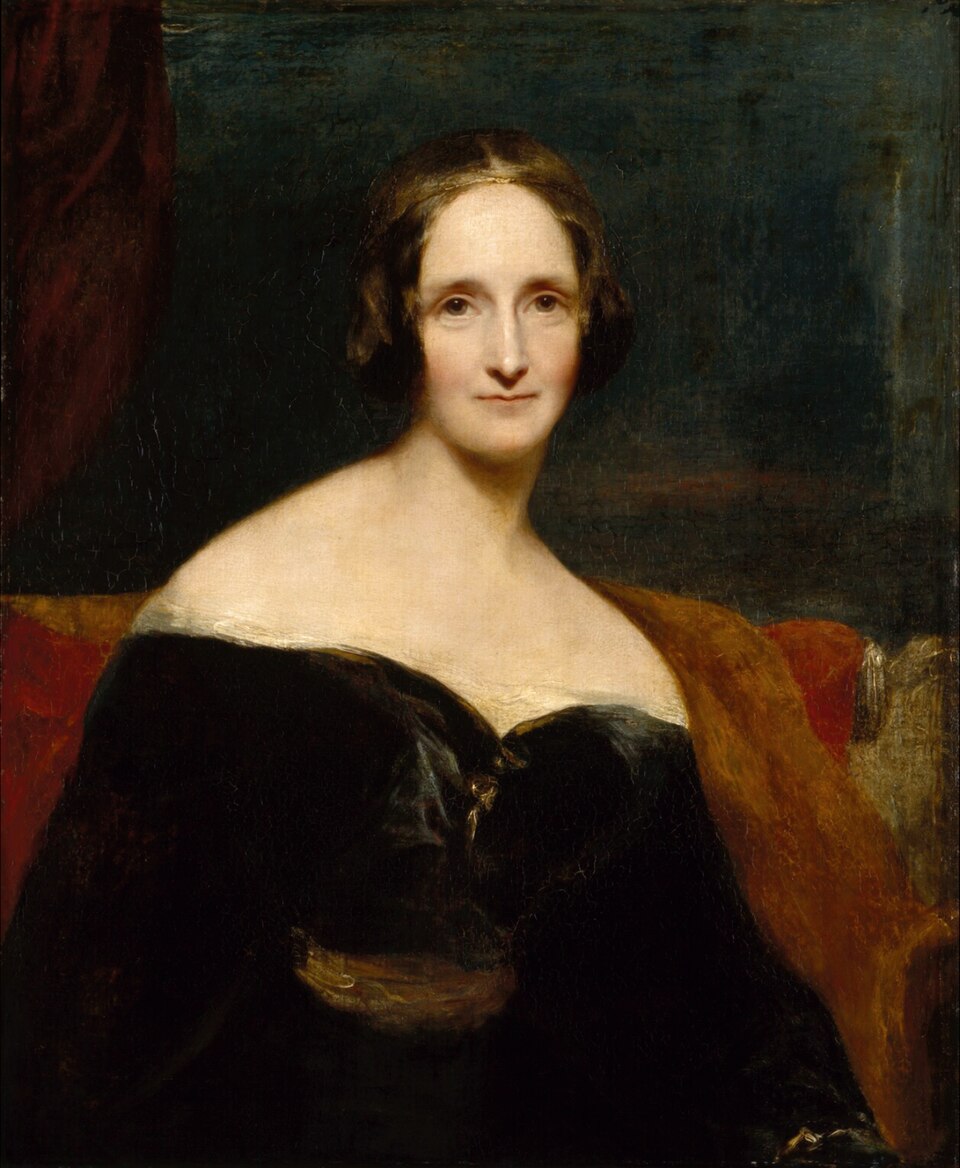
The novelist who invented science fiction at nineteen and spent a lifetime editing its shadow — the works of a husband the world forgot too quickly.
Mary Shelley wrote Frankenstein at eighteen during a wet Swiss summer on a dare, published it at twenty, and spent the next three decades being reduced to a footnote in her husband's biography. Neither fate was adequate.
Inheritance and parentage
The intellectual inheritance was immense and the personal cost was higher. Her father, William Godwin, was the foremost radical philosopher of his generation. Her mother, Mary Wollstonecraft, wrote A Vindication of the Rights of Woman (1792) and died eleven days after giving birth to her. Shelley grew up reading in her father's library and visiting her mother's grave.1
She eloped with Percy Bysshe Shelley in 1814, aged sixteen. He was married. They married in 1816 after the death of his first wife, Harriet.
Geneva and the creature
The summer of 1816 brought Byron, Polidori, Percy Shelley, and Mary Godwin (as she then was) to the Villa Diodati on Lake Geneva. Persistent rain kept them indoors. Byron proposed a ghost story competition. The others produced fragments; Mary produced Frankenstein.
The novel — Frankenstein; or, The Modern Prometheus — was published anonymously in 1818. Its premise was radical: not the traditional Gothic monster from outside, but a creation built by human ambition and abandoned by human responsibility. Critics and readers debated the authorship; the prevailing assumption was male.
Nothing is so painful to the human mind as a great and sudden change.
After Percy
Percy Shelley drowned in 1822. Mary was twenty-four. She spent the following decades editing his manuscripts, writing her own novels, and supporting her son. The Last Man (1826), a science-fiction novel set in a plague-ravaged 21st century, received little attention in her lifetime. Valperga (1823) was already out. She edited Posthumous Poems (1824) against her father-in-law's wishes.
The later novels — The Fortunes of Perkin Warbeck (1830), Lodore (1835), Falkner (1837) — kept her in print but not in fashion.
Footnotes
- Mary Godwin taught herself to read by tracing the letters on her mother's gravestone at St Pancras Old Church. ↩