Nagisa Ōshima
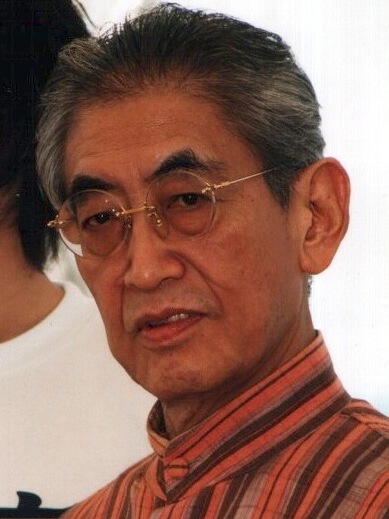
The most confrontational director of the Japanese New Wave — using cinema to attack the myths of postwar Japan with sexual, political, and formal provocation.
Nagisa Ōshima arrived at cinema with a political programme: to dismantle the comfortable fictions of postwar Japan — its sentimentality about the war, its suppression of class and racial inequality, its sexual repression — and replace them with images of raw confrontation. His 23 features, spanning four decades, make him the central figure of the Japanese New Wave.
Formation and political awakening
Ōshima was born in Kyoto in 1932 and studied law and politics at Kyoto University, graduating in 1954. He joined the Shōchiku studio as an assistant director, reaching the directing chair rapidly. His sensibility was formed by the student protest movements of the late 1950s and by a conviction that Japanese cinema — particularly the humanist tradition of Ozu and Kurosawa — had aestheticised suffering without confronting its causes.
His early Shōchiku films, beginning with A Town of Love and Hope (1959), were immediately recognisable as different: faster, angrier, and politically explicit. When Shōchiku withdrew Night and Fog in Japan (1960) — a film critical of the left as much as the right — Ōshima resigned and established his own production company.
The New Wave films and taboo subjects
Through the 1960s and into the 1970s Ōshima produced a body of work that systematically attacked Japanese social taboos. Death by Hanging (1968) examined the execution of a Korean-Japanese murderer, dramatising the racism of the Japanese state through deliberate formal strangeness. Boy (1969) told of parents who trained their son to fake road accidents for insurance money. The Man Who Left His Will on Film (1970) was a meta-cinematic meditation on political violence and cinema's complicity in spectacle.
In the Realm of the Senses (1976) became the most notorious work of his career: an account of an obsessive sexual relationship between a hotel owner and a servant, filmed with explicit sexual content and culminating in an act of mutilation. Shot in Japan, processed in France to avoid Japanese censorship, it remains one of the most debated films in the canon — oscillating between art-film seriousness and pornographic transgression, and generating legal challenges in multiple countries.
The cinema that does not disturb the audience is cinema that has given up.
International work and later career
Merry Christmas, Mr. Lawrence (1983), starring David Bowie and Ryuichi Sakamoto, brought Ōshima to wider international attention — a wartime prisoner-of-war story about the psychosexual dynamics of captivity. Sakamoto's score became iconic. The film's examination of East-West cultural collision and repressed desire was entirely consistent with Ōshima's earlier concerns, if in a more accessible register.
He suffered a stroke in 1996 that largely ended his directing career. Gohatto (1999), examining homosexual desire within a samurai corps, was his final feature.
Legacy
Ōshima is regarded, alongside Shōhei Imamura, as the defining figure of the Japanese New Wave. His refusal to separate political critique from formal experiment — treating genre, censorship, and cinematic convention as obstacles to be broken — gave the movement its most rigorous theoretical and practical shape. Directors from Asia and beyond have acknowledged his influence, particularly his insistence that cinema must address what a society most wishes to suppress.