Pablo Neruda
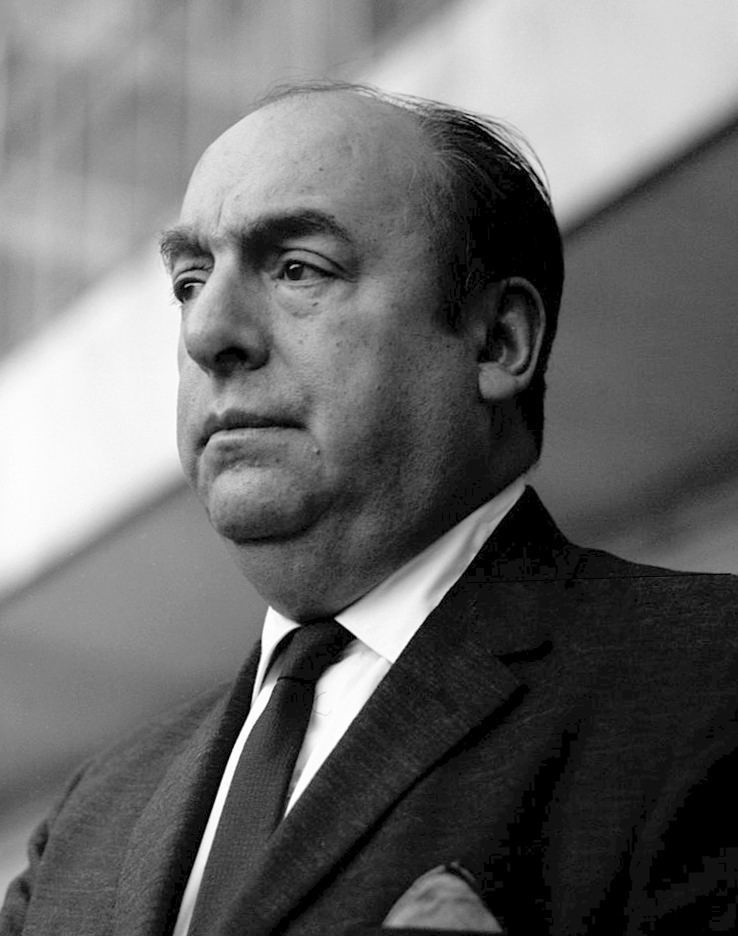
Born under one name and buried under another, Neruda turned the full span of human feeling — from erotic longing to political fury to the weight of everyday objects — into a body of poetry that no reader of Spanish can ignore.
Pablo Neruda was a Chilean poet, diplomat, and senator who won the 1971 Nobel Prize in Literature. Writing under a pen name he adopted as a teenager, he produced surrealist verse, political manifestos, historical epics, and intimate love poems that made him one of the most widely read poets of the twentieth century in any language.
Early life and the making of a pen name
Neruda was born Neftalí Ricardo Reyes Basoalto in Parral, Chile, on 12 July 1904. His mother died of tuberculosis when he was two months old; his father, a railway worker, later moved the family to Temuco in the rainy south. There the boy read voraciously and, by thirteen, was writing verse with enough seriousness that local newspapers began publishing him. He adopted the pen name Pablo Neruda — reportedly to sidestep his father's disapproval — drawing the surname from the Czech poet Jan Neruda. The name would become the only one the world remembered.
He moved to Santiago to study French at the Instituto Pedagógico but devoted himself almost entirely to poetry. By his early twenties he had published two collections that would define the rest of his reputation.
Love poems and early fame
Crepusculario (1923) announced a poet already in command of his voice; the following year Veinte poemas de amor y una canción desesperada (1924) made him famous. The twenty poems charted desire and loss with an intensity that struck readers — especially young Chilean readers — as something new in the language. The collection has never gone out of print and has been translated into dozens of languages.
Unable to support himself in Santiago, Neruda accepted a series of honorary consular posts, serving in Burma, Ceylon, Java, and Singapore through the late 1920s and early 1930s. The isolation and dislocation of those years fed the dark, hermetic surrealism of Residencia en la tierra (Residence on Earth), the first volume of which appeared in 1933.
Spain, exile, and political commitment
Posted as consul to Barcelona and then Madrid, Neruda arrived in Spain on the eve of civil war and watched friends — among them Federico García Lorca — die in the conflict. The experience was decisive. España en el corazón (Spain in the Heart, 1937) was a direct political poem, printed on the Republican front lines during the siege of Madrid. It was also the moment Neruda committed himself openly to the left.
He joined the Chilean Communist Party in 1945, the same year he was elected to the Chilean Senate. His party membership brought him into direct conflict with President González Videla, who had the party outlawed in 1948. Neruda was stripped of his seat, indicted, and forced to flee Chile on horseback across the Andes into Argentina. He spent the next several years in exile — in Europe, the Soviet Union, and Mexico — producing Canto General (1950), a vast historical poem that attempted to tell the full story of the Americas from before the Spanish conquest to the mid-twentieth century political present.
Return, Nobel Prize, and death
Neruda returned to Chile in 1952 after the charges against him were dropped. He continued to write at extraordinary volume, producing the three volumes of Odas elementales (1954–1957) — spare, vernacular odes to ordinary things: a tomato, a pair of socks, a bar of soap. The Nobel Committee, awarding him the prize in 1971, cited a body of work that "brings alive a continent's destiny and dreams."
By then Salvador Allende — Neruda's old political ally — was president of Chile. Neruda served briefly as Allende's ambassador to France before illness forced him home. He died on 23 September 1973, twelve days after Augusto Pinochet's coup ousted and killed Allende. The timing has been the subject of ongoing investigation; Chilean courts ordered an official inquiry that found, in 2023, that the cause of death was not solely the prostate cancer previously recorded.
They can cut all the flowers, but they cannot keep spring from coming.