Park Chan-wook
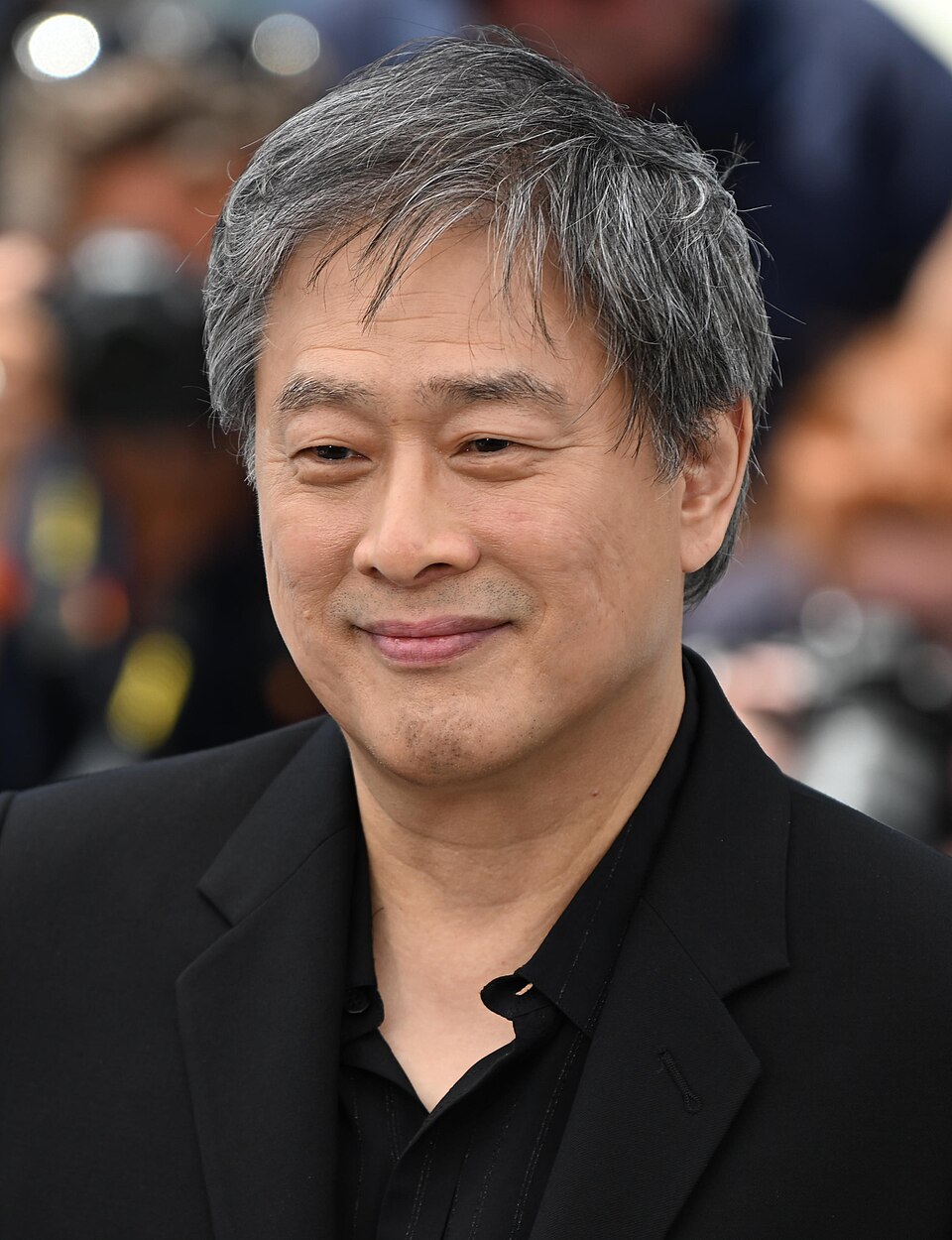
The South Korean director whose genre-defying films — violent, visually precise, and morally unresolved — placed Korean cinema at the centre of world film culture.
Park Chan-wook began his career writing about cinema before making it, and the critic's eye never left him: his films are architecturally planned, morally ambiguous constructions in which genre — revenge thriller, vampire horror, romance — is the vehicle for investigations into guilt, desire, and complicity that refuse comfortable resolution.
Formation
Park studied aesthetics at Sogang University in Seoul and worked as a film critic before directing his debut feature in 1992. His early work was commercially unsuccessful, and he credits the 2000 action film Joint Security Area — a tense, multi-perspective thriller set in the Demilitarised Zone — as the breakthrough that secured his standing in Korean cinema. The film became the highest-grossing Korean film at that point, and its structural sophistication announced his mature method.
The Vengeance Trilogy
Between 2002 and 2005, Park made three films linked by theme rather than narrative: Sympathy for Mr. Vengeance (2002), Oldboy (2003), and Lady Vengeance (2005). The trilogy examines revenge not as catharsis but as mechanism — each act of retribution generates new damage, and no one finishes clean.
Oldboy is the trilogy's centrepiece. A man imprisoned without explanation for fifteen years is released and attempts to identify his captor. The film's central revelation is one of the most disturbing in contemporary cinema; its visual style — claustrophobic compositions, a celebrated single-take corridor fight — made it an immediate reference point internationally. It won the Grand Prix at Cannes in 2004.
Visual method
Park's cinema is characterised by extreme visual control: precise symmetrical framing, colour palettes that shift with psychological state, and a use of physical space that traps characters and audience alike. He works closely with production designers and cinematographers to build environments that function as psychological externalisation.
He is also a writer; most of his films are scripted by him or with his close collaborators, giving his work an unusual formal coherence across two decades of production.
I don't think of my films as violent. I think of them as films about consequences.
International recognition
Thirst (2009), a vampire film rooted in Catholic guilt, won the Jury Prize at Cannes. Stoker (2013) was his English-language debut, produced in Hollywood with Nicole Kidman and Mia Wasikowska. The Handmaiden (2016), an adaptation of Sarah Waters's Fingersmith relocated to Japanese-occupied Korea, was selected as South Korea's entry for the Academy Awards and won multiple BAFTA nominations.
Decision to Leave (2022) won Park the Best Director award at Cannes and the BAFTA for Best Film Not in the English Language in 2023, confirming his position as one of the dominant filmmakers of his generation.