Paul Erdős
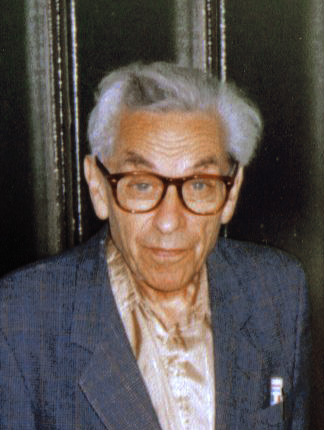
The wandering Hungarian mathematician who owned almost nothing, published with almost everyone, and treated open problems as the only fixed address he needed.
Paul Erdős was one of the most prolific mathematicians of the twentieth century — and one of the strangest lives in the history of the discipline. He gave away his money, kept no home, and travelled continuously between colleagues' spare rooms, carrying his belongings in a suitcase and problems in his head. Mathematics, for him, was a collective act.
A life organised around problems
Born in Budapest in 1913 to two mathematics teachers, Erdős was a prodigy who could multiply large numbers as a small child. He earned his doctorate at the University of Budapest and, as a Hungarian Jew, left Europe as fascism rose, holding positions in Britain and the United States before abandoning permanent posts altogether. From the 1950s onward he lived out of a suitcase, moving from campus to campus and colleague to colleague, subsisting on lecture fees and prizes and giving most of it away.
He worked ferociously — reputedly nineteen hours a day, sustained by coffee and amphetamines — and greeted collaborators by proposing a problem before saying hello. Death he called "leaving"; children were "epsilons"; a divine adversary he named the "Supreme Fascist" kept, he joked, a perfect Book of the most elegant proofs.
The method of collaboration
Erdős's mathematics spanned discrete mathematics, graph theory, number theory, combinatorics, set theory, and probability, and leaned toward cracking sharply posed open problems rather than building grand theories. With Mark Kac he helped found probabilistic number theory; he was a central architect of Ramsey theory and of the probabilistic method, a technique for proving that an object must exist by showing a random choice produces it with positive probability. In 1949, he and Atle Selberg gave an elementary proof of the prime number theorem.
Another roof, another proof.
The Erdős number
Because he collaborated so widely — roughly five hundred co-authors — mathematicians began measuring their distance from him. A direct co-author has Erdős number 1; someone who wrote with a co-author has Erdős number 2, and so on. The playful metric became a genuine folk institution across the sciences, a map of how mathematical knowledge actually propagates: person to person, over coffee, around a problem.
He backed problems with cash, posting rewards from a few dollars to thousands depending on difficulty, and many remain unclaimed.
Legacy
Erdős left roughly 1,500 papers, more than any mathematician in history except possibly Euler, and a model of the field as a shared, wandering conversation. His conjectures still drive research in combinatorics and number theory, and the notion of "proofs from The Book" inspired an actual published collection of the elegant arguments he prized. He died in 1996 in Warsaw, at a mathematics conference — working, as always.