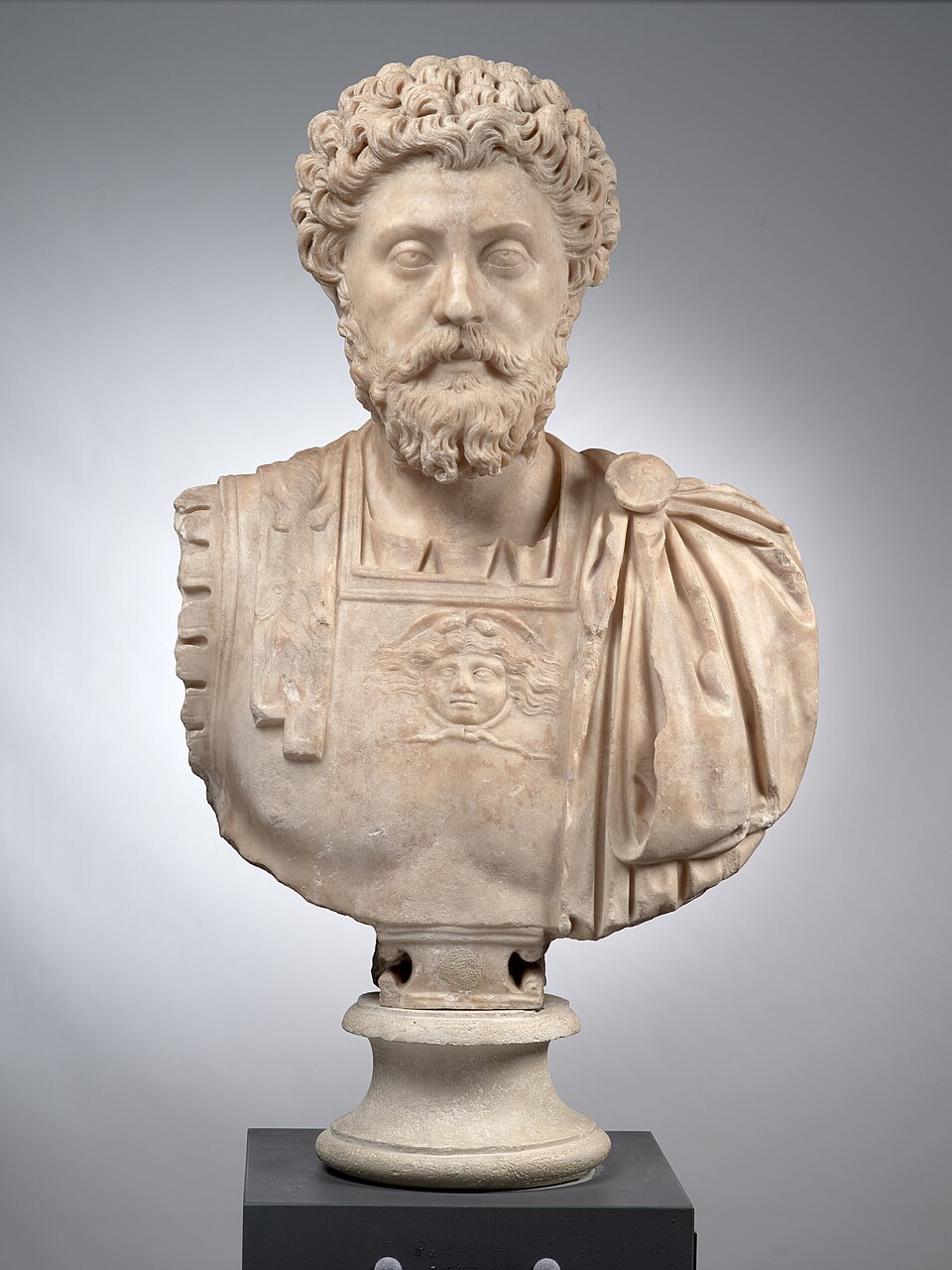
Plato
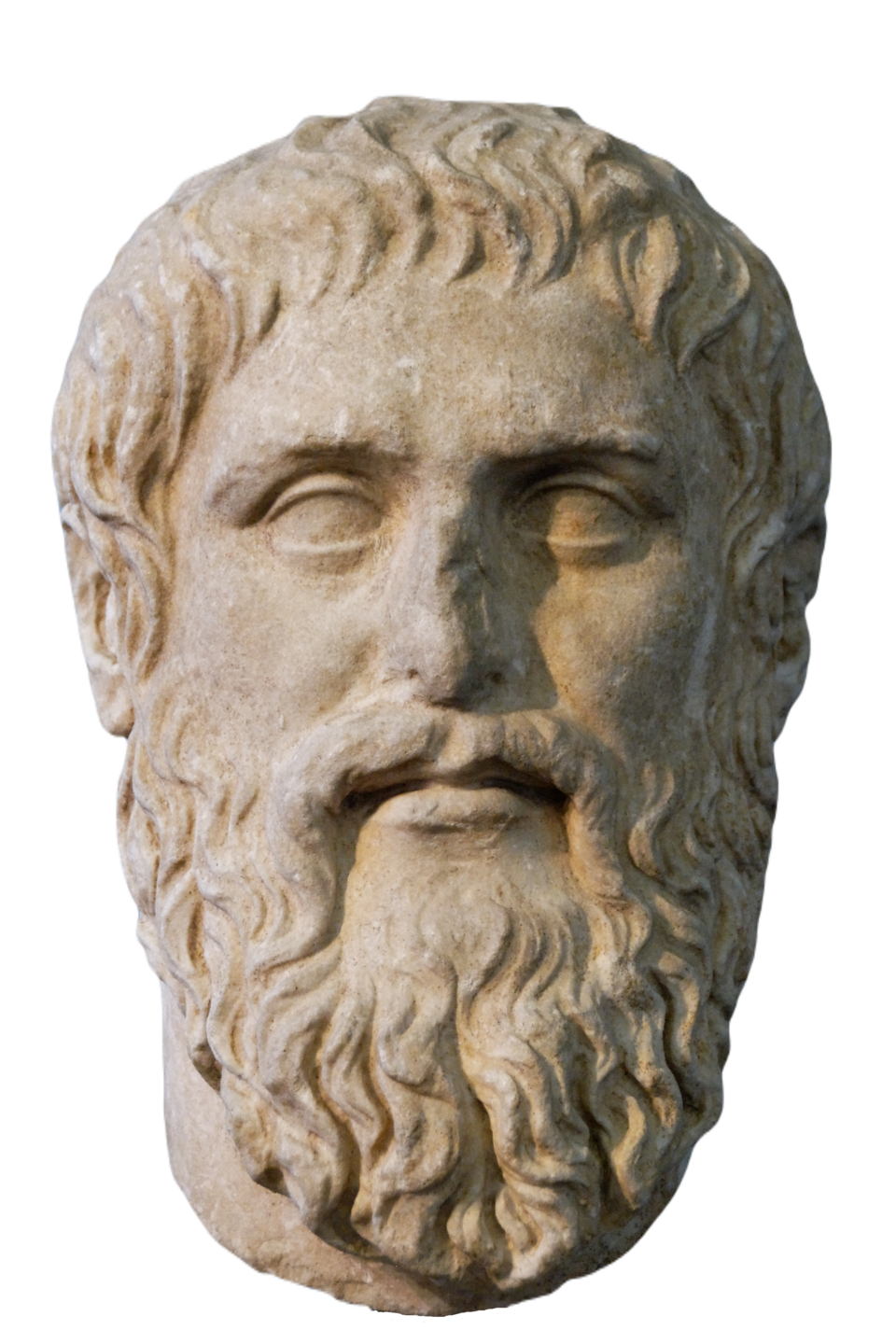
The Athenian who turned Socrates' questions into a philosophical system, founded Western academia, and argued that the world we see is the least real thing about it.
Plato studied under Socrates, founded the Academy in Athens, and spent four decades writing dialogues that turned a condemned man's oral questioning into the most consequential body of thought in the Western philosophical tradition. His claim that unchanging abstract Forms are more real than physical things reshaped metaphysics, epistemology, ethics, and politics — and the argument has never entirely gone away.
Early life and the circle of Socrates
Plato was born into an aristocratic Athenian family around 428–427 BC. His given name may have been Aristocles; "Plato" is the name by which he was known in antiquity, though the origin of the name is disputed.1 He received the education expected of an Athenian of his class — gymnastics, poetry, music — before coming under the influence of Socrates, whose method of sustained questioning through dialogue would define the form of Plato's entire literary output.
The execution of Socrates in 399 BC, on charges of impiety and corrupting the youth, was the defining trauma of Plato's intellectual life. It demonstrated that the city could destroy its most rigorous thinker by democratic vote. The question of how justice, knowledge, and political authority relate — and how philosophy might save rather than merely describe the situation — runs through everything Plato wrote afterward.
After Socrates' death, Plato travelled widely: to Megara, possibly to Egypt and Cyrene, and twice to Sicily, where he engaged the courts of Syracuse in attempts to produce a philosopher-ruler — experiments that failed badly on both occasions and left him, according to one account, briefly enslaved before being ransomed.
The Academy
Around 387 BC, Plato returned to Athens and founded the Academy on the outskirts of the city, in a grove sacred to the hero Academus. It is regarded as one of the earliest institutions of higher learning in the Western world. The Academy attracted serious thinkers and remained active for nearly nine centuries, until the emperor Justinian closed the pagan schools of philosophy in 529 AD.
The school's curriculum is not well documented, but it included mathematics — geometry in particular — alongside philosophy. An inscription traditionally attributed to the Academy's entrance read: Let no one ignorant of geometry enter here. Whether literal or legendary, it captures the institution's insistence that rigorous abstract thinking was a prerequisite for philosophy.
Aristotle enrolled at the Academy around 367 BC at the age of seventeen and remained for twenty years, departing only after Plato's death. The teacher-student relationship between Plato and Aristotle is the most consequential in the history of Western thought, and the intellectual distance between them — Aristotle rejecting Plato's Forms in favour of immanent form in matter — is as significant as the transmission.
Theory of Forms and the Allegory of the Cave
Plato's central metaphysical commitment is the Theory of Forms (or Ideas): the claim that the particular things we perceive — a beautiful body, a just act, a circle drawn in sand — are imperfect, transient copies of eternal, unchanging, non-material originals. The Form of Beauty is more real than any beautiful thing; the Form of Justice is more real than any just act. Knowledge is not perception of the physical world but acquaintance with the Forms, accessed through reason.
The most famous illustration is the Allegory of the Cave, set out in the Republic (Book VII). Prisoners chained in a cave since birth watch shadows cast on a wall and take them for reality. A philosopher is the prisoner who turns, sees the fire, endures the pain of the ascent, and eventually looks at the sun itself — the Form of the Good. Returning to the cave to govern is both the philosopher's duty and the source of their danger.
The object of knowledge is what exists and its function is the reality of that existence.
Later dialogues and the Laws
Plato's dialogues are conventionally divided into early, middle, and late groups. The early dialogues — Apology, Euthyphro, Meno — are closest in spirit to Socrates' historical practice, ending in aporia (puzzlement) without definitive conclusions. The middle dialogues — Phaedo, Republic, Symposium, Phaedrus — develop the Theory of Forms, the immortality of the soul, and the structure of the ideal political community. The late dialogues — Timaeus, Parmenides, Sophist, Laws — are more technically demanding, and in some cases revise positions taken earlier.
The Laws, his longest work and probably his last, describes a second-best city — more realistic than the Republic's ideal — governed by detailed legislation rather than philosopher-kings. It is the only major dialogue in which Socrates does not appear.
Footnotes
- Ancient sources offer competing accounts of the name's origin — variously linked to his broad shoulders, his broad forehead, or his broad literary style. None is verifiable. See: Wikipedia contributors, "Plato," Wikipedia. ↩