Rachel Carson
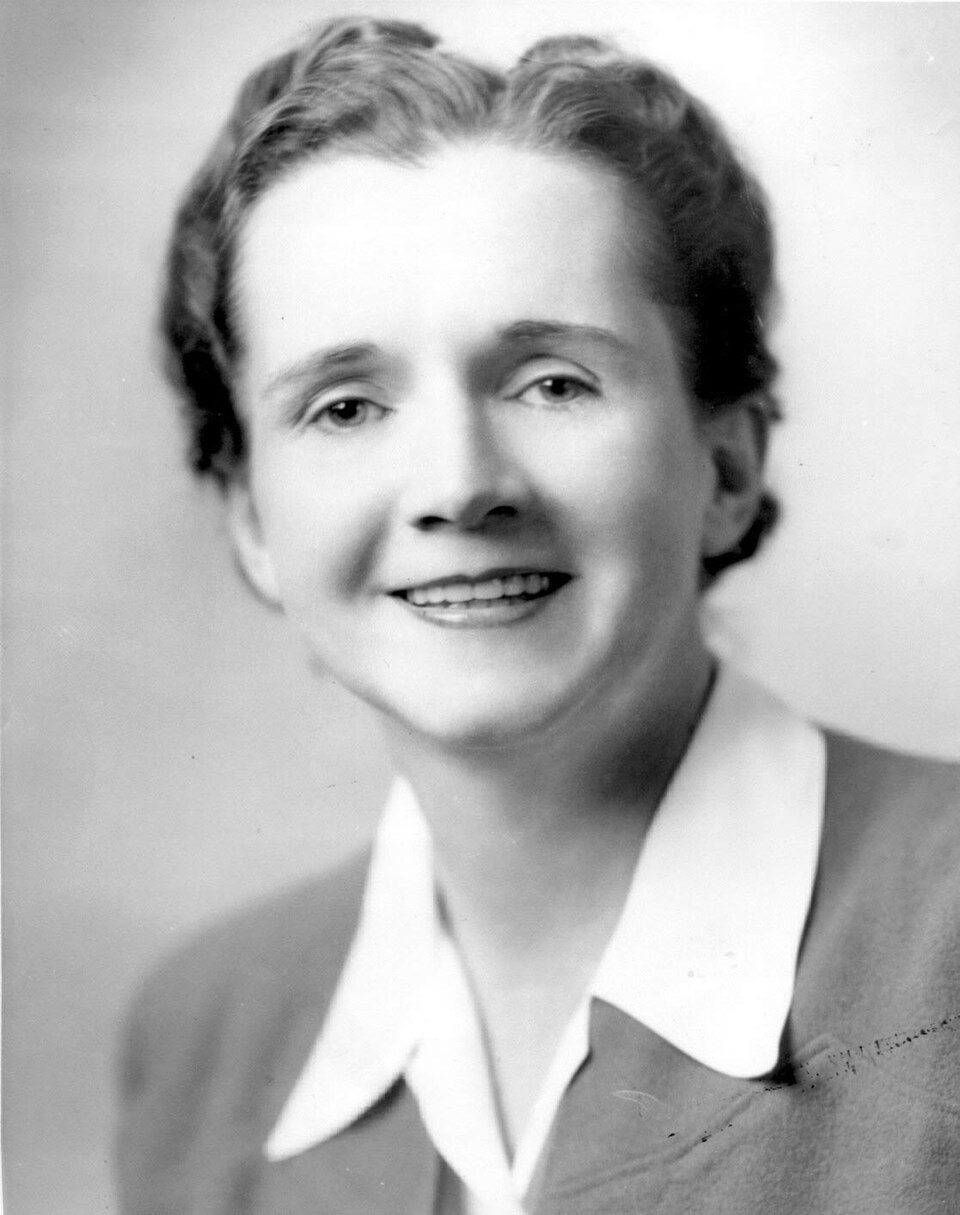
The marine biologist who turned a federal desk job into a literary career, then turned a book about pesticides into the founding document of the modern environmental movement.
Rachel Carson spent fifteen years writing government bulletins about fish by day and prose about the sea by night. The discipline showed. Her sea trilogy established her as the most widely read science writer of the postwar era; Silent Spring, published in 1962, demonstrated that the same clarity of attention applied to ecological catastrophe could change law.
Springdale to Johns Hopkins
Carson grew up on a 65-acre farm in Springdale, Pennsylvania, in the Allegheny River valley, where her mother Maria encouraged close attention to birds and insects from an early age. She enrolled at the Pennsylvania College for Women (now Chatham University) intending to study English, switched to biology in her sophomore year, and never looked back. A summer fellowship at the Marine Biological Laboratory in Woods Hole, Massachusetts — her first sight of the ocean — confirmed the direction. She completed a master's degree in zoology at Johns Hopkins University in 1932.1
The Depression made academic jobs scarce. In 1936 she sat the federal civil service examination, placed second among all applicants, and joined the Bureau of Fisheries (later reorganised as the U.S. Fish and Wildlife Service) as a junior aquatic biologist. She would stay for fifteen years, rising to editor-in-chief of all agency publications.
The sea trilogy
Carson's government work left time to write. An essay submitted to the Atlantic Monthly in 1937 — a lyrical account of the sea as experienced by its creatures — became the seed of Under the Sea-Wind (1941), her first book. Sales were modest; publication coincided with Pearl Harbor. A decade later The Sea Around Us (1951) transformed her reputation. It remained on the New York Times bestseller list for eighty-six weeks, won the National Book Award in 1952, and was translated into thirty languages. The success allowed her to resign from the Fish and Wildlife Service and write full-time. The Edge of the Sea (1955) completed the trilogy, mapping the ecology of the Atlantic shoreline zone by zone.2
Silent Spring
In 1958 Carson received a letter from a friend in Massachusetts describing the death of birds following aerial DDT spraying over a local wildlife sanctuary. She had been tracking the accumulating evidence on synthetic pesticides for years. What began as a magazine article became four years of research across government reports, scientific journals, and correspondence with biologists across the country.
Silent Spring, published in September 1962, documented how DDT and related compounds moved through food chains, accumulated in fatty tissue, and killed non-target species — songbirds, fish, raptors — at concentrations far below those that affect humans acutely. The title imagined a spring from which birdsong had disappeared.3 The chemical industry responded with a coordinated attack on Carson's credentials, methods, and character. She was dying of breast cancer by the time the book appeared and knew it.
Before Congress, 1963
In June 1963 Carson testified before the Senate subcommittee on pesticide use chaired by Abraham Ribicoff. She was 55, in considerable pain, wearing a wig to conceal hair loss from radiation treatment, and composed throughout. She called for a citizens' advisory committee on pesticides and stronger federal oversight. President Kennedy had already ordered his Science Advisory Committee to investigate; their report, published in May 1963, validated Silent Spring's central findings. Carson died in April 1964, ten months after her testimony.
The DDT ban Carson's work precipitated came eight years later: the Environmental Protection Agency, itself established in 1970 in part as a response to the environmental awareness Silent Spring had generated, banned DDT in the United States in 1972. She was awarded the Presidential Medal of Freedom posthumously in 1980.
We stand now where two roads diverge. But unlike the roads in Robert Frost's familiar poem, they are not equally fair. The road we have long been traveling is deceptively easy, a smooth superhighway on which we progress with great speed, but at its end lies disaster. The other fork of the road — the one less traveled by — offers our last, our only chance to reach a destination that assures the preservation of our earth.
Footnotes
- Carson supported her family through the Depression while finishing the degree, tutoring undergraduates and, after 1935, writing radio scripts on marine life for the U.S. Bureau of Fisheries. ↩
- The three books are sometimes described as a single extended argument: that the ocean is not a backdrop to human history but an active, interconnected system of which humans are one small part. ↩
- The book opened with a prose fable — an unnamed American town silenced by a mysterious blight — before presenting the scientific evidence. The fable was deliberately placed to make the argument emotional before it was analytical. ↩