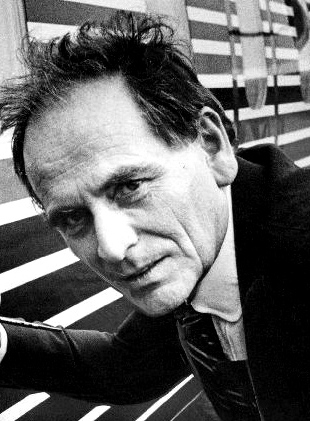
Raf Simons
Trained as a furniture designer and drawn into fashion by an encounter with Martin Margiela, Simons built one of the most consequential menswear practices of the past three decades without ever abandoning the subcultures that first shaped his eye.
Raf Simons launched his menswear label in 1995 with no formal fashion training, drawing instead on furniture design, postpunk subculture, and a set of references — Joy Division, skinheads, rave — that had rarely appeared in a fashion context with such directness. The brand he built became a template for a generation of designers who understood youth culture not as decoration but as content. His tenures at Jil Sander, Christian Dior, and Calvin Klein demonstrated that the same intelligence could operate at very different registers; his appointment as co-creative director of Prada alongside Miuccia Prada in 2020 remains one of the more structurally unusual arrangements in contemporary fashion.
Formation
Raf Jan Simons was born in Neerpelt, Belgium, on 12 January 1968. He studied industrial and furniture design at LUCA School of Arts in Genk — then known as Sint-Lukas — with no intention of working in fashion. The encounter that redirected him came at a Martin Margiela show in the late 1980s. According to accounts Simons has given over the years, Margiela's work demonstrated that fashion could carry the same conceptual weight as other design disciplines, and could do so without losing its relation to the body and to dress as a social fact.
Own label
Simons launched his eponymous menswear label in 1995. The debut collection, "Redux," established the register he would sustain through the following decade: slim, close-to-the-body tailoring; a palette drawn from army surplus and workwear; graphic references to punk, hardcore, and post-industrial music. Subsequent collections in the late 1990s brought in skinhead and rave subcultures, and a recurring interest in adolescence and belonging that gave the work an emotional edge uncommon in menswear at the time. The brand gathered a cult following before finding wider recognition.
Jil Sander
In 2005 Simons was appointed creative director of Jil Sander, a German house whose founder had established minimalism and precise tailoring as its defining characteristics. He held the position until 2012, presenting womenswear collections that maintained the house's structural rigour while introducing colour, art references, and a warmth of feeling that distinguished his work from Sander's cooler originals. The tenure is widely regarded as one of the more successful instances of a designer sustaining a house's identity while extending it.
Christian Dior
Simons succeeded Bill Gaytten as creative director of Christian Dior in 2012. His first couture collection for the house, shown in July 2012, incorporated room-scale floral installations by the artist Mark Colle and set the aesthetic terms for his three-year tenure: structured Dior tailoring in dialogue with contemporary art and a deliberate distance from the house's nostalgic conventions. He collaborated with the artist Sterling Ruby on textiles and prints during this period. Simons departed Dior in October 2015, citing the pressure of producing six collections a year.
Calvin Klein and subsequent work
In 2016 Simons joined Calvin Klein as chief creative officer, renaming the main line Calvin Klein 205W39NYC. The collections referenced American archetypes — horror films, the frontier, workwear — through a lens that was visibly European in its detachment. He departed the label in December 2018 by mutual agreement. His own label continued during both these tenures and remains active, with Simons releasing collections outside the conventional seasonal calendar.
Prada
In April 2020 Simons joined Prada as co-creative director alongside Miuccia Prada, the house's longtime creative lead. The arrangement is structurally unusual: both designers hold equal creative authority and present joint collections. The partnership has been credited with expanding Prada's engagement with menswear and with younger audiences, while Miuccia Prada's intellectual framework remains visible in the work.
"I always come back to the idea of the individual — someone who dresses for themselves, not for a category."