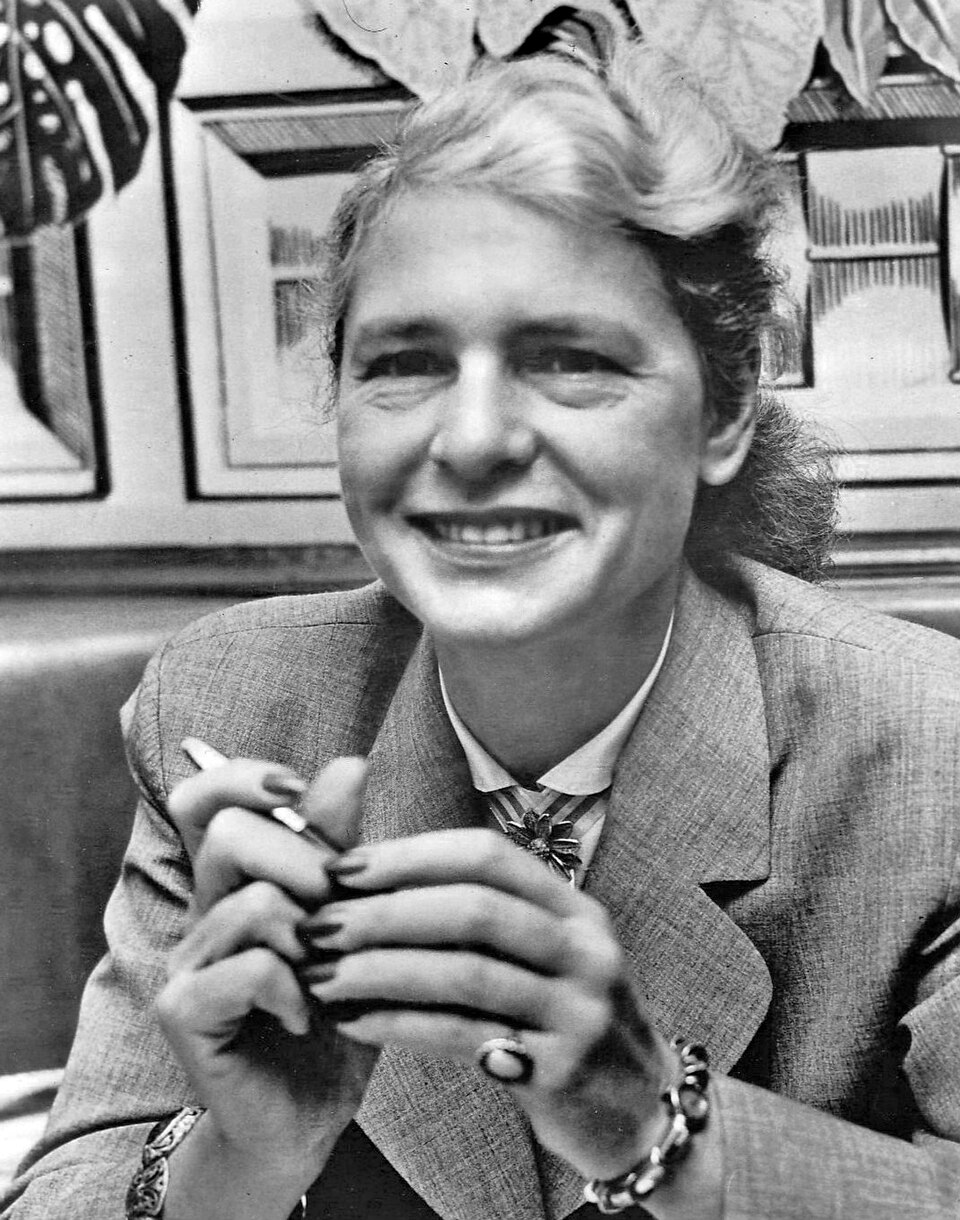
Robert Frank
The Swiss-American photographer whose road book The Americans — shot as a foreign outsider, published in 1958 — changed what photography was allowed to say and how it was allowed to say it.
Robert Frank spent a year driving across the United States on a Guggenheim Fellowship, shooting with a Leica at a slant — tilted horizons, harsh flash, motion blur, figures cut by the frame — and produced a book that Walker Evans called "a very literate achievement" and that the critic Sean O'Hagan called perhaps the most influential photography book of the twentieth century. The Americans changed the grammar of documentary photography.
Origins and emigration
Frank was born in Zurich in 1924 to a German Jewish family. He trained as a photographer's apprentice in Switzerland and emigrated to the United States in 1947 at twenty-two, finding work in fashion and commercial photography in New York. He associated with Abstract Expressionists, poets of the Beat generation, and artists who were renegotiating what American culture was and what it excluded.
In 1955, he received a Guggenheim Fellowship — at the time unusual for a recent immigrant — to photograph American society. He spent 1955 and 1956 travelling some 10,000 miles across the country, exposing approximately 28,000 frames of 35mm film. From these he selected 83 photographs.
The Americans
The book was first published in France in 1958 by Robert Delpire as Les Américains, with an introduction by Jack Kerouac; the American edition followed in 1959. It was poorly received in the United States on publication, with critics objecting to its bleakness, its formal roughness — the visible grain, the unstraightened horizons — and what many read as an unflattering portrait of the country.
The photographs are organised thematically rather than geographically: the American flag appears repeatedly, as do jukeboxes, cars, and separated crowds. Race is a persistent subject — segregation captured casually, in the spatial arrangements of buses and elevators, without caption or editorial intervention.
Method and influence
Frank used a 35mm Leica in conditions that would have been considered technically inadmissible by the photojournalism conventions of the time: fast film, available light, motion blur treated as expressive rather than corrected. The book's formal roughness was a choice, not a deficiency — it carried the subjective restlessness of a traveller who does not share the confidence of the host culture.
After The Americans, Frank moved away from still photography toward experimental film. He collaborated with Kerouac, Allen Ginsberg, and the Rolling Stones, making films that extended the same improvisational sensibility to moving image.
There is one thing the photograph must contain, the humanity of the moment.
Legacy
The Americans has influenced virtually every serious American photographer who followed it. It established that a photography book could be an authored work — a sustained argument — rather than a collection of successful individual images. Garry Winogrand, Lee Friedlander, Diane Arbus, and the generation that followed all worked in dialogue with it, even when they departed from its approach.