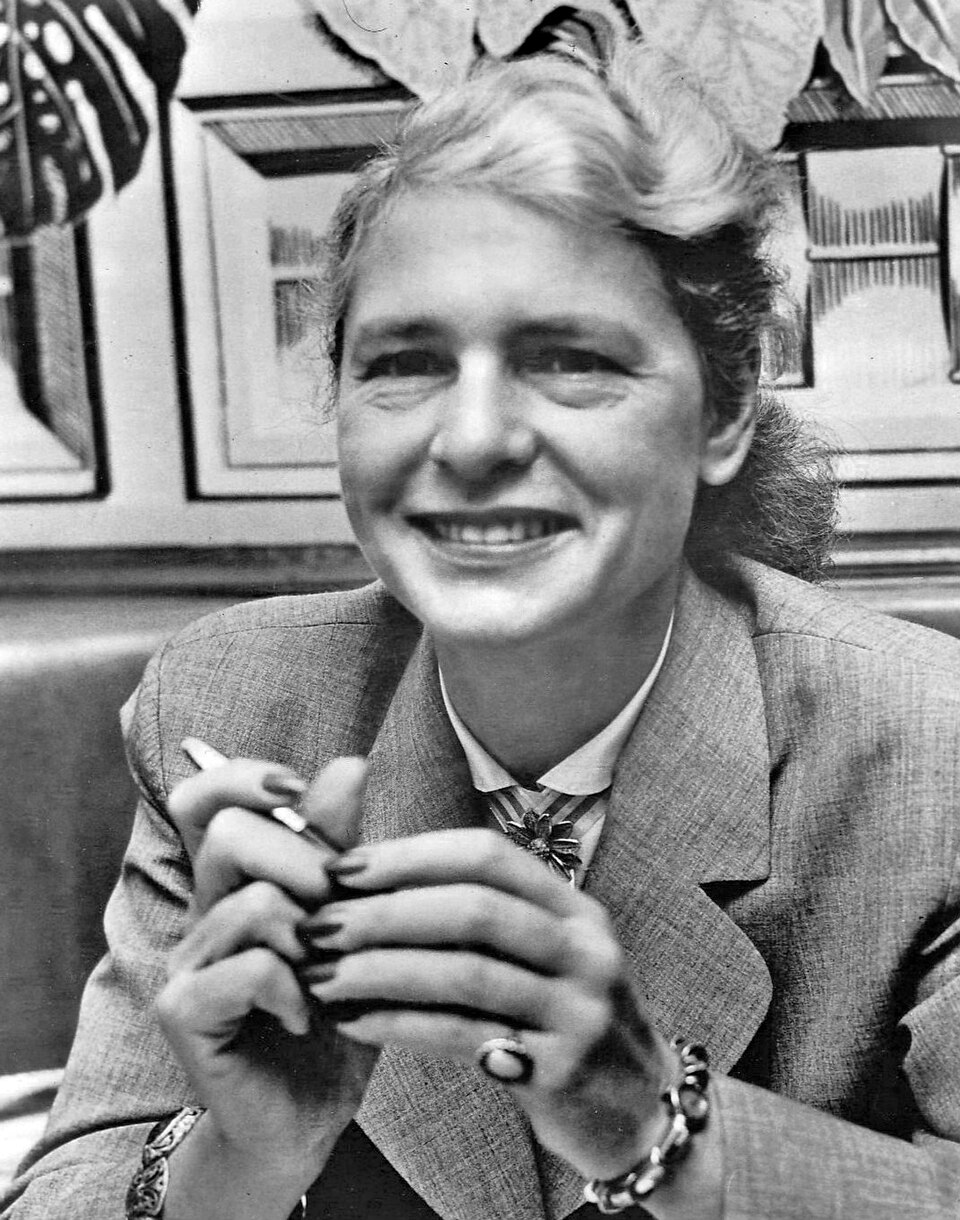
Robert Mapplethorpe
The American photographer who brought classical formalism to bear on the erotic and the taboo, making work of extreme beauty whose controversy outlasted its maker.
Robert Mapplethorpe worked with the formal discipline of a classical sculptor — controlled studio light, geometric composition, immaculate print quality — and applied it to subjects that the fine-art establishment had never admitted: black male nudes, sadomasochistic imagery, homoerotic documentation of New York's underground. The combination produced photographs of genuine beauty and, after his death, a censorship battle that became a landmark in American cultural law.
Formation
Mapplethorpe was born in Floral Park, Queens, in 1946. He studied at the Pratt Institute in Brooklyn and initially worked across media — painting, collage, sculpture — before photography became his primary form in the early 1970s. He lived with the poet and musician Patti Smith in the Chelsea Hotel in New York during the early part of his career; Smith later wrote about the period in her memoir Just Kids (2010).
His early photographic work used Polaroid cameras; he moved to medium-format cameras and studio conditions as his visual vocabulary consolidated around formal control and tonal precision. He printed his own work in gelatin silver, working for the deepest blacks and the most luminous highlights the process allowed.
Work
Mapplethorpe's work ranged across celebrity portraiture — he photographed Patti Smith, Andy Warhol, Debbie Harry, Louise Bourgeois, Arnold Schwarzenegger — flowers in formal botanical arrangements, and a body of erotic and explicitly sexual imagery including documentation of leather-bar and BDSM culture.
The photographs of black male nudes — a body of work accumulated through the 1970s and 1980s — have been discussed extensively in terms of both their formal achievement and their potential objectification; the scholarship remains contested but insistent.
He was diagnosed with AIDS in 1986 and established the Robert Mapplethorpe Foundation in 1988 to support AIDS research and arts funding.
The censorship controversy
In 1989, months after Mapplethorpe died of AIDS, the Corcoran Gallery in Washington, D.C. cancelled a retrospective of his work, The Perfect Moment, under pressure related to its explicit content and the government funding involved. The exhibition moved to the Contemporary Arts Center in Cincinnati, where the director Dennis Barrie was criminally prosecuted for obscenity. He was acquitted by a jury in 1990, in a verdict that became a significant ruling on artistic freedom in the United States.
My mission as a photographer has been to make images that are as perfect as possible.
Legacy
Mapplethorpe's prints now command major prices at auction. His formal method — the application of classical photographic discipline to sexually explicit subject matter — remains his definitive contribution, demonstrating that beauty and transgression are not mutually exclusive. The foundation he established has donated substantially to AIDS research and arts organisations.