Roland Barthes
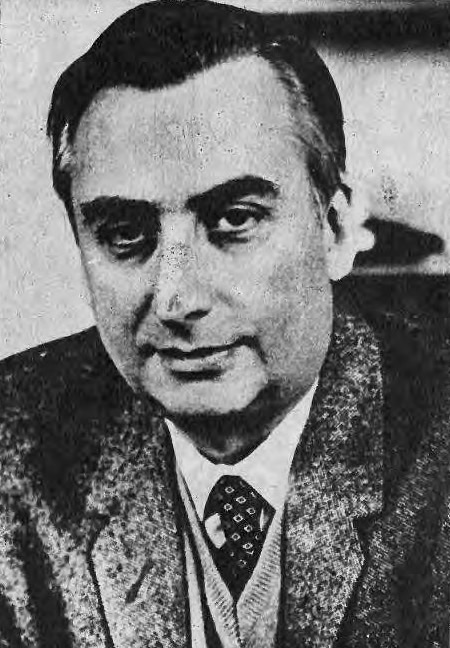
The French critic who turned the analysis of signs into a politics — reading fashion, food, wrestling, and literature as equally revealing texts of how a society narrates itself.
Roland Barthes believed that nothing in culture is natural — that every apparently obvious sign, from a steak to a wrestling match to a fashion photograph, is the product of historical choices that have been made to look inevitable. His life's work was to defamiliarise that obviousness and show the mechanism behind it.
Early life and intellectual formation
Barthes was born in Cherbourg in 1915 and raised largely by his mother in Bayonne and Paris after his father was killed in naval combat in 1916. Tuberculosis interrupted his studies repeatedly through the 1930s and 1940s, confining him for extended periods to sanatoria — time he used to read voraciously. He eventually completed degrees in classical literature and grammar at the Sorbonne.
His first major critical essays appeared in the journal Combat in 1947, targeting the theatrical naturalism of contemporary French writing. These became the book Writing Degree Zero (1953), which argued that literary style is never neutral but always carries ideological weight. The argument drew on Sartre's existentialism and Marxist critique while already moving toward the structuralist method that would define his middle period.
Mythologies and the analysis of everyday life
In 1957 Barthes collected two years of monthly essays into Mythologies, a book that remains his most widely read. Each essay takes a fragment of contemporary French life — steak-frites, the face of Greta Garbo, the Tour de France, a soap-powder advertisement — and submits it to semiological analysis: what systems of meaning are being silently invoked? What natural appearance conceals what historical construction?
The closing theoretical essay, "Myth Today," provided the framework: myth works by presenting historical contingency as eternal nature. The book made Barthes one of the central figures of structuralism, and Mythologies has never been out of print.
Structuralism and its dissolution
Through the 1960s Barthes produced structuralist analyses of literary and narrative form — On Racine (1963), Elements of Semiology (1964), The Fashion System (1967) — that mapped the codes and conventions through which texts produce meaning. But even as he elaborated the method, he began to undermine it.
"The Death of the Author" (1967) argued that the meaning of a text does not reside in the intentions of whoever wrote it but is produced at the moment of reading. The essay became one of the foundational documents of post-structuralism. S/Z (1970), a minute analysis of a Balzac short story, exposed how many competing codes any text activates simultaneously, resisting reduction to a single interpretation.
Late work and the personal voice
In his final decade Barthes moved toward a more personal, essayistic mode. Roland Barthes by Roland Barthes (1975) was a deliberately anti-autobiographical autobiography. A Lover's Discourse: Fragments (1977) catalogued the emotional figures of being in love with analytical tenderness. Camera Lucida (1980), written after his mother's death and published in the year of his own, meditated on photography, grief, and time through the concept of the punctum — the particular detail in a photograph that pierces the viewer.
He was appointed to the Collège de France in 1977. He died in Paris in March 1980, struck by a laundry van a month after delivering his inaugural lecture.
Myth does not deny things; its function is to talk about them; simply, it purifies them, it makes them innocent, it gives them a natural and eternal justification.