Sebastião Salgado
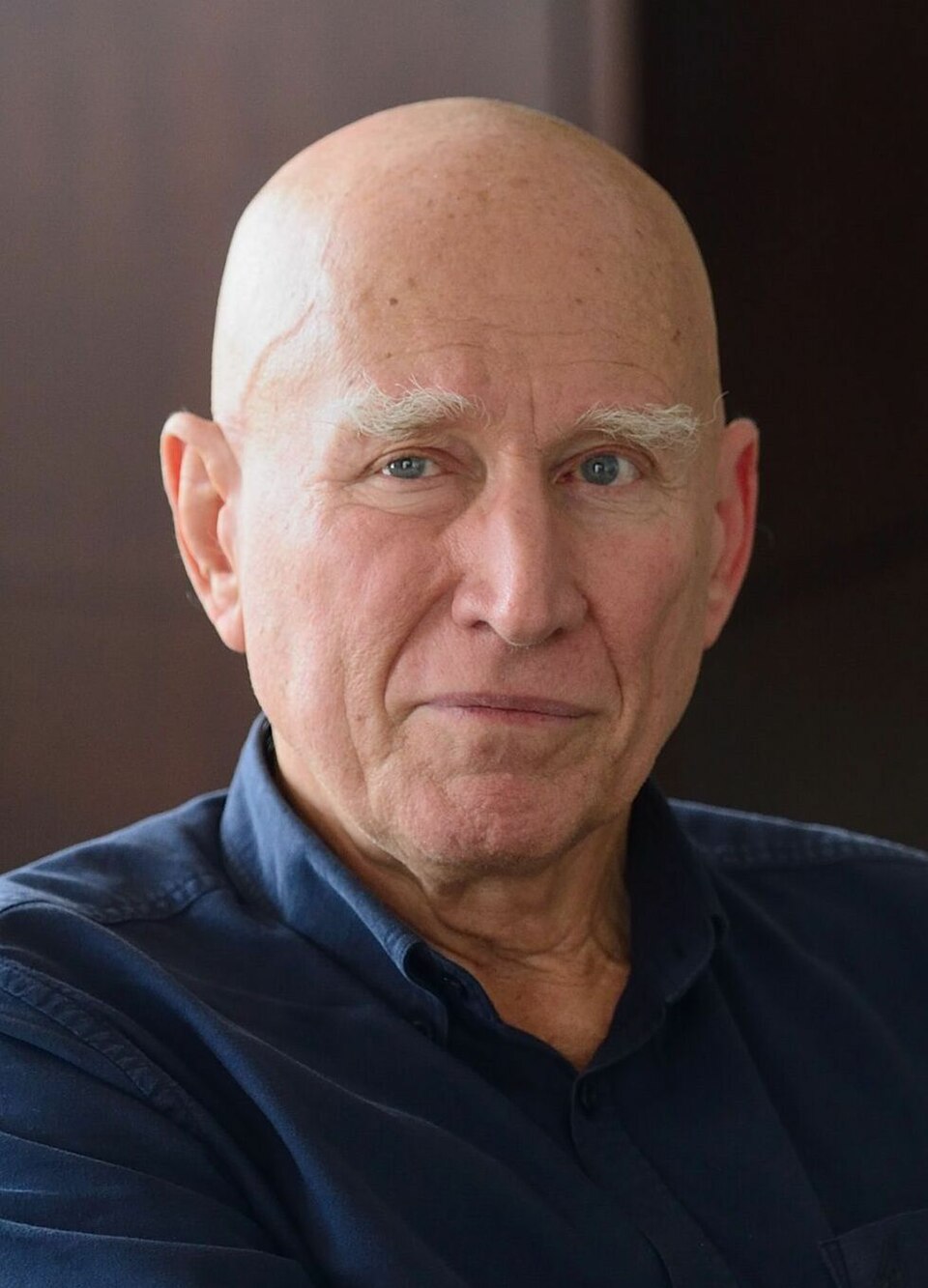
The Brazilian social documentary photographer who spent decades bearing witness to human suffering and ecological devastation, producing images of indelible moral weight.
Sebastião Salgado trained as an economist, worked for the International Coffee Organization in London, and arrived at photography in his late twenties as the instrument most suited to the kind of witness he wanted to bear — sustained, global, morally serious. Over five decades, he documented famine in the Sahel, gold mining in Brazil, mass displacement in Africa and Europe, and the natural world at its most remote and intact, producing a body of work that made him one of the most recognised documentary photographers of the twentieth century.
Formation
Born in the state of Minas Gerais, Brazil, in 1944, Salgado grew up on a cattle ranch. He studied economics in São Paulo and then in Paris, completing a postgraduate degree in agricultural economics. He worked in London for the International Coffee Organization before leaving economics for photography in the early 1970s after taking photographs in Africa on a work trip and recognising that the camera was the instrument he wanted to use.
He joined the Gamma photo agency in Paris in 1973 and moved to Magnum Photos in 1979, remaining a member until 1994 when he and his wife Lélia founded their own agency, Amazonas Images.
Major projects
Salgado's work is organised around long-term projects rather than individual assignments. Other Americas (1986) documented indigenous and rural populations across Latin America. Sahel: The End of the Road (1986) recorded the Ethiopian and Sahel famines. Workers (1993) depicted industrial and agricultural labour at monumental scale across six continents, framing ordinary physical toil as an object of formal grandeur. Migrations (2000) documented mass displacement of people across thirty-nine countries during the 1990s.
The project Genesis (2013) represented a departure: three years documenting territories of the natural world relatively untouched by industrialisation — Galápagos, Amazon, Antarctica — in large-format black-and-white.
Method
Salgado shoots in black-and-white and works in close physical proximity to his subjects over extended periods. His use of wide-angle lenses, dramatic tonal contrast, and a compositional formalism drawn from classical painting has been both admired — for its ability to make suffering legible and indelible — and criticised, by Susan Sontag and others, as aestheticising misery in ways that substitute beauty for political analysis.
The tension between documentary purpose and formal beauty was the defining critical question around his work and remains unresolved.
If someone looks at one of my photographs and reflects for a minute, I've done my job.
Instituto Terra
After completing Migrations, Salgado was so distressed by what he had witnessed that he suffered a crisis of faith in the project of documentary photography. He and Lélia returned to his family's cattle ranch in Minas Gerais and over the following decades replanted 2.7 million trees, restoring a degraded watershed to Atlantic Forest. The Instituto Terra, established in 1998, became an internationally recognised reforestation project.