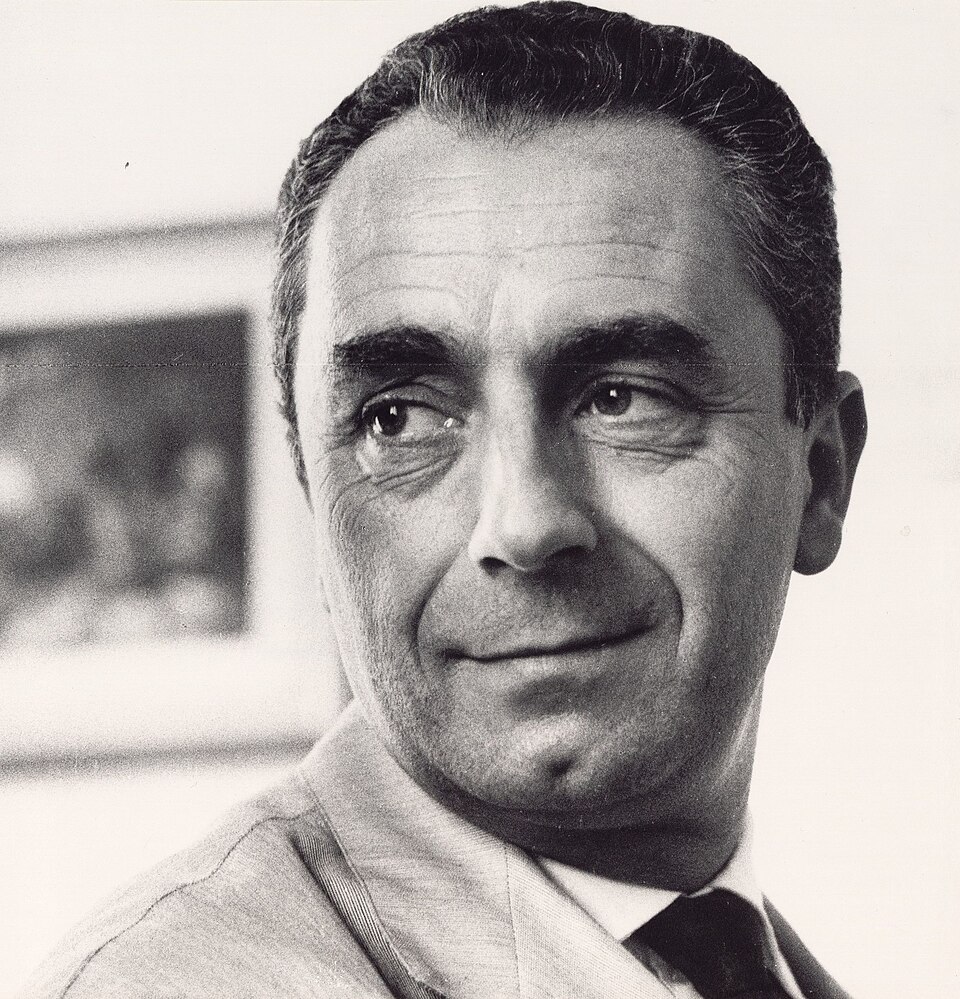
Sergio Leone
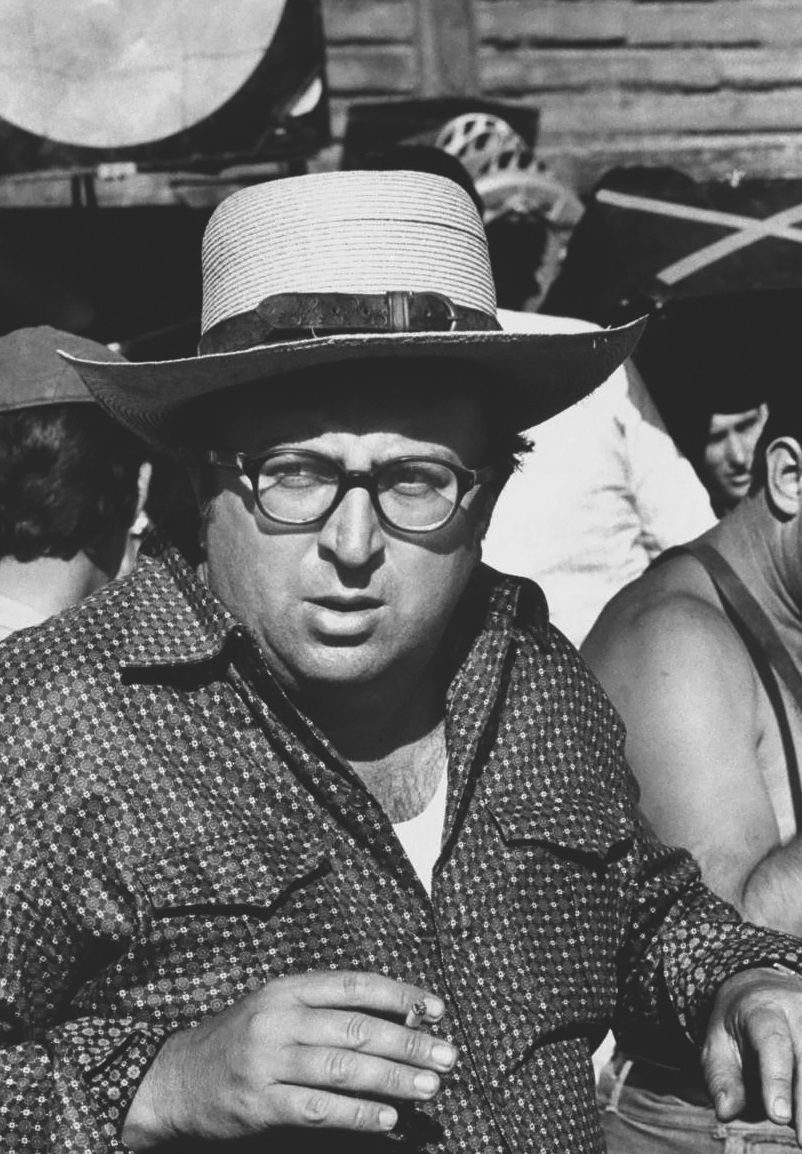
He took the American Western, stripped it of its mythology of virtue, and gave it back as a ceremony of silence, money, and time.
Sergio Leone did not respect the Western — he studied it, dissected it, and reassembled it into something colder and stranger, in which moral ambiguity was not a complication but the premise. Working from Rome with Spanish landscapes and a composer who understood that silence was as important as music, he created a genre and then transcended it.
Rome and the apprenticeship
Born in Rome in 1929 to a family with roots in the early Italian film industry — his father Roberto Roberti directed silent films — Leone grew up on the lot and worked his way through the Italian studio system as an assistant director and second-unit director on international productions including William Wyler's Ben-Hur (1959). He learned the mechanics of epic cinema from the inside.
His first feature, The Last Days of Pompeii (1959), was a co-direction credit taken over from a sick colleague; his debut in his own right was The Colossus of Rhodes (1961), a peplum — the Italian historical epic that was the industry's bread and butter. Leone found these forms functional but insufficient. The American Western, which he had loved since childhood, offered something else.
The Dollars Trilogy
A Fistful of Dollars (1964), loosely adapted from Akira Kurosawa's Yojimbo, introduced Clint Eastwood as the Man with No Name — a drifter with no stated history, no stated ethics, and complete competence at violence. The film's innovation was formal as much as moral: extreme close-ups of eyes, hands, gun holsters, alternating with wide shots of enormous empty landscape; and Ennio Morricone's score, which replaced conventional orchestral tension with silence, whistle, electric guitar, and whip-crack percussion.
For a Few Dollars More (1965) and The Good, the Bad and the Ugly (1966) expanded the form. The final film's climactic three-way standoff — intercut in extreme close-up fragments over several minutes — is one of cinema's most analysed sequences.
Once Upon a Time in the West
Once Upon a Time in the West (1968), made after and in conscious response to the Dollars trilogy, is the fullest statement. A story of land, railroad, and revenge in the post-Civil War West, it opens with twelve minutes of near-silence and uses Charles Bronson, Henry Fonda against his hero image, and Claudia Cardinale to construct an elegy for the Western itself. Morricone wrote the score before shooting began; Leone filmed to the music.
Once Upon a Time in America (1984), his final film and a twenty-year project, transferred the same mythological weight to Jewish gangsters in New York from the 1920s to the 1960s. The original cut ran nearly four hours; it was released in a truncated version in the United States and has since been restored.
Legacy
Leone redefined what genre cinema could be — not the delivery of formula but the transformation of formula into something that engages with history, time, and myth. His visual grammar (the extreme close-up/extreme wide-shot dialectic) and his use of Morricone's music influenced filmmakers from Quentin Tarantino to John Woo.
My films are fairy tales for adults. The Western is the land where everything is always at stake, and everyone knows it.